Sue Larkey Blog
Helping you “Make a Difference”


Tips, Strategies, Time Savers and Inspiration to help make difference for a child with an ASD in your class, home or community.

Please join my Facebook Community as you also read the insights, ideas and support of many amazing teachers, parents and professionals. Click this Facebook Icon Facebook Icon(or google “Sue Larkey Teacher”)
Please comment on any Blog via my Facebook page.
14 Tips for Christmas & 14 Great Gift Ideas
Here are some tips for Home that can be used at school too. Even if your cultural background does not celebrate Christmas it is impossible to get away from it in during December. 14 Tips for Christmas Social Scripts are great to use at Christmas to explain traditions, expectations (ie thank for present even if you already have, don’t like etc) Check last weeks E-newsletter for tips on how to write Scripts Children at schools give out cards to each other and this is an important part of “friendships” in schools. Help your child take part in card giving if it is part of the school “culture.” I find getting the class photo a great visual to support to select who to make cards for etc Some Classes do a class Kris Kringle. If they have to buy for another child, this is a great opportunity to talk about how to choose a gift for someone else ie “what other people like” how to ask people what they like or observe them etc Use a Calender to indicate any changes in routines, concerts,...

10 Tips Growing Up on the Autism Spectrum
Recently on my Facebook page I posted “Growing Up Autistic: 10 Tips for Teenagers with Asperger Syndrome or Mild Autism” by Chris Bonnello. It had a huge response and Chris has kindly given me permission to put the full article on my website. Parents, educators and teens all found the article very helpful so please, if you didn’t see it, take a moment to read and share with anyone who may benefit. “If you’re growing up on the spectrum, this article was written for you. I grew up with mild autism myself: I struggled with isolation, I struggled with understanding other people, and I struggled with other people not understanding me. So, from one autistic to another, here is my honest advice to you.” Chris Bonnello For longer version of Tips For Growing Up on the Autism Spectrum join our mailing list with the form below and you will be redirected to all of the tips and a PDF download link to the longer version of the tips. Join me on Facebook for more tips and inspiration > click...
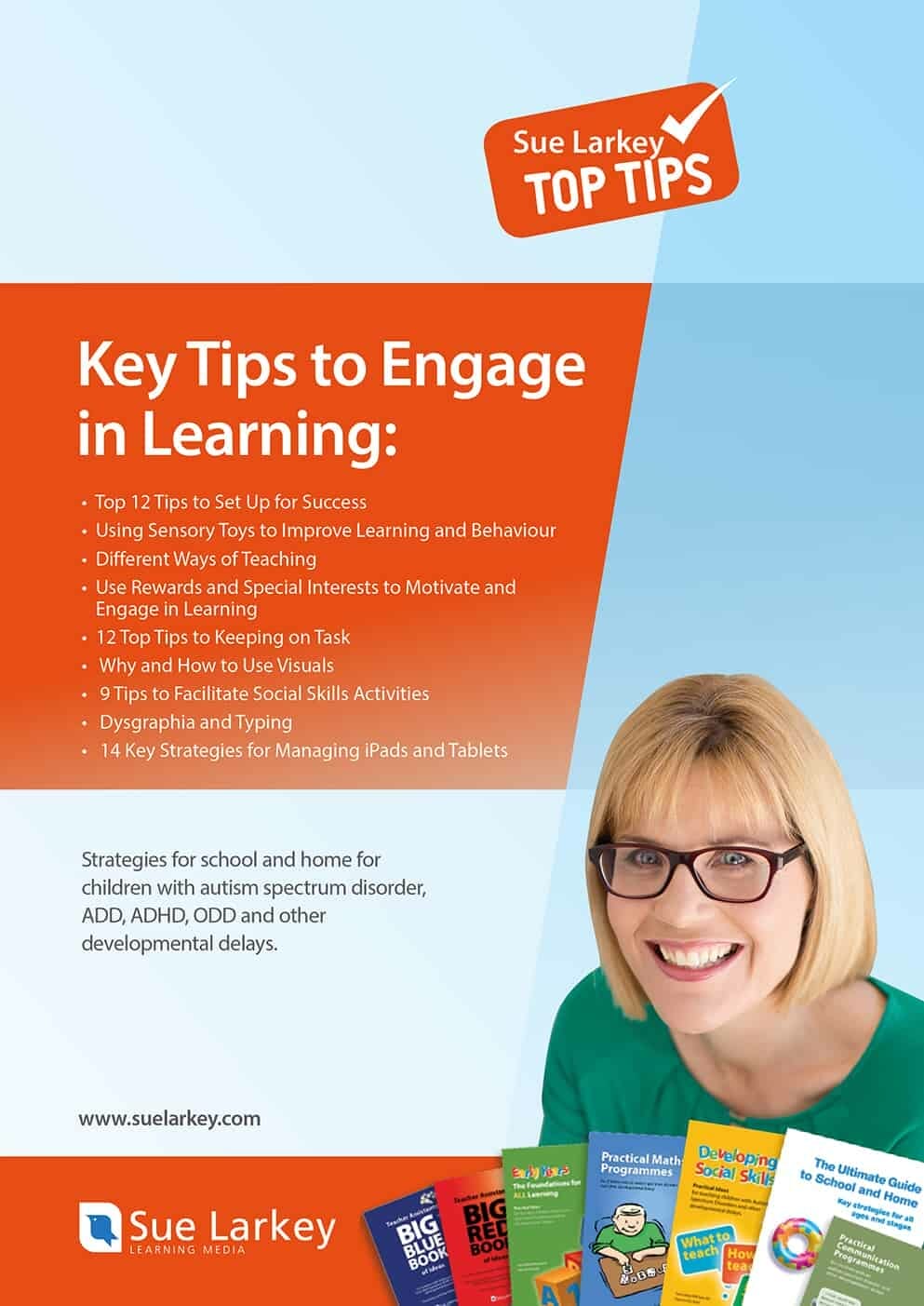
Key Tips to Engage in Learning – E-Book
Content of E-Book √ Top 12 Tips to Set Up for Success √ Using Sensory Toys to Improve Learning and Behaviour √ Different Ways of Teaching √ Use Rewards and Special Interests to Motivate and Engage in Learning √ 12 Top Tips to Keeping on Task √ Why and How to Use Visuals √ 9 Tips to Facilitate Social Skills Activities √ Dysgraphia and Typing √ 14 Key Strategies for Managing iPads and Tablets Strategies for school and home for children with autism spectrum disorder, ADD, ADHD, ODD and other developmental delays. Top 12 Tips to Setup for Success Understand the child’s difference (strengths and challenges), accept their different way of thinking, learning, socialising, etc . Break it down. Break tasks down into smaller parts and give them each step sequentially. If possible, give them a checklist to mark off as they do each step. Do NOT expect the children to multitask! Allow them extra time to get it done, but let them finish! It is important to finish one task before going to...
Here’s How to Set up a Passive Playground / Lunchtime Club
Many schools have introduced Lunchtime Clubs and had great success. Playgrounds are unstructured, unpredictable places where children with ASD struggle to follow and join in the numerous social interactions surrounding them. Children with ASD frequently return to class from the playground in a high state of anxiety. In addition, their self-esteem frequently takes a battering. Up to 70% of children experience bullying. In our book Developing Social Skills, co-author Gay von Ess and I have lots of practical ideas and strategies to support social skills. Passive Playgrounds/Lunchtime Clubs 10 Top Tips to Support Children in Playground Observe and then teach current playground language to children with ASD. Remember to revisit this every term as games and language changes rapidly in playgrounds. Ensure that children with ASD and their parents are aware of the current playground games and activities. Allocate a staff member to teach the rules to the child with ASD so that he/she only...
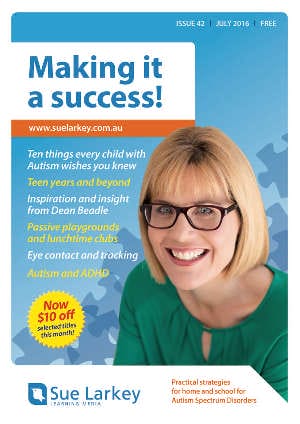
Sue Larkey’s Complete Newsletter Term 3 – 2016
For those of on holidays or about to start the break. I thought you might like some holidays reading -Term 3 Newsletter. By subscribing to our newsletter below you will then be able to print out or read online the complete newsletter. Many of you would have heard me say “It takes a community to raise a child with ASD”. It is the support from home, school and the wider community that can truly make a difference – and make it a success. I strongly believe that UNDERSTANDING is a key element of this. In this Newsletter I have included a range of tips, information and resources to help you understand and support the children you know. I have included a number of INSIGHTS from parents and people on the spectrum as this is a wonderful way to increase understanding. In this Newsletter I have included: Ten Things Every Child with Autism Wishes You Knew – written by a parent and provides great tips for school and home (Pg 2-3). Teen Years and Beyond – 10 Top Tips to Increase...
Puberty and Sex Education for Home & School
Puberty is a natural development for all children. Puberty starts in girls around 10-11 and boys 11-12. Menstruation for girls typically occurs between 12 and 13, while voice changes for boys is often around 15. We ALL need to have on-going discussions with the child and this is where having both home and school helping the child’s understanding is vital. Boys and girls need to know about their changes and changes in the opposite sex too (particularly, if they have opposite sex siblings or are at co-ed schools). It is important to start the information before the changes occur otherwise the children can worry they are sick or something is wrong with them. I know some parents who talk about the changes before they happen and as they happen their children tell them and they celebrate! Open, honest and on-going information is most effective, and not too much information all at once! That being said some children want to know everything and that is where books can be wonderful....
Just Calm Down
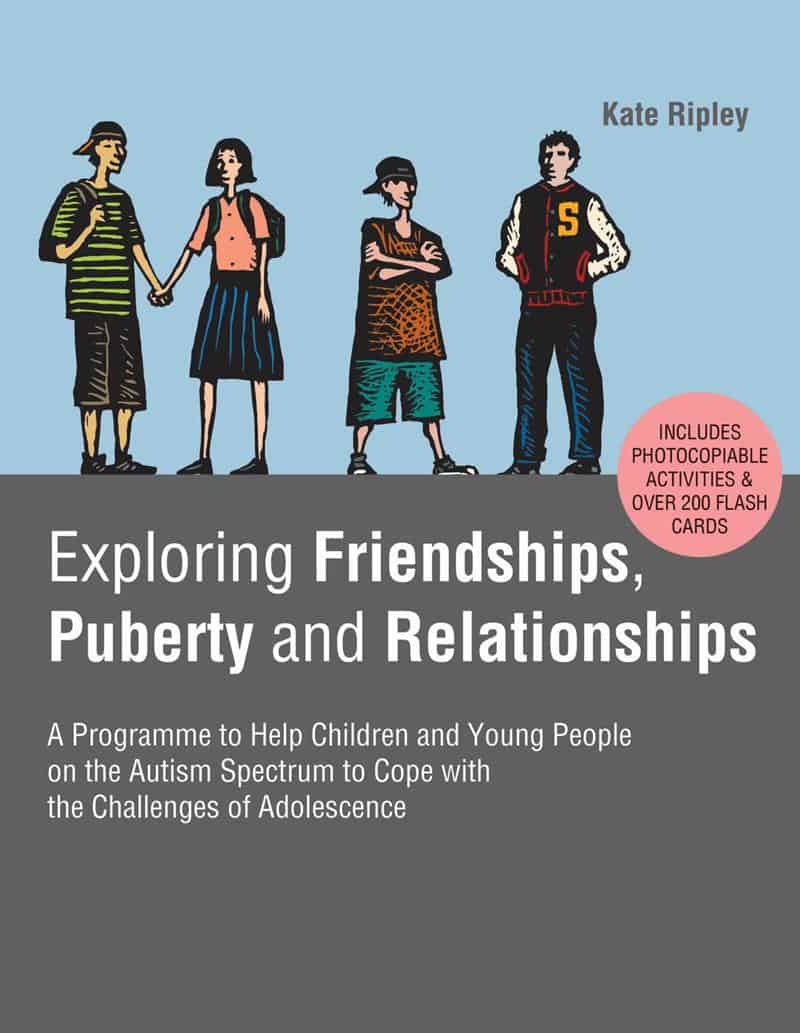
Has anyone ever told you to calm down? How did you respond?Have you ever sent a child to a "break area / time out" and it escalated the behaviour?Do you know children who have difficulty regulating emotions? Do you know kids who struggle with friendships because of emotional reactions? Are you struggling with kids who don't respond to your behaviour plans?"How to be a Super Hero Called Self- Control" is such a wonderful book it really engages children in being a detective for emotions and give fantastic strategies - "super powers" to regulate emotions. For example; Frustration needs super powers of ' take a deep breath', 'make a mantra' or 'use your words'Anxiety needs super powers of "just give yourself a hug' or 'make a worry box'See below for more information"The Kids Guide to Staying Awesome and in Control" helps children create a menu to use for self- regulation. I highly recommend students create a menu to use when sent to "take a break/ time out" areas. See below for more...

Fine Motor Challenges – Quick Solutions
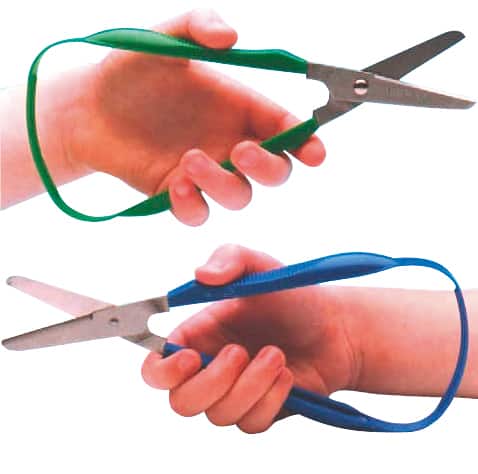
Role of Writing and Fine Motor Skills "The process of writing requires much more than the ability to form pretty letters. The writing process involves skills in language, organization, motor control and planning, and sensory processing: four areas that are problematic for many individuals with ASD. It is essential that parents and teachers consider how each of these areas may be affecting a student’s aversion to the writing process." Great Post from my Facebook.read more Print this Blog in One Page >> Tip Sheet - FineMotorChallengesWriting: Why Use Pencil Grips? Children need to hold a pencil in a way that provides both stability and mobility. Speed, legibility, and endurance of handwriting are influenced by the way a child holds their pencil. Pencil grips help the child maintain a position of stability to allow for efficient mobility and improved handwriting. Pencil Grips: Our pencil grips are available in three types and are for both left and right handers. The Crossover...
You Can’t STOP Behaviour! Just Replace It
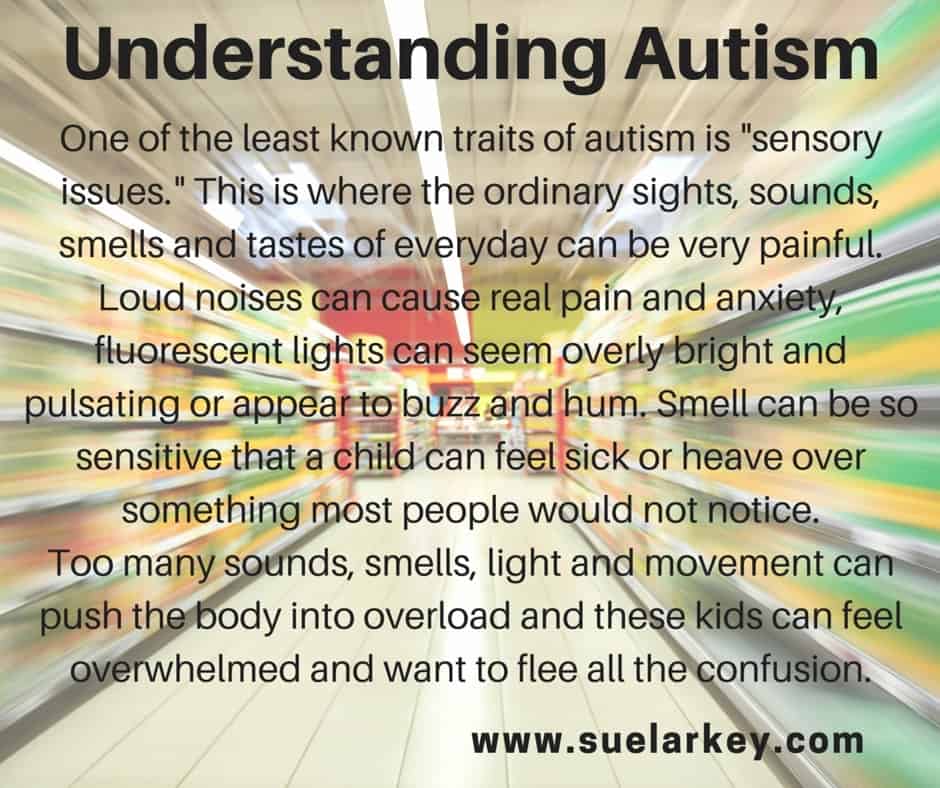
Understanding Sensory NeedsDr Temple Grandin talks a great deal about her sensory needs, how sensory has been one of her biggest challenges in life, and how a huge amount of her behaviour could have been stopped by some simple clothing changes (e.g. pants not dresses). By recognising and understanding a child’s sensory needs we can put in place different strategies to help alleviate their discomfort and improve their behaviour.Many people try to stop behaviour in children with ASD. But we now know there is a hierarchy – they always replace one behaviour with another. If you take away fidget toys, or things they have in their hands they will replace it with body behaviour. For example, if you stop them chewing their collar they may chew their hand, fingernails, etc. Therefore, rather than trying to stop the behaviour just find appropriate replacements and manage the behaviour instead. This is why the use of sensory tools is so important as a replacement for many behaviours observed...
Sue Larkey’s Complete Newsletter Term 2 – 2016
A Different Way of Learning and Engaging People with Autism Spectrum Disorder (ASD) experience the world differently.In this Newsletter I have explored and explained a range of different ways to support their learning, engaging, behaviour and more.Many children with ASD, ADHD, developmental delays, etc. need a range of adaptions and educational supports to engage them successfully in educational settings. My doctorate research found two of the biggest challenges educators had were having time and resources.In this Newsletter I hope you find some timesavers and information to engage the children you know. In this Newsletter I have included:Reading and Hyperlexia – Plus 9 Handy Hints.A Meltdown is not a Tantrum – 17 Common Causes of Meltdowns.10 Ways Girls with ASD Differ From Boys.11 Key Questions to Ask when you see a Behaviour.Understanding Sensory Needs and What to Do To Support.The Importance of Play and How to Support Play.Puberty – Preparing for Success at Home and...

How to Make the Biggest Difference – part 2
Autism Awareness Day Sat April 2nd (or anytime in April is Autism Awareness Month)Your opportunity to make Big Difference in 2016Great Books to Read to Children, Students, Family & Community during AprilAcceptance is the key to making a difference. When people understand that a child with ASD learns differently and needs different supports I see the BIGGEST difference for the child, family and school.There are three parts to understanding the ASD diagnosis:When to Tell a ChildWhat to Tell a ChildWho and How to Tell (Talking to Class, Peers)Part 1: When to Tell the ChildDr Tony Attwood recommends you tell the child around seven years of age or when they start noticing difference.“Diagnosis for my son opened a whole lot of self-acceptance for him. He realised that although he always felt different, that there was a group of people who are the same as him. We viewed diagnosis as a tool to help us and others best help our son. School has been very supportive, and family have had...
Number 1 Thing Can Do to Make a Difference in 2016 – part 1
Saturday April 2nd is Autism Awareness and a wonderful opportunity to raise understanding of ASD.As it is on a Saturday, I would love you to start planning now what you can do Friday April 1st in your school, preschool.That is 2 weeks away at the time I post this Blog Hope these 9 Key Tips to Promote Understanding in the Classroom might give you some ideas9 Key Strategies to Promote Understanding in the Classroom1. You must first have permission from parents to discuss the child’s ASD in the classroom.Conduct the ‘My Life in a Box’ activity. This is a fantastic activity for the whole school. ‘My Life in a Box’ is where for News each child brings in a box with objects that tell us about themselves e.g. favourite book, places they have been on holidays, favourite food, favourite colour, sport, pets, etc. If the child has ASD or has a sibling with ASD they can include a book about ASD to read to the class. It is VERY important they talk about all the other interests they have...
