PDA and Supporting the Drive for Autonomy
with Expert Guests Laura Kerby & Eliza Flicker
Pathological Demand Avoidance in the Classroom
Strategies for Teaching PDA Students
Key takeaways from this podcast for educators and parents/ carers of a child with PDA:
✅ Put every interaction through an autonomy lens. Treat the child like a respected colleague rather than someone who must comply (the preschool twins had their best ever day when they got to be the head teachers for the day).
✅ After a child has been in crisis, step back and give time and space rather than crowding around. Allow at least 45 minutes to an hour for adrenaline levels to begin to drop before expecting a return to tasks.
✅ Guard your own reactions. A single roll of the eyes, a huff, or visible disappointment can undo a lot of the relationship building you have done, so respond calmly when a child cannot follow through.
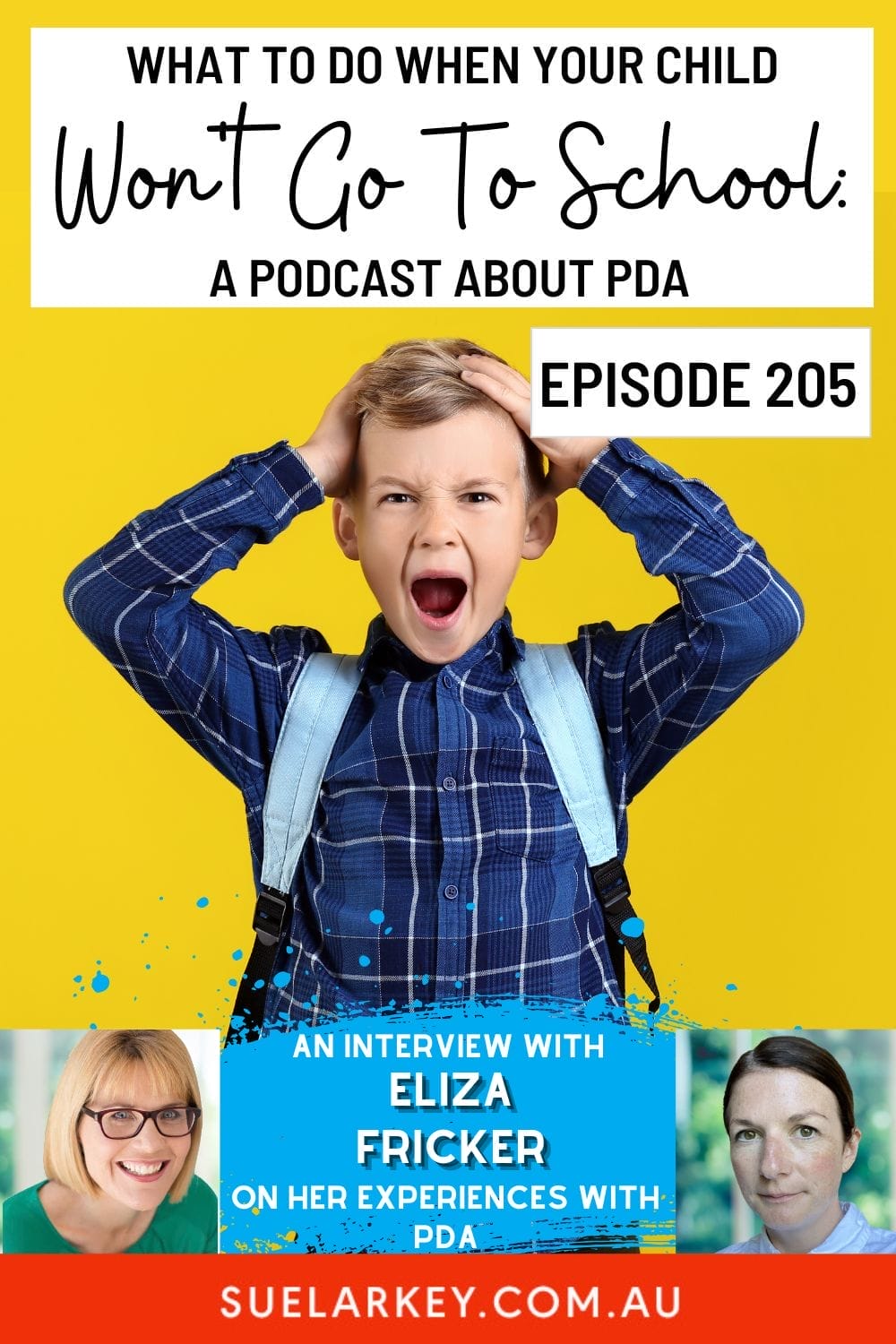
Pathological Demand Avoidance (PDA) in the Classroom: Understanding and Teacher Strategies for Educators
✅ Make sure every child has at least one safe person and at least one safe place in the building. For a neurodivergent child especially, support tends to fail from the beginning without this.
✅ Before giving an instruction, ask yourself two questions: does it really matter, and who is this actually for, the child or me?
✅ Treat finishing as a demand. If a child wants to abandon a project, accept it calmly without guilt-tripping (avoid lines like, we have done so much, it would be a shame not to finish).
✅ Let children reclaim a little autonomy through small acts, for example leaving a chair slightly out or one piece of a puzzle unplaced, and resist the urge to correct it.
✅ Expect demand tolerance to fluctuate from day to day and term to term. Keep assessing and adjusting rather than assuming steady upward progress (it is a fluctuating tolerance, not a straight line).
✅ Rethink praise and rewards. Direct praise such as well done or good job, sticker charts, and rising expectations can all land as demands for a child with a PDA profile.
✅ Do not expect the same demand tolerance when a trusted adult is away. A child may work brilliantly with a familiar staff member and struggle when a supply or cover teacher steps in.
ENROL NOW!
ON SALE – SAVE $70

Understanding and Connecting with Pathological Demand Avoidance Learners
During Laura Kerbey’s time teaching autistic children, she had a sudden realisation that those with Pathological Demand Avoidance (PDA) are children like no other!
None of her tried and tested autism strategies would work to help them focus or learn and most of her time was spent wondering, what am I doing wrong?
If you feel the same, this short, Laura’s Book is your go to guide to teach you everything you need to know from one educator to another.
With an introduction to what PDA is followed by PDA tailored advice on how to connect with your student and create an autonomous, spontaneous environment that is personalised for you both, this guide is here to ensure that you and your PDA student thrive!
Illustrated by the popular Eliza Fricker and packed with entertaining anecdotes (including one about Jabba the Hut’s poo), this go-to-guide contains everything you need to start implementing PDA friendly learning to help you connect with your student and help them make the most of their learning experience.

RECOMMENDED COURSES AND RESOURSES
Understanding Autism Spectrum Disorder: Knowledge to Improve Student Learning, Participation and Outcomes

Behaviour Strategies for Teacher Assistants to Support Neurodiverse Students
RECOMMENDED PODCASTS

EPISODE 191:
Top Tips for Preparing Neurodiverse Students for Camps & Excursions (ASD, ADHD, ODD, PDA)

EPISODE 251:
Student Wellbeing Part 1: Playground Plans to Create Connection for Neurodiverse Students (ASD, ADHD, ODD, PDA)

EPISODE 206:
The Red Beast & Its Exciting and Inclusive Update
Great Resources to Understand and Support children with PDA
No Results Found
The page you requested could not be found. Try refining your search, or use the navigation above to locate the post.
SUE LARKEY BOOKS









 Sorry we no longer ship items outside Australia. Please consider the digital versions of Sue’s Books –