Why Choice Making is so hard for Neurodiverse Children and What To Do
(AS, ADHD, PDA, odd, AuDHD)
Choice Making Neurodiversity Classroom Strategies
Discussed in this Episode:
✅ Limit choices to two options only. Instead of a full shelf of puzzles, offer two specific puzzles (e.g., ‘the Dora puzzle or the number puzzle’). The same applies in secondary — instead of an open research topic, offer two pre-selected poems or topics.
✅ Model making the ‘wrong’ choice out loud. Say aloud ‘I’ve read two pages of this book and I don’t like it — I’m going to put it back.’ This demonstrates that changing your mind is acceptable and teaches children the process of self-correction.
✅ Use a grazing plate approach for food exploration. Place new foods alongside a known safe food without any pressure to eat. Let children sniff, touch, and explore at their own pace, as done with Victoria who expanded from dry noodles to 20 different foods within one school year.
✅ Use parallel play to introduce new activities. Sit beside a child doing a new activity without requiring them to join. Let them watch. One boy named David only ever chose the same blocks until his teacher sat with him and modelled other activities through quiet parallel engagement.
✅ Introduce the Tomorrow Box. Allow children to place tasks they can’t face today into a ‘tomorrow box,’ giving them a sense of control. The key is consistency — children almost always return to complete the task the next day.
✅ Give ODD students control over order, not content. One ODD student was not given a choice of what work to do, but was given a ‘now, next, later’ board and allowed to choose the order in which he completed set tasks. He grumbled — but he completed them.
✅ Make choices visually concrete. Display the two choices as real objects or photos, not just verbal instructions. Visual supports help ADHD children with working memory issues — they can look back to recall what the choices were rather than having to hold them in their heads.
✅ Use indirect language with PDA learners. Swap commands for collaborative questions: instead of ‘You need to start your maths now,’ try ‘Would you like to work with me here or find a quiet space in the library?’ or ‘How many questions do you think you can do?’
✅ Give ADHD students a deadline for research. One secondary student named Chloe told her teacher she needed a cut-off date to stop researching. Set a specific date and time to stop. Add a visual timer alongside the Now/Next/Later board to manage time blindness.
✅ Let ODD children help peers instead of completing tasks independently. Offer ‘Do you want to help Noah or Elijah today?’ — they choose who to assist, and through helping they still participate in the learning. This sidesteps the adult-authority power struggle.
Learn more about MAKING CHOICES!
WHAT BOOK WILL YOU CHOOSE?
$10 OFF
The Essential Guide to Secondary School

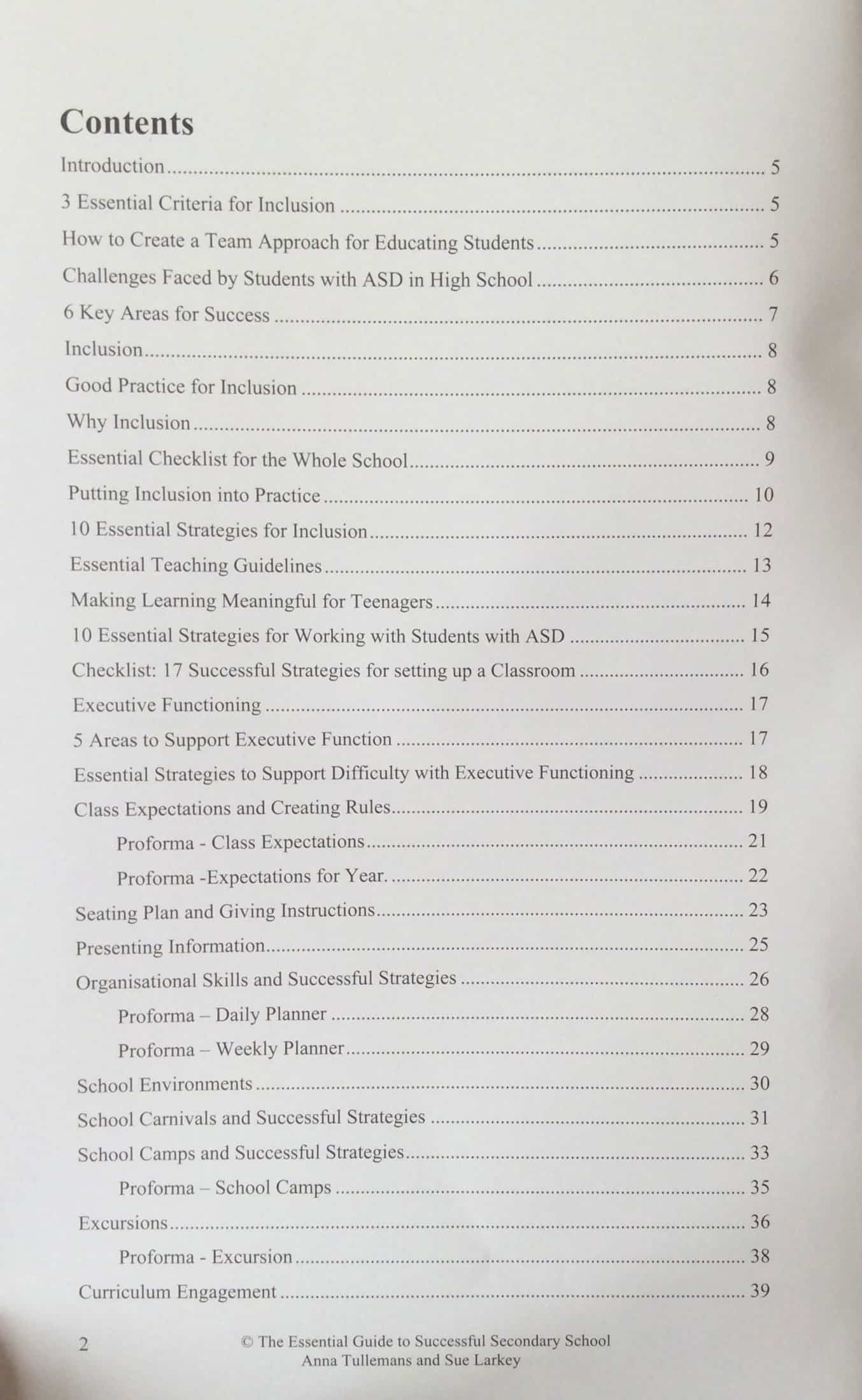
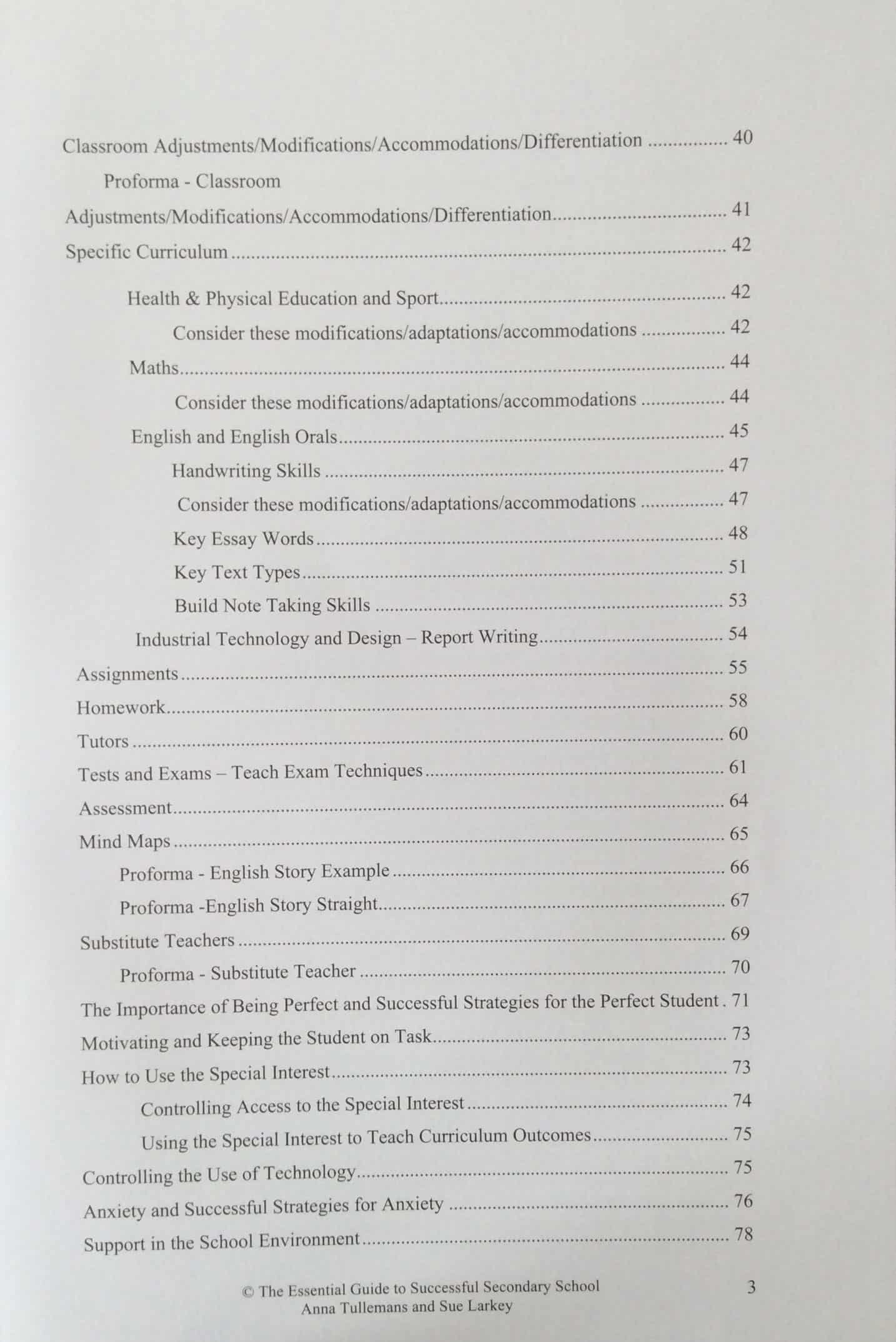

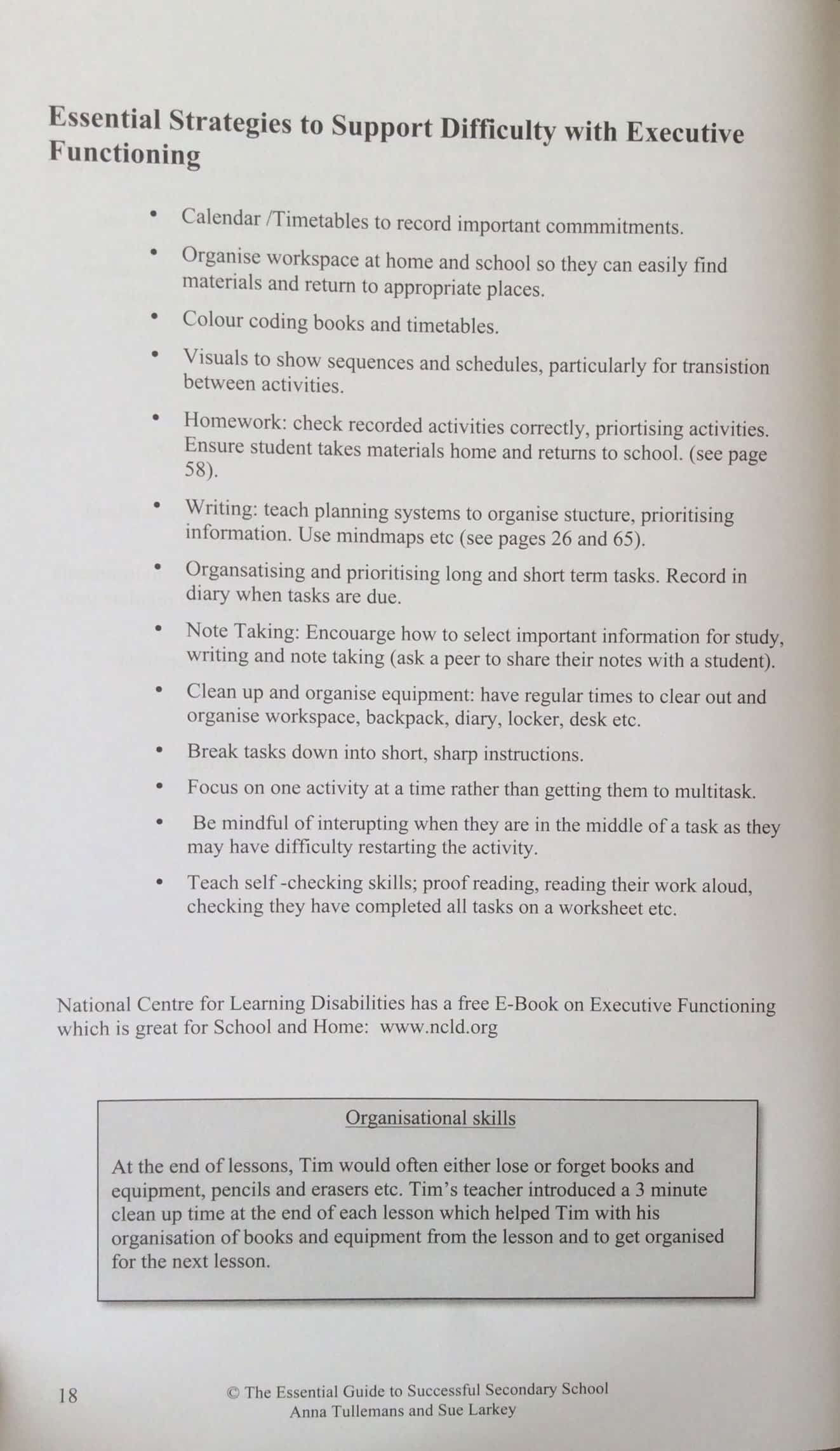


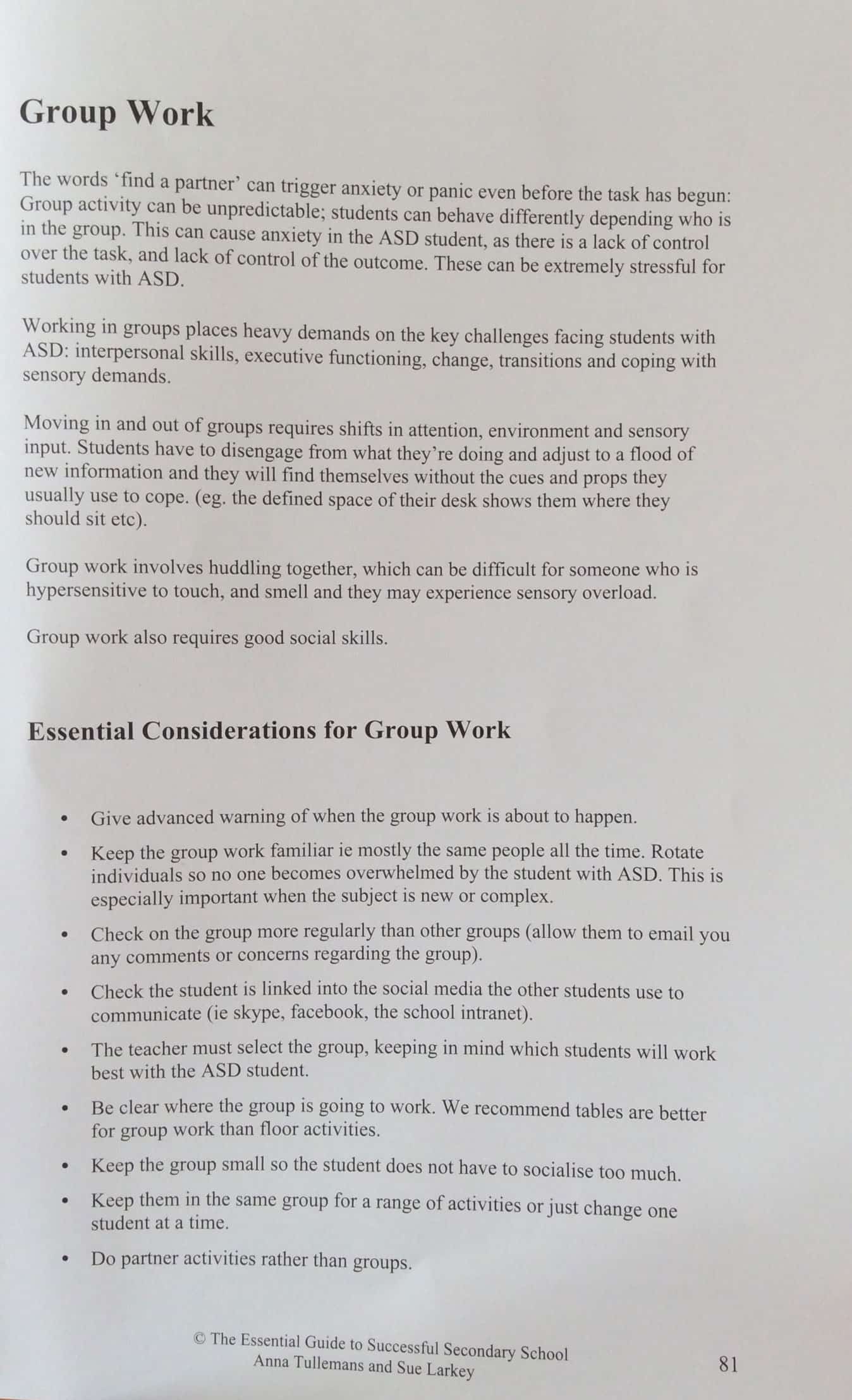
| by Sue Larkey & Anna Tullemans | Revised and expanded in 2016. A practical guide to secondary school. Ideas for
all staff, from curriculum engagement, accommodations, group work, homework, using technology, behaviour support, organisational skills to building independence. Includes proformas to photocopy and save you time. This book has over 100 pages of proven ideas and strategies. MASSIVE TIME SAVER for busy Teachers & Parents

$44.95
46 in stock
The Ultimate Guide to School and Home
Pages 46 & 47 referred to in this weeks podcast

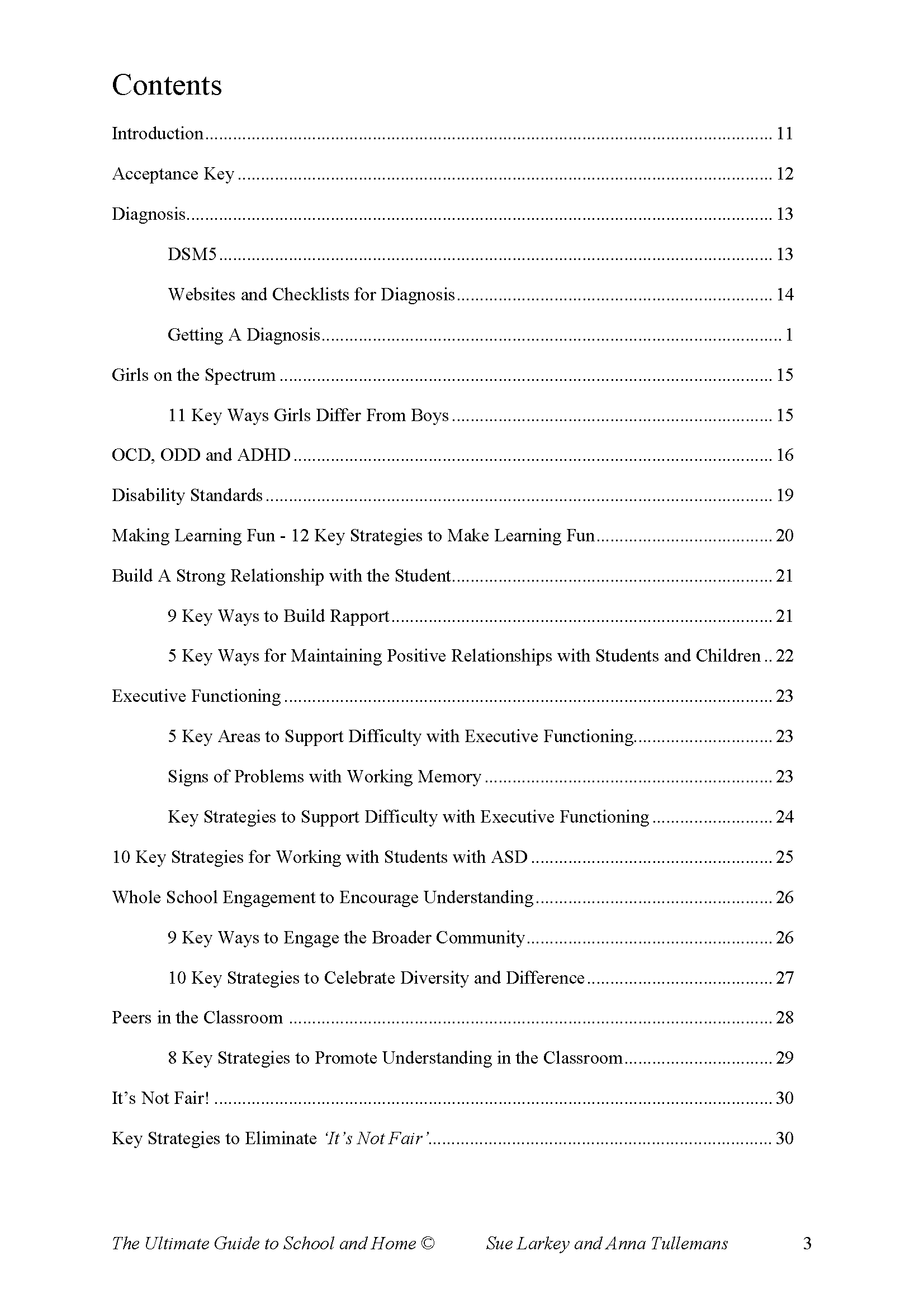
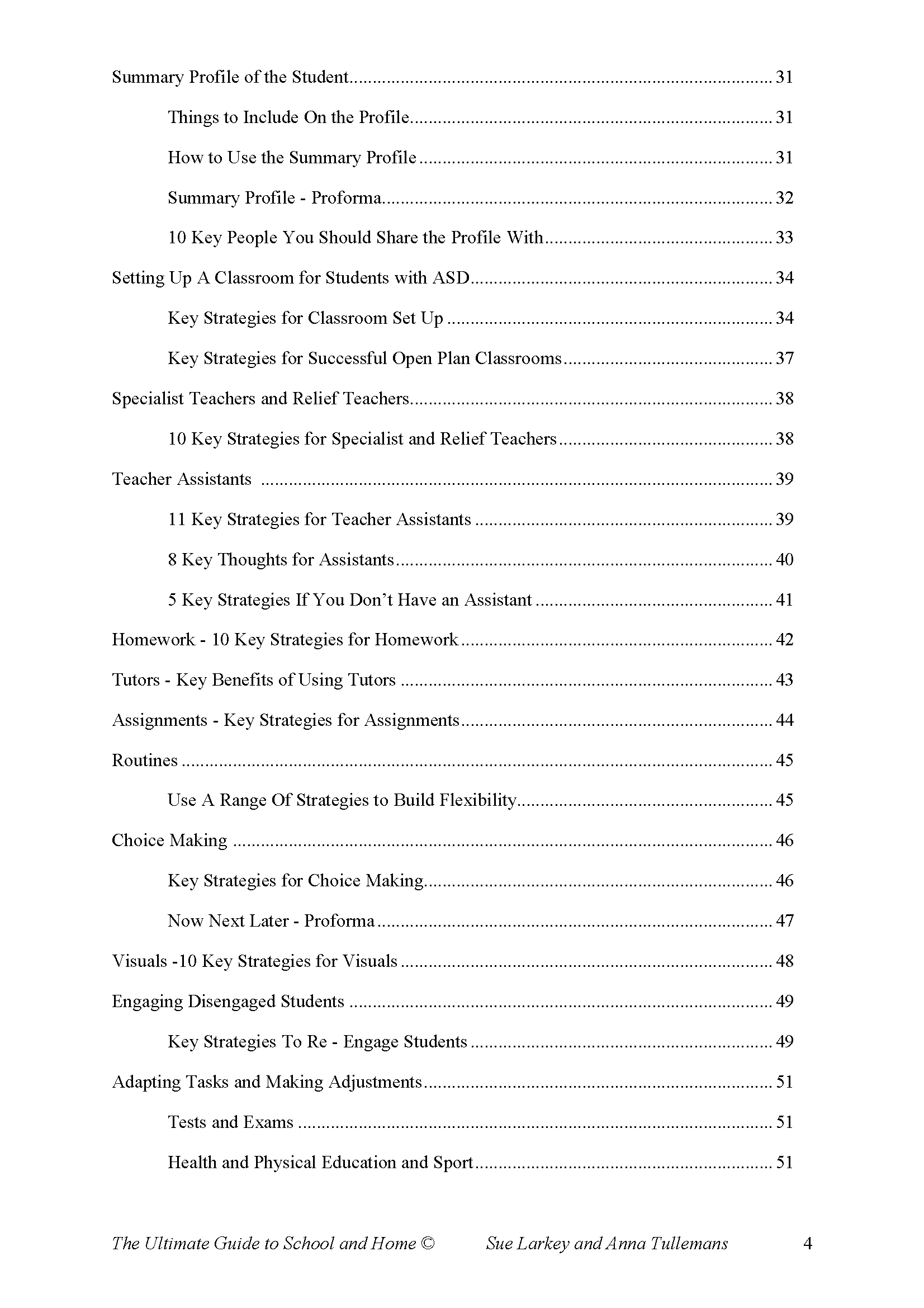
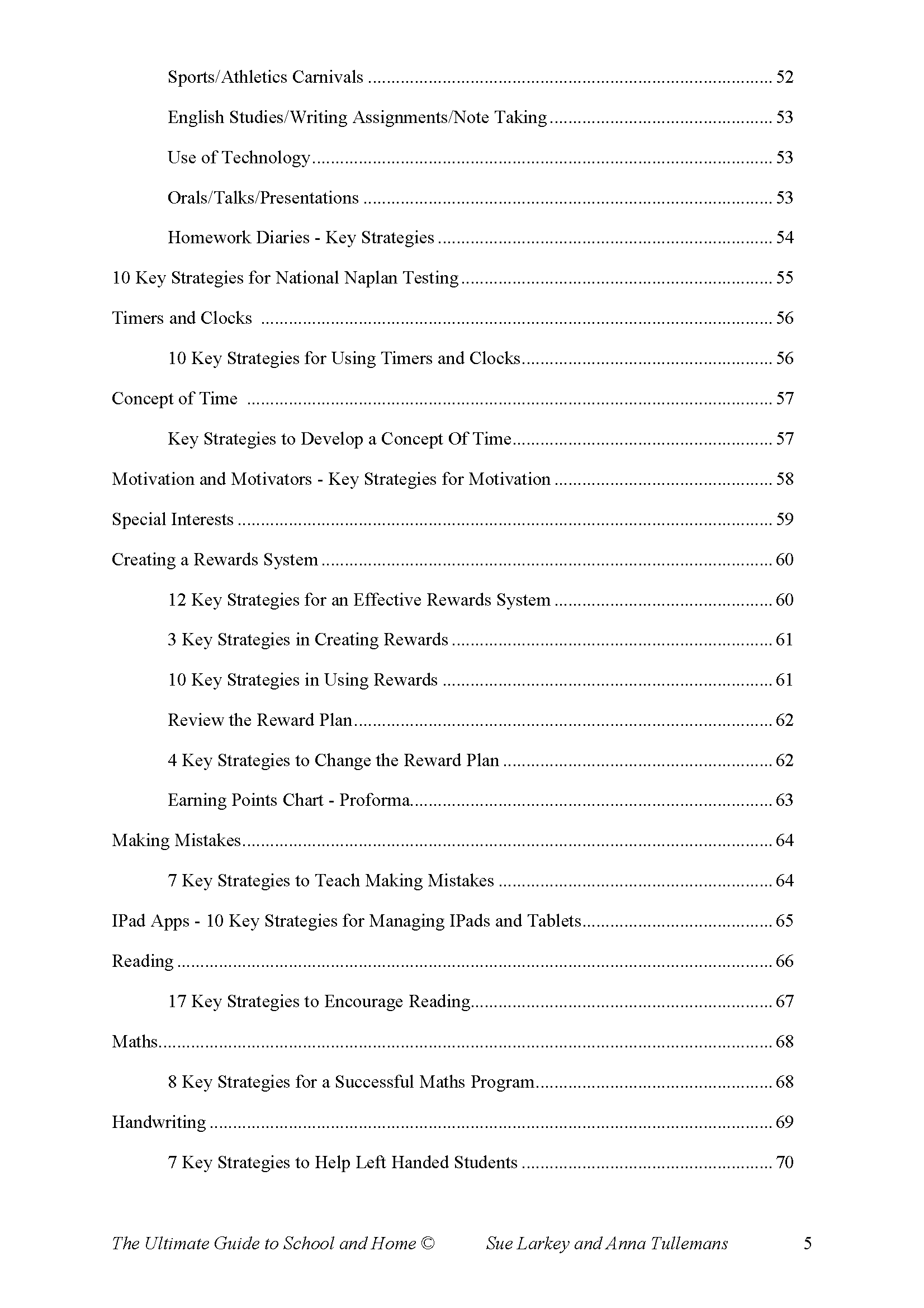
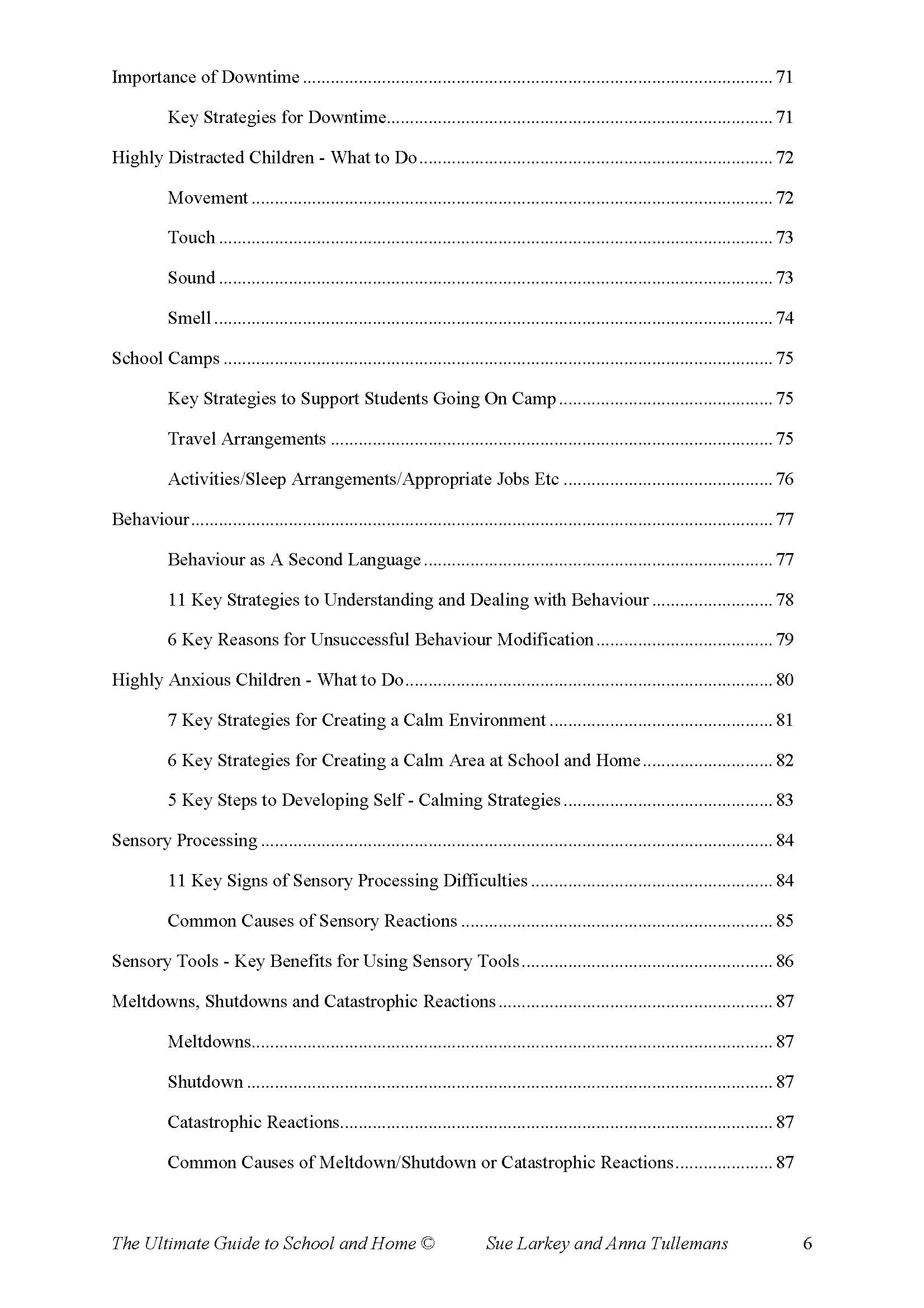
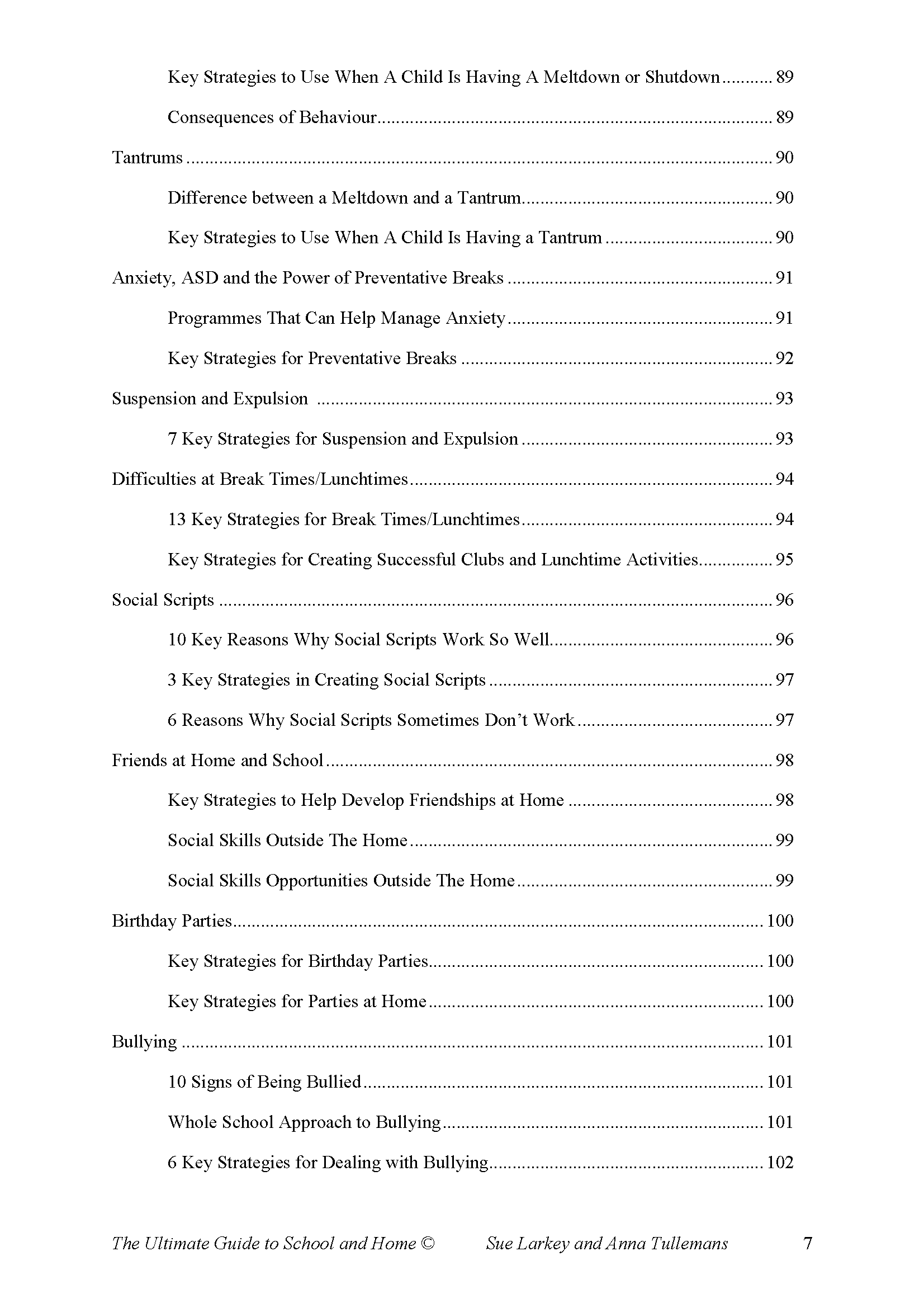
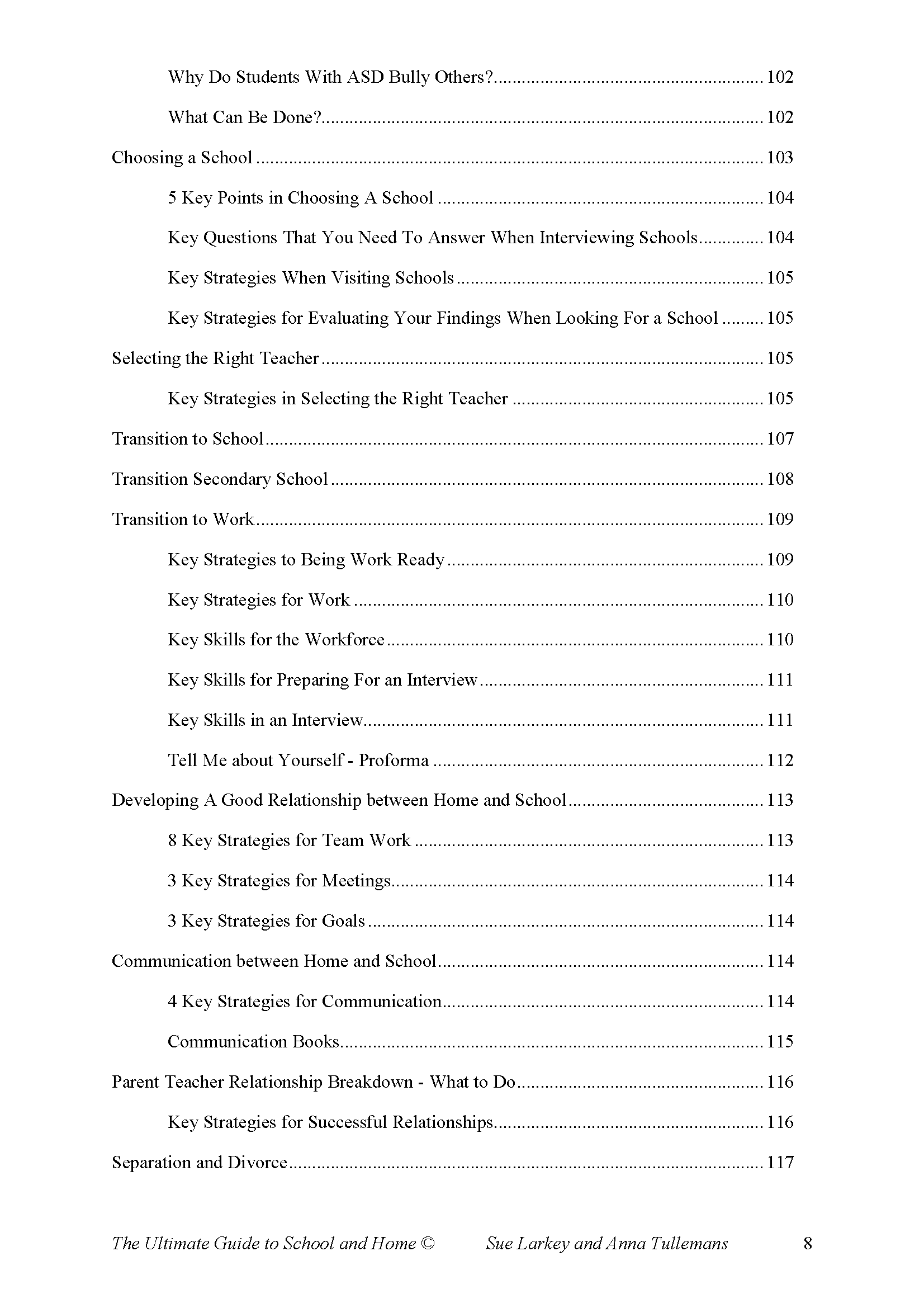
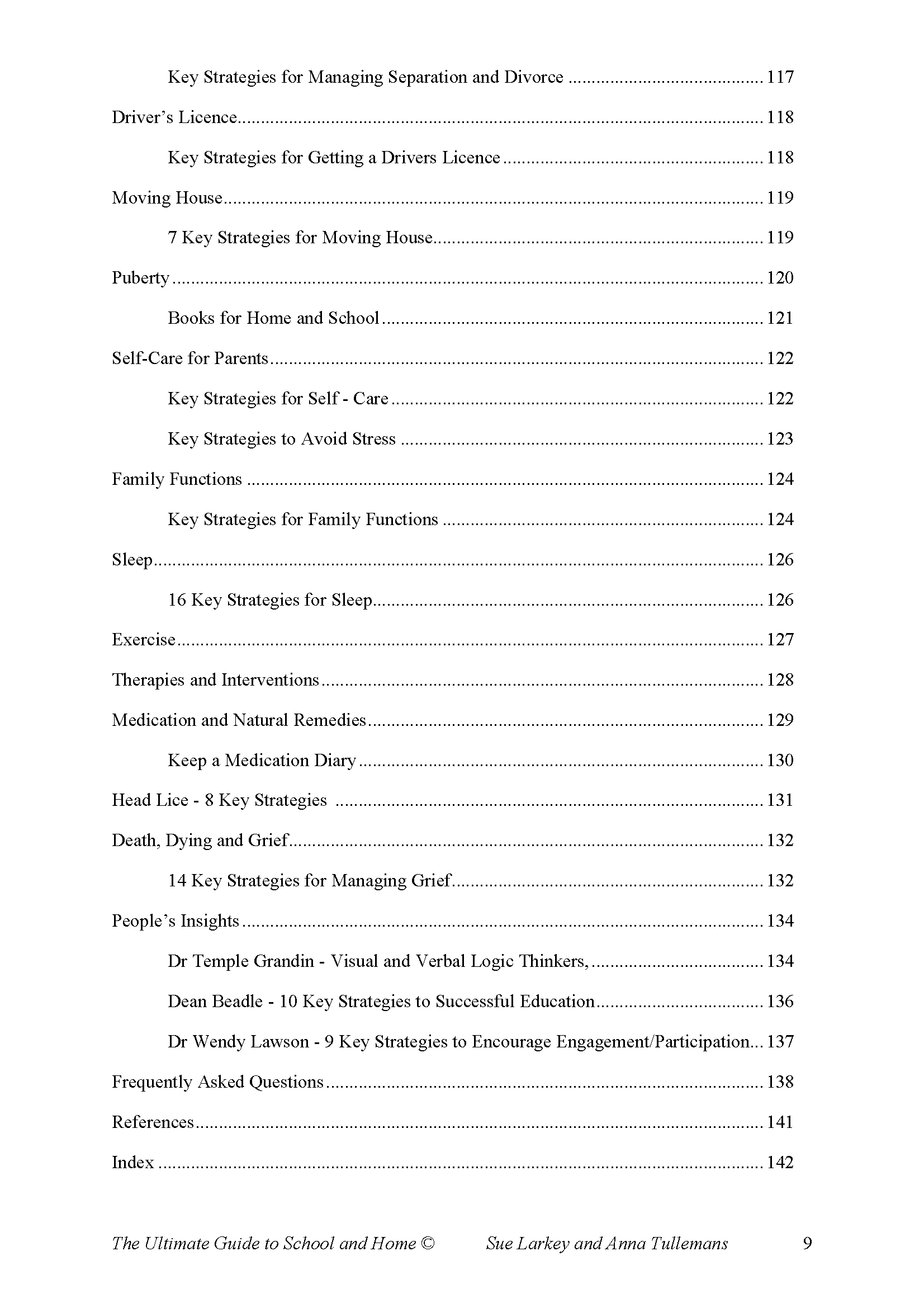
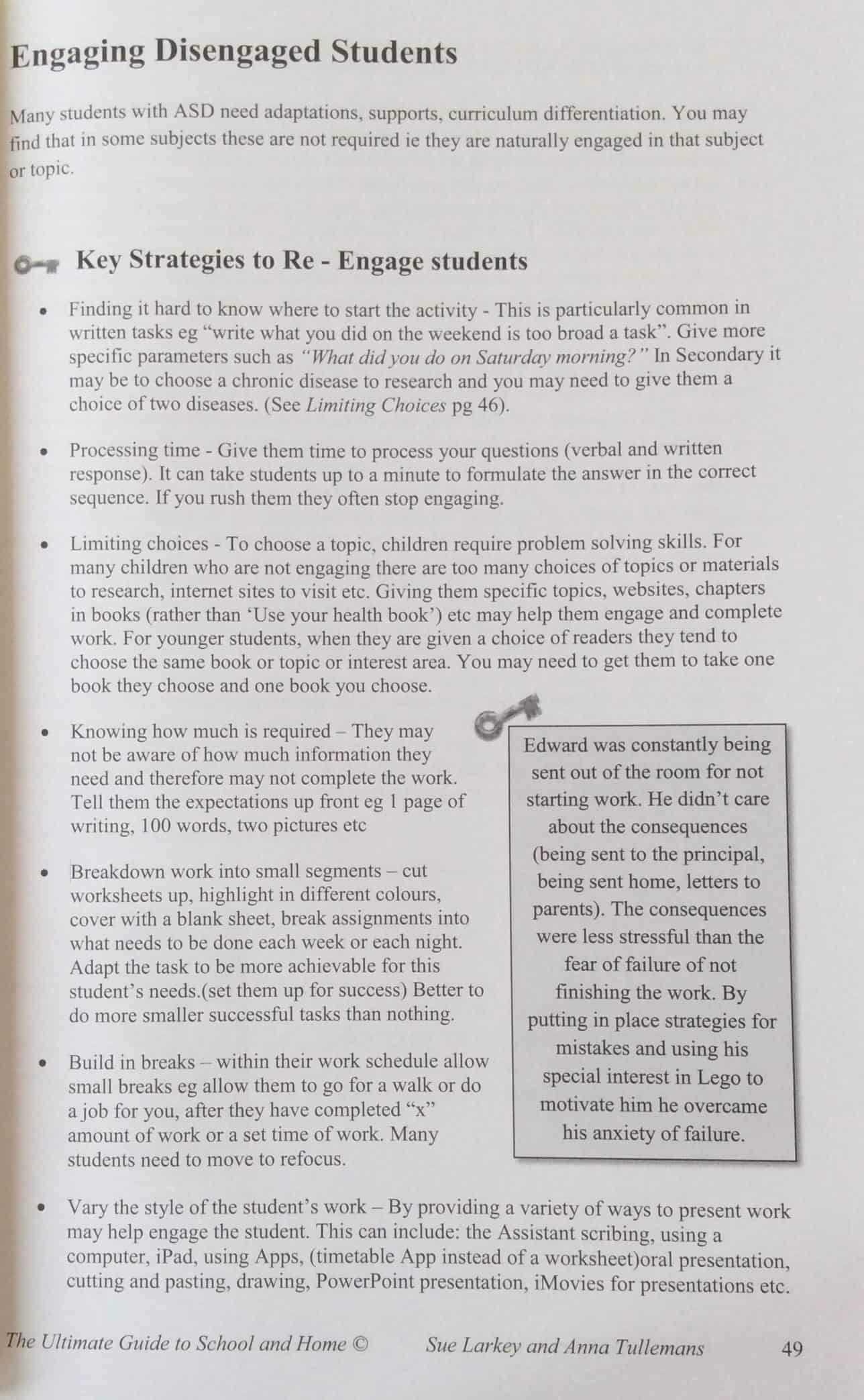
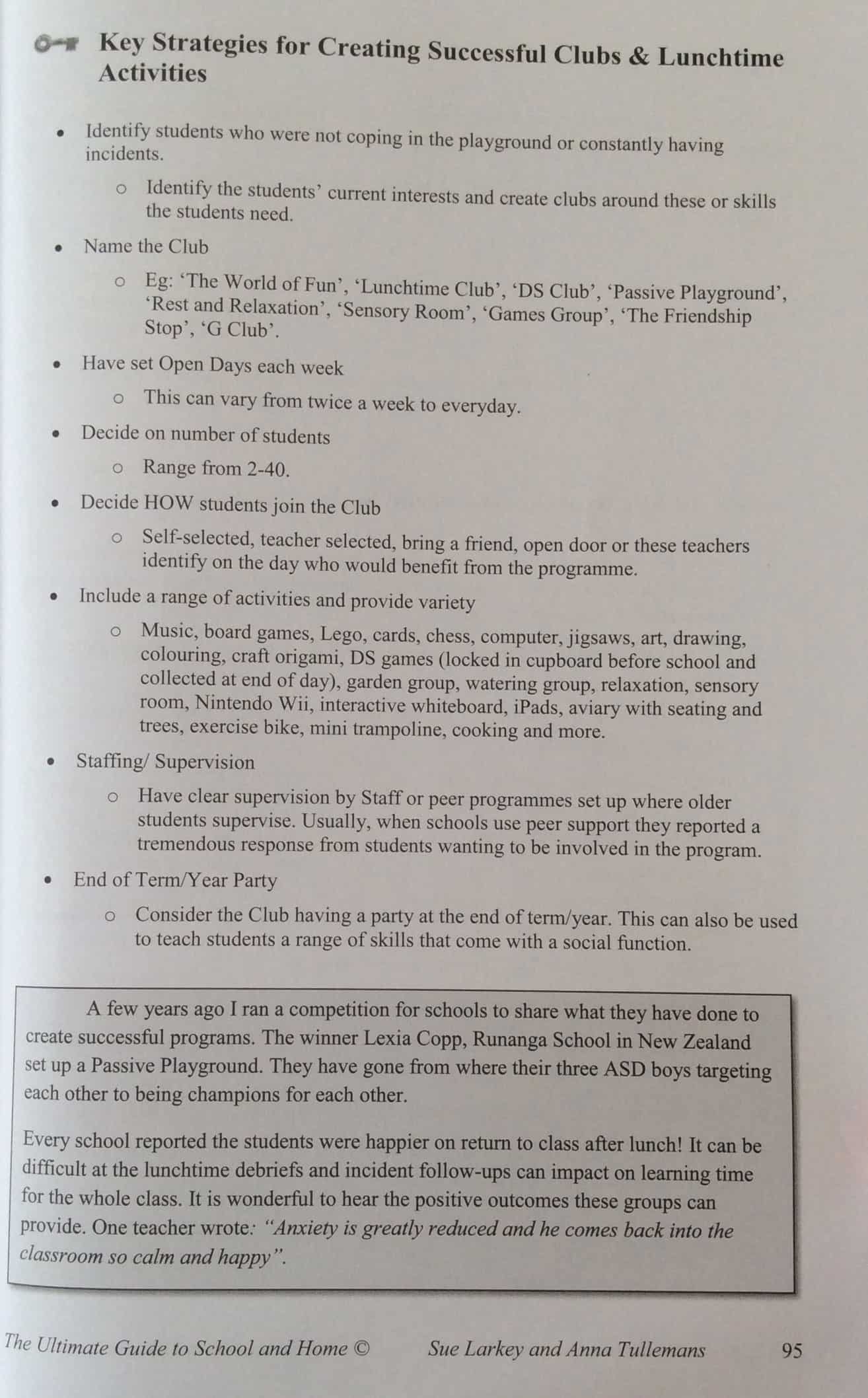
| by Sue Larkey and Anna Tullemans | This book provides key strategies for all ages and stages. It offers over 500 practical strategies and timer savers for school and home from engaging disengaged students, what to do if you don’t have a teacher assistant to considerations for setting up a classroom for teachers; and from developing friends, to moving house and choosing a school for families. It is the ultimate guide for teachers, parents and all professionals supporting children with autism spectrum disorder, including Aspergers, ADD, ADHD, ODD and other developmental delays.
Content pages below.
$44.95
36 in stock
lAURA kERBY’S bOOK
Pages 55-58 referred to in the weeks podcast

$45.95
7 in stock
The Educator’s Experience of Pathological Demand Avoidance An Illustrated Guide to Pathological Demand Avoidance and Learning
I realised EVERYTHING I was doing was wrong. I needed to learn. I needed to change. During Laura Kerbey’s time teaching autistic children, she had a sudden realisation that those with Pathological Demand Avoidance (PDA) are children like no other! None of her tried and tested autism strategies would work to help them focus or learn and most of her time was spent wondering, what am I doing wrong? If you feel the same, this short, easy-to-read guide is here to teach you everything you need to know from one educator to another. With an introduction to what PDA is followed by PDA tailored advice on how to connect with your student and create an autonomous, spontaneous environment that is personalised for you both, this guide is here to ensure that you and your PDA student thrive! Illustrated by the popular Eliza Fricker and packed with entertaining anecdotes (including one about Jabba the Hut’s poo), this go-to-guide contains everything you need to start implementing PDA friendly learning to help you connect with your student and help them make the most of their learning experience.
Which Tip Sheet will you use?
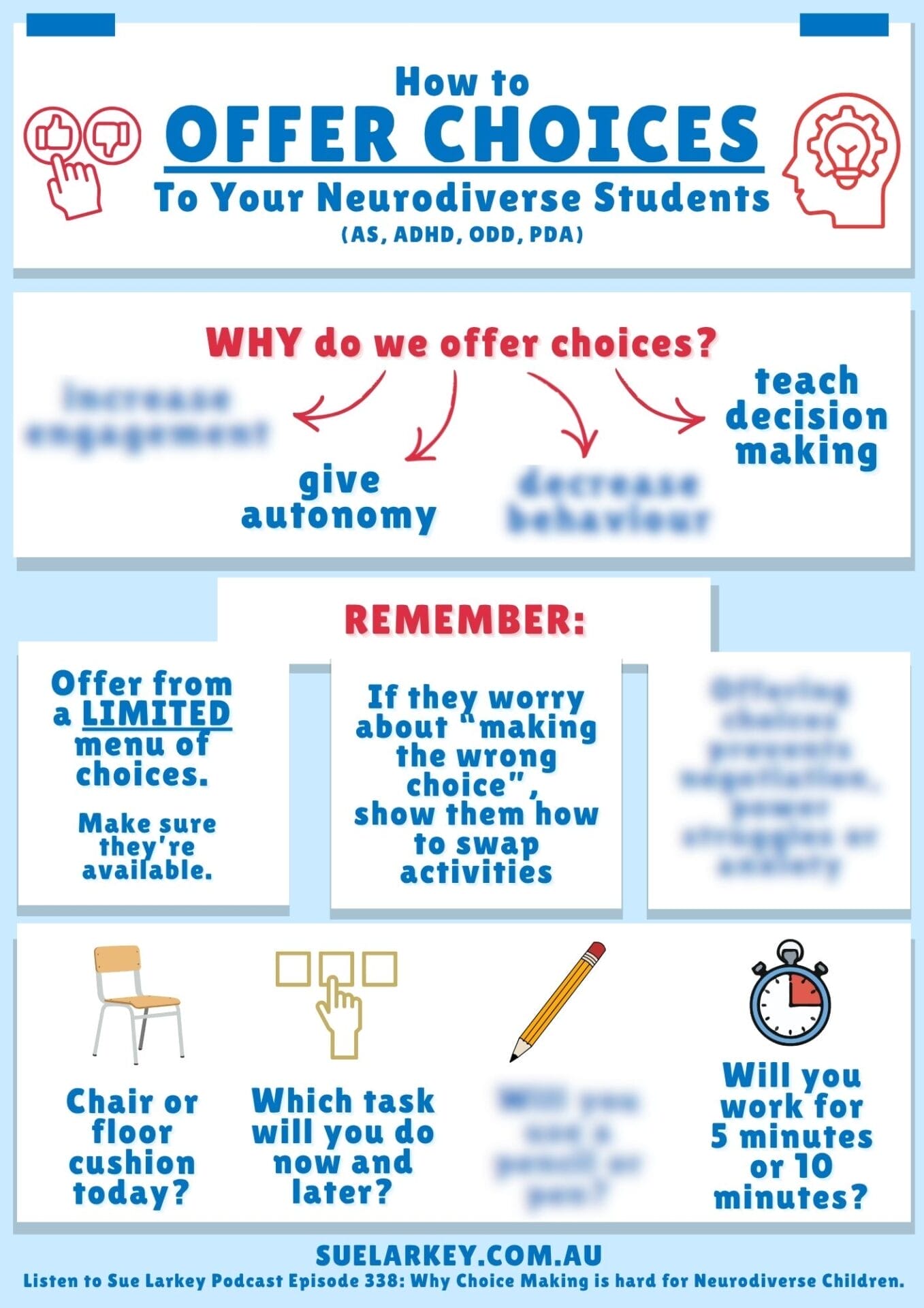

WHICH course WILL YOU CHOOSE?
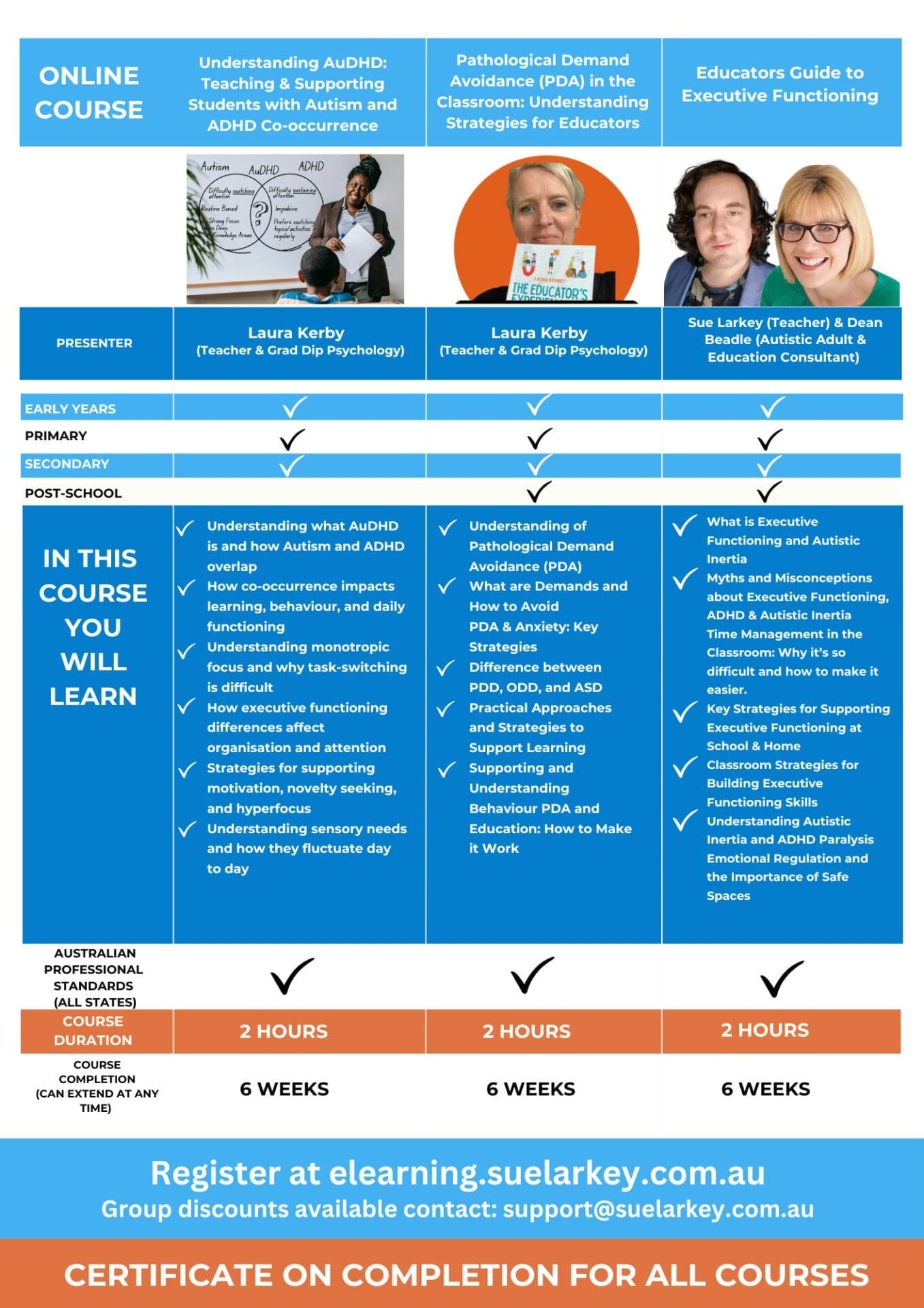

Pathological Demand Avoidance (PDA) in the Classroom: Understanding and Teaching Strategies for Educators

Executive Functioning Training
Educators Guide to Executive Functioning – Why it impacts Learning and Behaviour & What to do
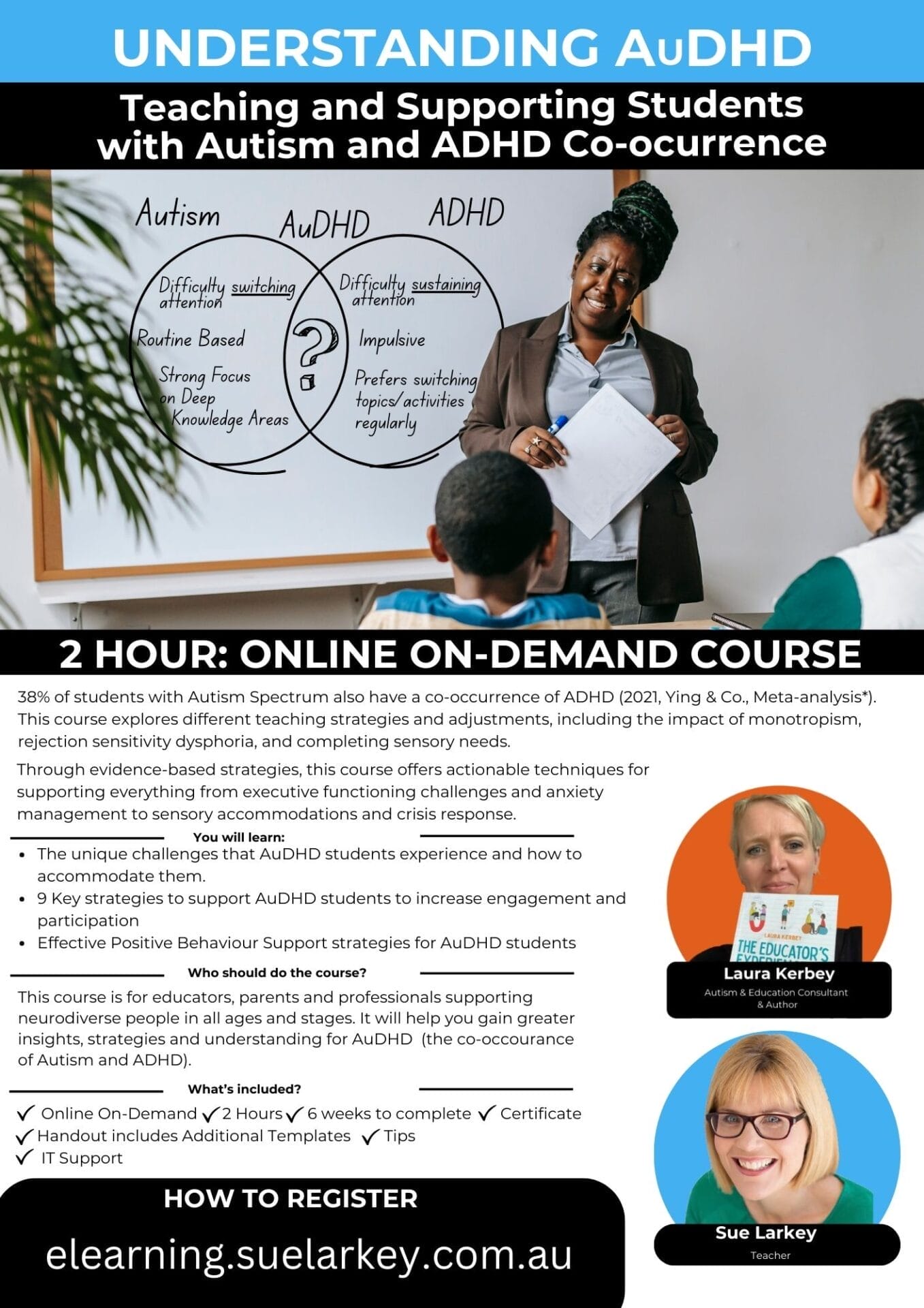
Understanding AuDHD:
Teaching and Supporting Students with Autism and ADHD Co-ocurrences

RECOMMENDED PODCASTS

EPISODE 256:
Fostering Self-Advocacy: Dean Beadle on Autistic Identity in Education

EPISODE 275:
Executive Functioning Skills for Neurodiverse Students:
“Beyond just try harder” with guest Dean Beadle

EPISODE 136:
Finding Autistic Joy & More – An Interview with Dean Beadle
RECOMMENDED PRODUCTS
-

Making it a Success
$47.95 -

Practical Sensory Programmes
$71.95 -
Practical Communication Programmes
$44.95 -
Teacher Assistants Big Red Book of Ideas
$39.95 -

The Essential Guide to Secondary School
$44.95 -
The Early Years: The Foundations For All Learning
$39.95 -

Tips for Toileting
$29.95 -

Photo Cook Book 1
$44.95 -

Time Timer – 20cm Medium
$65.00 -

Time Timer – 7.6cm Small
$50.00 -
Developing Social Skills
$39.95 -

Teacher Assistants Big Blue Book of Ideas
$39.95



$24.95
Portable Schedule with Digital Timer | Links visual schedules with a time frame. Great for routines, concept of time, pre-warns how long until finish, self monitoring and more! Choose from the colours below.

Listen to the Podcast on how I use a Keychain & Wait visual as a tool for listening and waiting. Check out a range of great keychains in the sensory tools on my website
More Ideas in my Books:
| by Sue Larkey | This is the ideal reference for schools to successfully integrate students into the classroom. It provides easy to follow, proven strategies and worksheets to use immediately. Dr. Tony Attwood writes in the foreword: “Sue has a remarkable ability to identify and briefly explain the difficulties experienced by a child with autism in a regular classroom and to suggest realistic and practical strategies to improve abilities and behaviour. Her advice is succinct and wise.”
8 in stock
| by Sue Larkey & Anna Tullemans | Revised and expanded in 2016. A practical guide to secondary school. Ideas for
all staff, from curriculum engagement, accommodations, group work, homework, using technology, behaviour support, organisational skills to building independence. Includes proformas to photocopy and save you time. This book has over 100 pages of proven ideas and strategies. MASSIVE TIME SAVER for busy Teachers & Parents
46 in stock
UNDERSTANDING AuDHD: Teaching & Supporting Students with Autism and ADHD Co-occurrence
✅ 2 Hours, 8 Lessons
✅ 6 Weeks to Complete
✅ Certificate of Completion
✅ Lesson Transcripts
 2 Hours
 Certificate
$149




 Sorry we no longer ship items outside Australia. Please consider the digital versions of Sue’s Books –
