Sue Larkey Blog
Helping you “Make a Difference”


Tips, Strategies, Time Savers and Inspiration to help make difference for a child with an ASD in your class, home or community.

Please join my Facebook Community as you also read the insights, ideas and support of many amazing teachers, parents and professionals. Click this Facebook Icon Facebook Icon(or google “Sue Larkey Teacher”)
Please comment on any Blog via my Facebook page.
Complete Sue Larkey Term 3 2018 Newsletter
Making it a Success in 2018 What you will learn Strategies to help teens and adults Exam strategies Creating successful social scripts Improving executive function What is theory of mind Teaching eye gaze
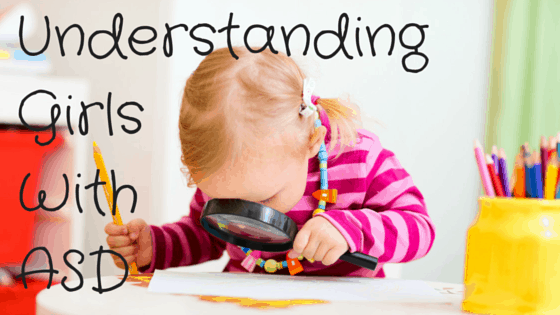
Girls with ASD
Girls with ASD are often undiagnosed as the criteria was created by examining mainly boys, and the problem is that girls can be very different. I think we all know ‘neuro-typical’ boys and girls are very different in their social, communication and behaviour so it is no surprise that girls and boys with ASD are different too. Although are many characteristics that are very similar between boys and girls with ASD but I thought I would list the main differences. 9 Ways Girls with ASD differ to Boys with ASD Their special interests are usually animals, music, art, literature. They often have a very good imagination which includes imaginary friends, games, being animals or taking on persona of other girls. They often see speech therapists for their speech and may be diagnosed with specific language disorders, however, there is something different about this girl no one can quite put their finger on. They often play with older children or children that are much younger. This play is...
Behaviour – Why Do Children Do THAT?
Behaviour – Why Do Children Do THAT? Solutions and Strategies for Common Classroom Behaviours Behaviour REASON WHY THEY MIGHT DO THIS SUGGESTED STRATEGIES Chewing on shirt, hat string or objects Chewing is calming for these students so it is important you provide opportunities to chew. Chewy tubes, Chewigem necklace, Pencil toppers. Oral Motor Programme. Water bottle with straw – they will need a few straws as tend to chew through. Hiding or running away This is a ‘flight response,’ usually due to confusion, lack of ability to problem solve of emotional build ups. Give a Preventative Break (go for a walk, bounce on a fit ball). Teach problem solving skills (important do this when calm). Recommend reading From Anxiety to Meltdown Difficulty accepting criticism This can be due to anxiety around making mistakes. Often part of Executive Functioning difficulties. Give a Preventative Break (go for a walk, bounce on a fit ball). Teach problem solving skills (important do this when calm)....

Lunchtime Clubs and Passive Playgrounds
Many schools have introduced lunchtime Clubs and had great success. Playgrounds are unstructured, unpredictable places where children with ASD struggle to follow and join in the numerous social interactions surrounding them. Children with ASD frequently return to class from the playground in a high state of anxiety. In addition, their self-esteem frequently takes a battering. In our book Developing Social Skills, co-author Gay von Ess and I have lots of practical ideas and strategies to support social skills. Top Tips for Creating Successful Lunchtime Clubs Use students’ current interests and create clubs around these, or skills the students need. Consider setting up for students who are not coping in the playground or constantly having incidents. Name the Club: 'The World of Fun,' ‘Lunchtime Club,' 'Rest and Relaxation' or 'Games Group.' Have set open days each week. This can be from 1-5 days. Decide on number of students who can attend. Decide HOW students join the...
Making Friends and Being One
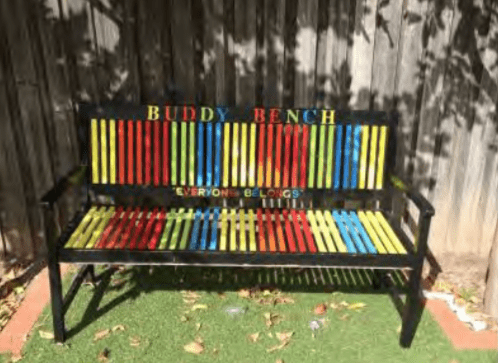
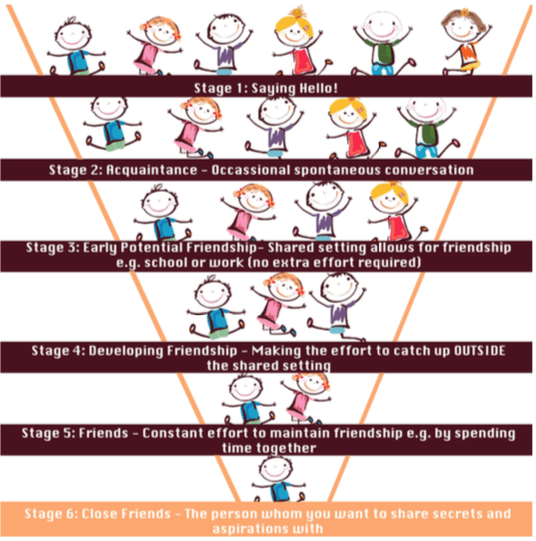
One of the biggest myths about ASD is they all like being on their own. Children with ASD often desperately want friends, and in fact worrying about friends can cause them anxiety. Many children show this stress by becoming more withdrawn, which of course makes the situation worse. For students with ASD a little extra support may be required to create friendships. For instance, when teachers allow children to select their own partners, children with ASD often are left out. Instead staff should consider who will be a good partner/ friend to the child and be pro-active in pairing them. Good examples of opportunities for schools to support friendships are in seating arrangements, partner activities and group work. Parents, I would encourage you to support the school by organising some out of school activities such as having children over for a play, meeting in the park after school or Joining in after school activities which friends attend. This will allow some one on one time to...
Why Making Mistakes is Frustrating
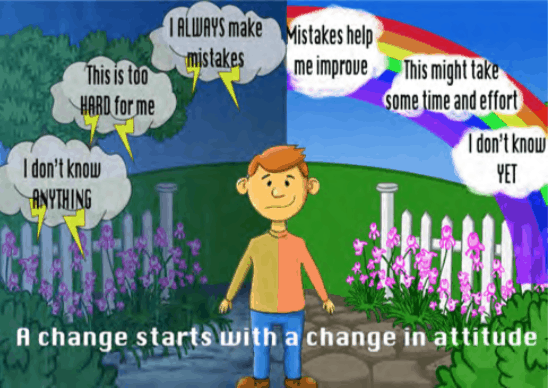
A key part of increasing participation and engagement is getting students to “have a go” BUT........have you ever noticed that making mistakes is particularly frustrating for students with ASD? This is because students with ASD often have 'cognitive inflexibility,' in other words they have a 'one track mind' and their thinking tends to be rigid. Essentially, students can't see an alternative option or opinion, or get frustrated when corrected as they believe they are right. Therefore this cognitive inflexibility is a barrier to learning as students are prevented from learning from their mistakes. Hence, it is no surprise when I talk with parents and teachers I often hear the following phrases, "He doesn't like making mistakes," or "If he gets it wrong, he stops work." This highlights that we need to encourage these children to 'have a go.' Strategies to encourage 'having a go': Break activities into small achievable steps. Use Social Stories to support understanding...
Top Tips for Transition to Work
Employable Me ABC TV Show "Follow people with neuro-diverse conditions such as autism, OCD and Tourette syndrome as they search for meaningful employment. This uplifting and insightful series draws on science to uncover people's hidden skills." Dear my younger #ActuallyAutistic self, I'm writing from 2018. 20 years on from when you went for your autism diagnosis. You always knew you were different, but now you'll know for sure. It will take a while to fully understand. Join my list below to read more... School to Work Transitions for Young People with Autism Spectrum Disorder It is very important we start preparing students for post school options. A great starting point is getting teenagers involved in volunteer work. The school holidays are a great time to volunteer, checkout the volunteer websites as they have many options available. Jeanette Purkis has written a fantastic book The Wonderful World of Work and has kindly written a tip sheet for this Newsletter. 1....

Complete Sue Larkey Term 2 2018 Newsletter
Making it a Success in 2018 What you will learn Understanding Dysgraphia & Handwriting Difficulties 9 Ways Girls with ASD differ from Boys with ASD Creating Goals for The Early Years. Why Making Mistakes is Frustrating & Strategies to Have a Go Making Friends and Being One Top Tips for Lunchtime Clubs & Passive Playrgounds 12 Top Tips for School to Work Transitions Recommended Resources for Teen Years and Beyond Dean Beadles letter : 'Dear my Younger #ActuallyAutistic Self' Worksheets/Posters to Download and use at Home & School Upcoming Workshops (last...
The Amygdala and ASD
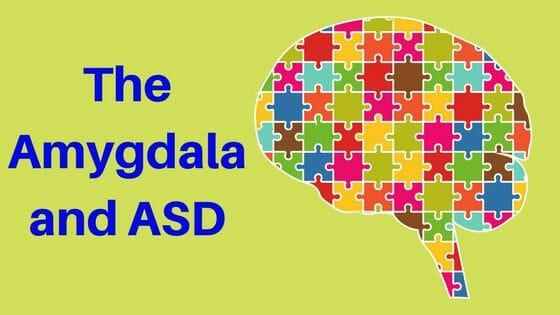
Have you heard of the ‘Amygdala’? Did you know it is thought that an enlarged amygdala could be causing anxiety, sensory processing differences and more. The amygdala is thought to be a part of the limbic system within the brain, which is responsible for emotions, survival instincts, and memory. In his workshops Dr Tony Attwood discusses the studies that have found that the amygdala is enlarged in children with autism spectrum disorder (ASD). He believes this is why we see children not being able to regulate behaviour, unusual reactions to pain and more. Amygdala – limbic structure involved in many brain functions, including emotion, learning and memory. It is part of a system that processes ‘reflexive’ emotions like fear and anxiety. What is known about the amygdala is that it has a dual sensory input system. The amygdala is specialised for reacting to stimuli and triggering a physiological response, a process that would be described as the ‘emotion’ of fear. Once an emotion has...
Building relationships in the classroom
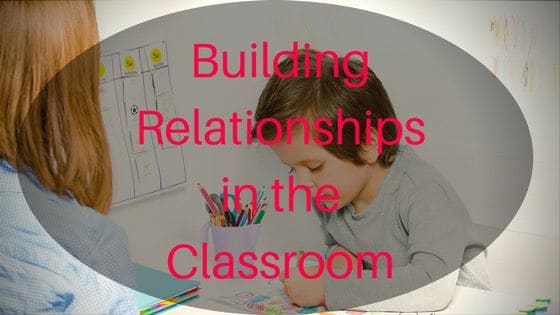
The whole team including the teacher, teacher assistants, administration staff and leadership team should work towards building a strong relationship with the student. In my experience often the student only develops a strong relationship with the teacher. This is limiting as the student needs to be able to respond to other staff in the playground, and often leadership teams are involved in behaviour management. A strong relationship with the student means that the student will be more receptive to teaching opportunities and more likely to retain more information learnt from the teacher. 4 Key Ways to Build Rapport Get to know the student and his or her interests. Develop a summary profile of the student so everyone is aware of the student’s triggers. Know the students’ name (students on the spectrum often don’t realise you are speaking to them if you don’t include their name). Give students responsibilities or jobs particularly around their special interest. Excerpt from: The...
Understanding Emotions
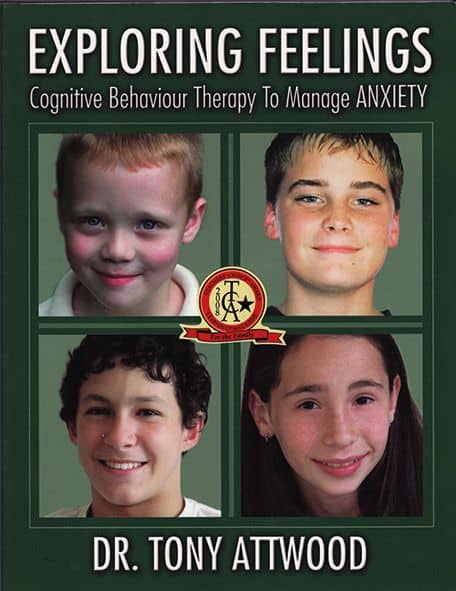
Dr Tony Attwood’s work on Cognitive Behaviour Therapy (CBT) is very important for children with autism spectrum. According to Tony people with autism spectrum disorder (ASD) need to work on feelings and emotions AT LEAST ONE HOUR EVERY WEEK from early childhood right through to adulthood. The issue is not that children with ASD DON’T have feelings or emotions – it’s that they don’t always understand their feelings or emotions, and often don’t have strategies to deal with them. Interestingly, Tony talks about how feelings of sadness or anxiety can often come out as anger. They need a way to vent their feelings and as some just don’t know how to cry – they hit out instead. Teaching them to understand how they are feeling is a very useful tool in helping them to manage their own behaviour. Feelings of frustration or anxiety can very quickly escalate into major meltdowns, but with an emotional toolbox children can learn to manage these feelings before they reach boiling...
Make Sleep and Exercise a GOAL in 2018
Research has found that both exercise and sleep can improve attention, mood, executive function, and self-regulation. “Sleep disturbance impacts cognition, it impacts mood, and it impacts behavior.” Stanford University Psychologist Ruth O’Hara Research has found that two thirds of children with ASD have sleep problems, fragmented sleep, and early awakenings. So be aware that many of our students can be fatigued by early afternoon and may benefit from easier, more repetitive learning tasks in the afternoon. On my Facebook page I recently did a Poll which 1,540 people voted. Remember different strategies work for different children, and if one strategy doesn't work, try another. 16 Key Strategies for Sleep Set up a good bedtime routine. Use timers/clocks/sensory tools. Melatonin (Medication). Teach to stay in bed even if not sleeping. Epsom Salts, Bath or Lavender. Turn off all “blue screens” (iPads, TVs etc.) at least onehour before sleep. Keep bedroom door open. Accept lack of...
