Sue Larkey Blog
Helping you “Make a Difference”


Tips, Strategies, Time Savers and Inspiration to help make difference for a child with an ASD in your class, home or community.

Please join my Facebook Community as you also read the insights, ideas and support of many amazing teachers, parents and professionals. Click this Facebook Icon Facebook Icon(or google “Sue Larkey Teacher”)
Please comment on any Blog via my Facebook page.
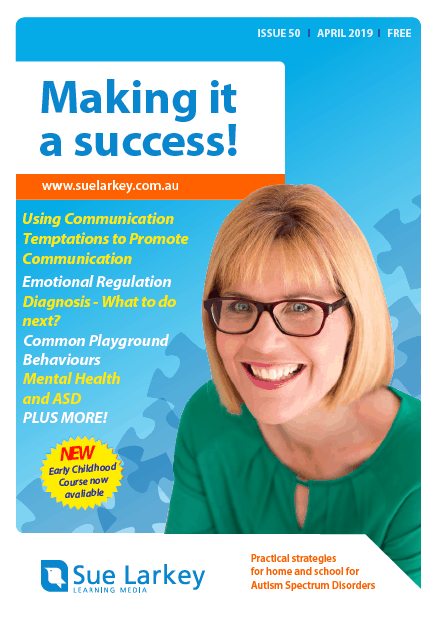
Complete Sue Larkey Term 2 2019 Newsletter
Some behind the scenes info about the making of this newsletter and some of the highlights Subscribe to this podcast via your favourite app Making it a Success in 2019 What you will learn Emotional Regulation pg 2 Ideas to help your children self regulate pg 3 Diagnosis - What to do next pg 5 My NEW Facebook Support group for Parent/Carers pg 8 NEW Online Course - Developing Early Childhood Approaches for Children with Additional Needs pg 9 Your Words Matter pg 11 Using Communication Temptations to Promote Communication pg 14 12 Ideas to Provide Opportunities to Communicate pg 15 10 Key Rules to a Successful Communication Programme pg 16 Solutions & Strategies for Common Playground Behaviour pg 18 Behaviour Solutions for the Classroom & Home pg 22 Understanding Mental Health & ASD pg 24 Understanding Sensory Needs pg 27 Recommended Sensory Tools pg 28 Recommended Resources pg 29 Online Accredited Courses - Term 2 Course starts May 13 pg 33 Upcoming Workshops pg 34...
Behaviour Solutions for the Classroom & Home
29 WAYS FOR TEACHER ASSISTANTS TO SUPPORT STUDENTs and student Wellbeing Managing meltdowns in neurodiverse students Subscribe to this podcast via your favourite app Join my newsletter for more awesome information about ASD Discussed in the episode: ✅ Understanding Meltdown Phases and recognising the stages from buildup to crisis.✅ Calming Strategies to reduce anxiety and stress.✅ Importance of Silence and emphasis on giving space for self-regulation.✅ Communication Alternatives✅ Discusses reflection and preventive strategies for meltdowns✅ Stresses the importance of knowing individual triggers.Teacher assistants, school support officers, teacher aides, etc. – you are angels in disguise and we thank you for all your hard work with our ASD students. You are usually the person that the student with ASD may develop a great mentoring relationship with, so it is important that you start off on the ‘right foot’. Managing meltdowns in neurodiverse students is a crucial part of your role,...
Why Kids with ASD are often Thirsty!
WHY YOU NEED TO KNOW ABOUT INTEROCEPTION AND THE IMPACT ON THE KIDS YOU KNOW Subscribe to this podcast via your favourite appJoin my newsletter for more awesome information about ASD Did you know why you need routine drink, toilet & snack breaks for children with ASD, ADHD & SPD? Interoception refers to the ability to perceive and understand your internal sensations and emotions. This occurs through receptors located throughout your body which communicate to your brain. When the interoceptive system is working properly, you are motivated to take action to restore your balance and help you feel more comfortable. For example, if you get thirsty - you get a drink; if you feel cold - you get a sweater; if you feel anxious - you seek comfort. Simply, interoception is your urge to act. For children with sensory processing issues, the brain can’t understand the sensory information their body if sending them meaning they are not able to identify their feelings. This often...

Autism Acceptance 2019
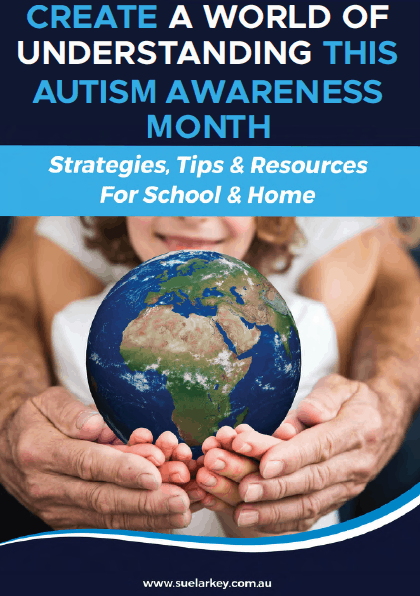
?Create a World of Understanding?to Embrace Difference April 2nd is Autism Awareness Day and a wonderful opportunity to raise understanding of ASD within the classroom & community. Even if you don't have a chance to do an activity on April 2nd, use thisMonth to Raise Autism Awareness # Acceptance: Embrace Difference to Make a Difference! In this "Create a World of Understanding Magazine" you will find ✅8 Key Ideas to Embrace Difference, great ideas & activities for your whole community ✅Range of Activities to Promote Understanding ✅Fantastic Resources for ALL ages and Stages ⭐️Use Autism Awareness as opportunity to add a few Autism Resources to your Library for ongoing Understanding & Acceptance in your community⭐️ Want Strategies and Ideas Delivered to Your...
Managing Screen Time for Students with Autism
MANAGING SCREEN TIME FOR STUDENTS WITH AUTISM Subscribe to this podcast via your favourite appJoin my newsletter for more awesome information about ASD Screens are a wonderful tool to use with students with autism, however they are becoming increasingly difficult to monitor and manage. Here are a few great examples of questions you could ask yourself to see if the student's screen time is under control? Do you have a plan to 'manage' screen time? Is it being followed? Does screen use interfere with what your family/classroom wants to do? Does screen use interfere with sleep? Does the student easily transition between screen time and non-screen time? i.e. will they get 'off' when directed If after asking these questions you are wanting to put in place some strategies to manage screen time, below are some tips to get you started.TIPS TO MANAGE SCREEN TIME EXIT PLANMany students with autism get very engrossed with their screens making it very difficult for them to transition to...

Success for Camps and Excursions
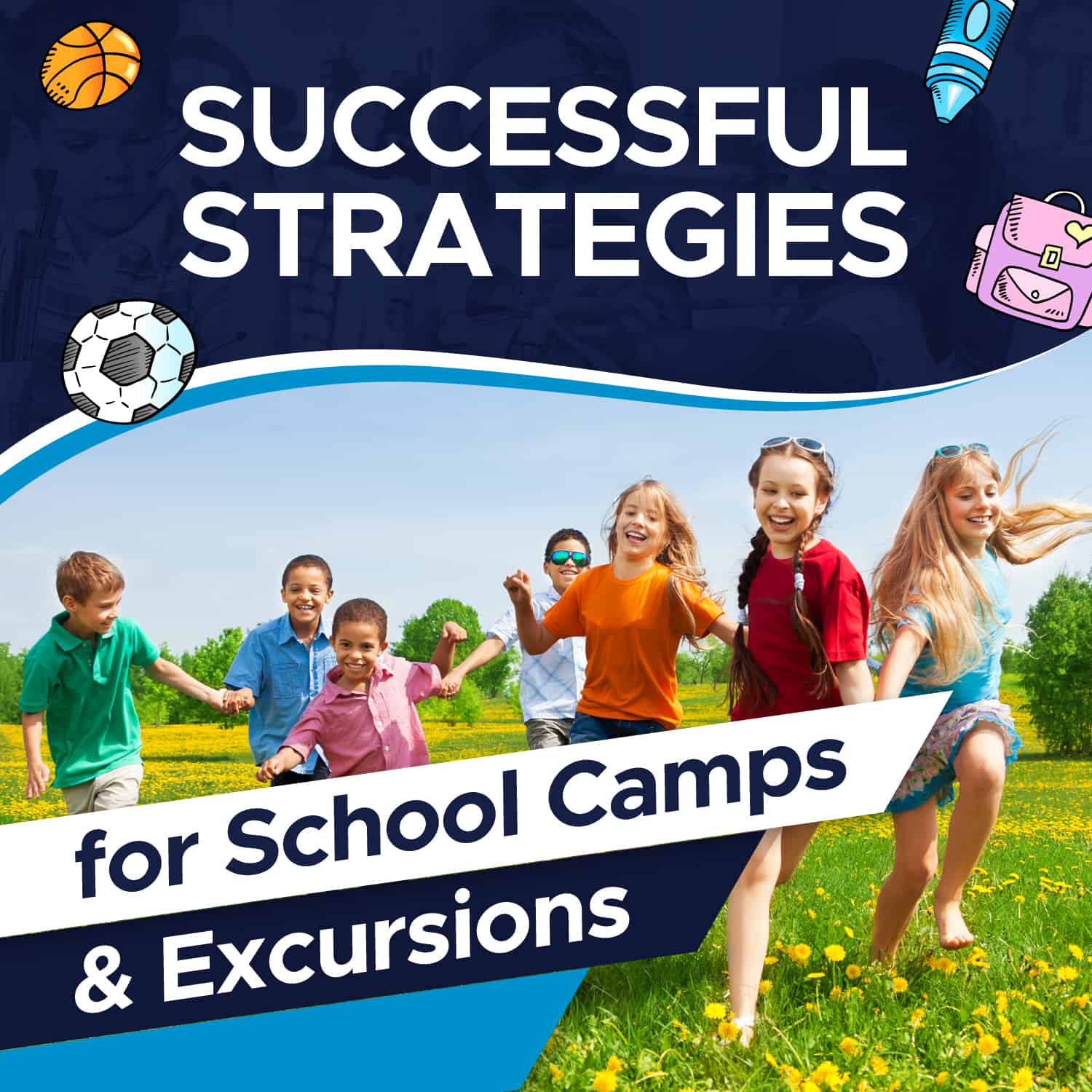
SCHOOL CAMPS AND EXCURSIONS Subscribe to this podcast via your favourite appJoin my newsletter for more awesome information about ASD Many children with ASD can find the anticipation of camp to be a source of great stress. Letting the student know as much detail as possible from the food to the different sensory feelings they might encounter, can often help to reduce anxiety and uncertainty. Talking about expectations and concerns can allow staff to tailor their support to the child's specific needs.I asked for some tips on my Facebook page and one lovely teacher gave this great piece of advice! Don't forget to follow Sue Larkey on Facebook for more great information. Give the student at least two weeks warning of the upcoming camp or excursions. Important Information: Where they are going. When they are going. How they are going to get there. Download pictures of the place with maps of the area and look at the website so they can familiarise themselves and get excited. If...
Strategies for Using Time Timers for Students with Autism
TOP TIPS FOR USING TIME TIMERS FOR STUDENTS WITH AUTISMSubscribe to this podcast via your favourite appJoin my newsletter for more awesome information about ASD For anyone who wants to measure and manage time more effectively, the Time Timer is an innovative visual timer designed to "show" the passage of time through the use of a red disk that disappears as time elapses. Unlike traditional timers that fail to make the abstract concept of time concrete, the Time Timer's visual depiction of "time remaining" provides stress-free management at school and home. Timers tell the student with autism HOW LONG and WHEN they are going to have to do an activity. Timers allow you to pre-warn the student about activities finishing or starting. They help answer many of the questions these students have: What is happening? What order? What time? What is next? How long?TIME TIMERS CAN SUPPORT STUDENTS TO: Ease stressful transitions by showing "how much longer" and "here is what 5 more minutes...
Individual Education Plans (IEPS)
INDIVIDUAL EDUCATION PLANS (IEPs) Subscribe to this podcast via your favourite app Join my newsletter for more awesome information about ASD An Individual Education Plan (IEP) (also known by other names including Individual Learning Plan or ILP) may be developed for a student with diverse learning needs or a disability. An IEP is about access and equity to education. It should consider the “reasonable adjustments” that need to be made to provide students with access to teaching, learning and the schooling experience generally. The IEP meeting is an opportunity for teachers, parents, school administrators, related services personnel, and students (when appropriate) to work together to provide an appropriate educational program. STEP 1: UPDATESTEP 2: GOALSThe most important part of any IEP is arguably the list of goals the student is aiming to achieve. This can be the hardest part for parents and teachers to craft effectively. As a general guide, IEP goals should be: SMART goals...

29 Ways for Teacher Assistants to Support Students in 2019
29 WAYS FOR TEACHER ASSISTANTS TO SUPPORT STUDENTS IN 2019 Subscribe to this podcast via your favourite app Join my newsletter for more awesome information about ASD Teacher assistants, school support officers, teacher aides etc. – you are angels in disguise and we thank you for all your hard work with our ASD students. You are usually the person that the student with ASD may develop a great mentoring relationship with, so it is important that you start off on the ‘right foot’. 10 Top Tips to Support Your Student to Stay on TaskOften, as a teacher assistant your most challenging task is to maintain your students concentration. This can be particularly difficult when working with a student with ASD. The ideas below are some strategies I found extremely useful when I had a teacher assistant in the classroom. 12 Key Strategies for Teacher Assistants 7 Considerations for Supporting Students Students with ASD are usually visual learners. You need to show them what to do rather than...
Neurodiversity: What is it & Strategies
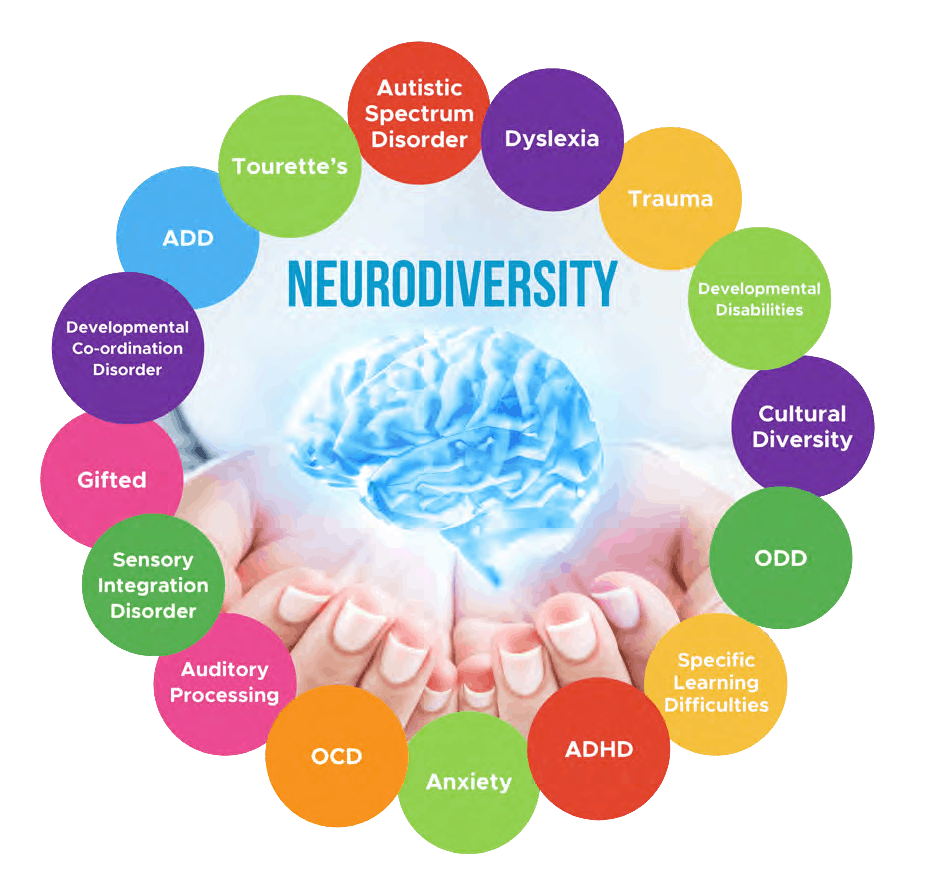
Neurodiversity is the concept that neurological differences between people should be recognised and respected. Instead of using terms like ’dys - function’ ‘dis- abilities’ & ‘dis-orders’ neurodiversity is an enabling term that takes into account neurological differences. Neurodiversity - is not one size fits all. We are all different and neurodiversity celebrates difference. Below are some of the diagnosis and environmental factors that would be considered in Neurodiversity. Subscribe to this podcast via your favourite app Join my newsletter for more awesome information about ASD I personally love the term neurodiversity, as many children I meet don’t have official “labels” yet, but their family, educators, etc. notice their different way of engaging in learning. My passion is to ensure these children get the most out of their educational settings by putting in place strategies and accommodations that support their specific learning style. One way to do this is to put...
Complete Sue Larkey Term 1 2019 Newsletter
Making it a Success in 2019 What you will learn 29 Ways for Teacher Assistants to Support Students pg 2 7 Considerations for Supporting Students pg 4 School Camps & Excursions pg 5 Individual Education Plans (IEPs) 3 Steps for Success pgs 7 -9 Managing Screen Time pg 11 Using Token Reward pg 13 Why I love the term 'Neurodiversity' pg 14 NEW Online Course - Developing Early Childhood Approaches for Children with Additional Needs pg 15 Strategies for Making Learning Fun pg 16 13 Key Strategies to Setting Up Your Classroom pg 17 18 Ways to Set Up a Classroom Top Tips for Using Time Timers pg 20 Minimising Stress Around Timers pg 23 Why you Need to Know about Interoception and the Impact on the Kids you Know pg 24 Top 10 Tips for Toilet Training pg 26 Recommended Resources pg 27 Sensory Tools pg 29 Online Accredited Courses - Term 1 Course starts Feb 25th pg 30 Upcoming Workshops pg...
Ideas to Help You Set Up Your Classroom for Success
13 KEY STRATEGIES TO SETTINGUP YOUR CLASSROOM Subscribe to this podcast via your favourite app Join my newsletter for more awesome information about ASD Strategies 1-7 1. Position in classroom (Seating, mat time, assembly, parades)- have a set position for the student which takes into account: Who they are next to Where in the room or group How close they are to teacher Distractions Whether they are too close to favourite activities like books, computers, Lego etc. Sensory distractions (noises, smells, lighting, objects hanging too close). Some students prefer to be near a door so they can leave if anxiety is building (particularly in secondary). 2. BAGS/LOCKERS/TOTE BOXES Ensure these students are at the quiet end of the row. Students often don’t like being touched, feeling crowded or the noise that happens in the busy areas. 3. Writing 60% of students with ASD have dysgraphia. Students often don’t like being touched, feeling crowded or the noise that happens in the busy areas....