Setting Up a Calm Corner:
How to Go From Overwhelm to Regulated
sensory tools emotional regulation
This Weeks Podcast was Created after a Question from Trish:
“I am currently in the middle of setting up a calm corner/area within my senior preschool room (4-5years) my kids understand that this area is to be used when they are feeling overwhelmed or just need a little break away. Would love for ideas on what I can add to this area”
Discussed in this Podcast:
✅ Ask each child, and their parents, what helps them calm. I used to ask parents, “What’s in your handbag?” and build a personal basket around the items that came up.
✅ Use figure eight or infinity breathing, drawing the shape in the air with a finger, and turn it into a race track or train track visual for children who love those themes (one boy responded to a Lightning McQueen version).
✅ Set a five minute time timer for a break, then run a check in with a breathing activity and a quick body scan before deciding whether another five minutes is needed.
✅ Offer a break token or a photo card that says “I’m taking a break,” so a child can access the space without having to speak or ask.
✅ Use a colour card system (red, orange, green) so a child can show where they are at, and have them pick the card back up from your desk when they return.
✅ Run whole class body breaks by photocopying the break pictures and displaying today’s chosen break on the whiteboard, or fold a break into a stand up and share moment.
✅ Build in preventative breaks at the start of the year, then shift toward on request breaks as routines settle and anxiety reduces.
✅ Set up a jar of activity strips, or a spinning paper plate wheel, with de-stressing activities so an overwhelmed child does not have to think about what to choose.
✅ Provide a high energy option (mini trampoline, hopscotch circuit, a fast “walk, don’t talk”) for children who regulate through movement rather than quiet.
✅ Add a small sensory transition object, with a “wait” or “finish” visual attached, to help a child move from the break area back to the classroom.
1. Everyone is different
When you create a calm area ask children what they would like to calm them.
Sue’s TOP Pick for working out different types of breaks and activities for children.
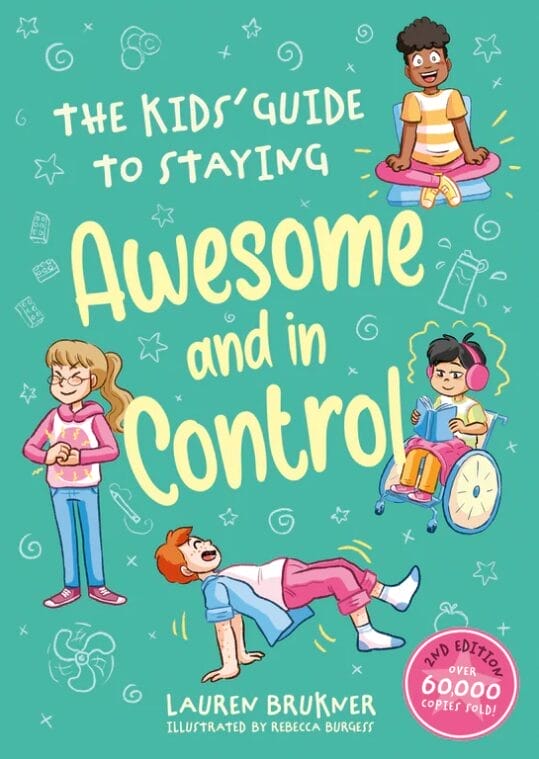
Excerpt from the Book: Strategies to Provide Support When Fast and Emotional
This Book also Includes insights for:
-
Fast and Wiggly
-
Slow and Tired
-
PLUS MANY MORE

2. Teach how to take a break and what type of break they need
The Different Options of Breaks Can Include:
1. Calm Corner
2. Toilet, Drink or Food Breaks
3. Movement Breaks
3. High energy areaS
1. Mini Trampoline
2. Circuit on Playground
3. Running
4. Hop Scotch
4. Sensory toys and tools
Great Sensory Items:
– Body sock
– Weighted blanket /pillow
– Different textured pillows
– Wooden massagers
– Squishy fidgets
This a link to my favourite sensory tools: https://suelarkey.com.au/sensory-shop/
5. The Space
This Space Can Include:
-
A teepee/tent
-
Private area, away from foot traffic
-
Dark
-
Quiet (headphones a good option)
-
Posters
-
Ergonomics
RECOMMENDED COURSES
Understanding Autism Spectrum Disorder: Knowledge to Improve Student Learning, Participation and Outcomes
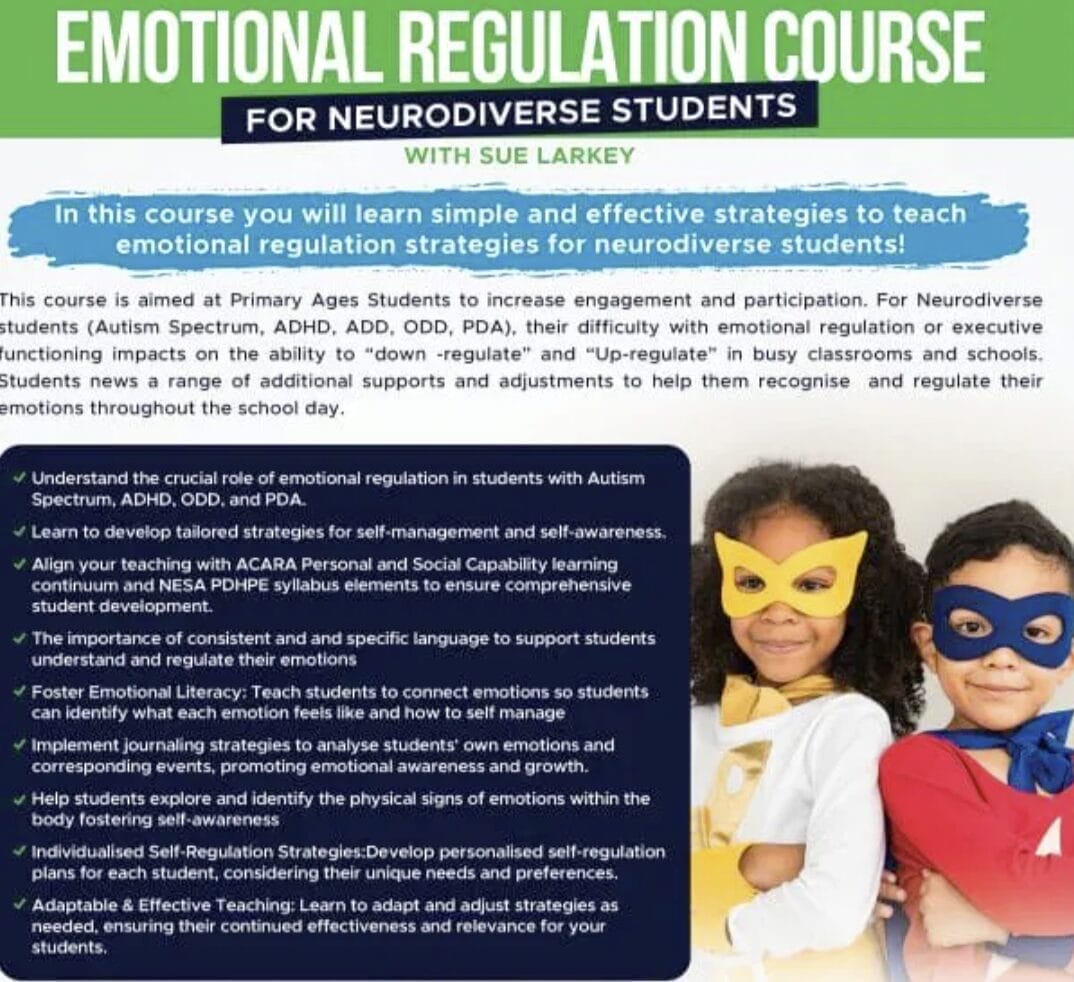
Challenging Behaviour in the Classroom: Emotional Regulation in Students with an Autism Spectrum and/or other Neurodiversity
RECOMMENDED pODCASTS
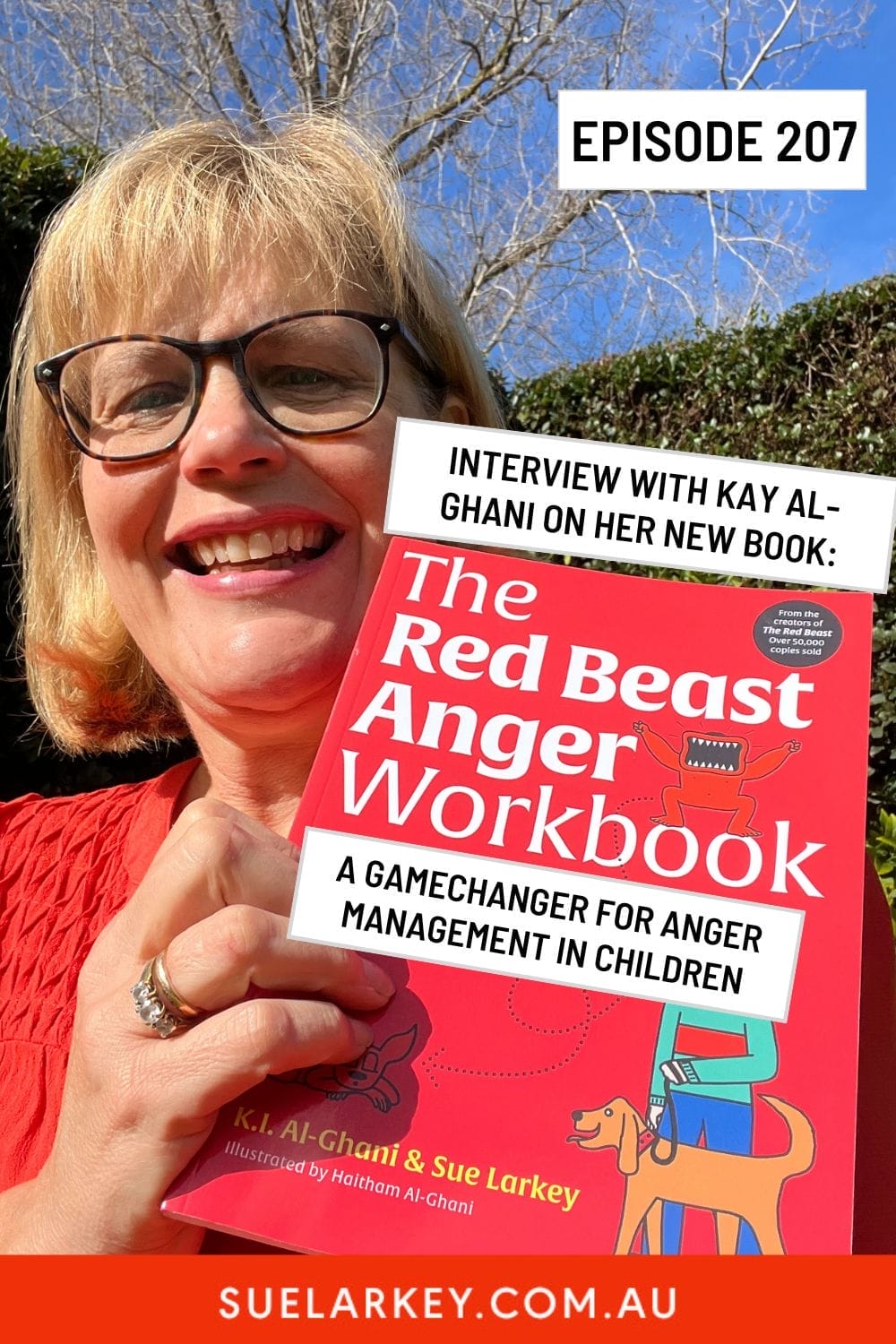
Episode 207:
The New Red Beast Workbook that is Gamechanger for Anger Management in Children
Episode 71:
How to Help Children Manage their Emotions with Lauren Brukner
Episode 270:
Mindfulness Activities for Classrooms: The Magician’s ToolKit
Great Sensory Tools:
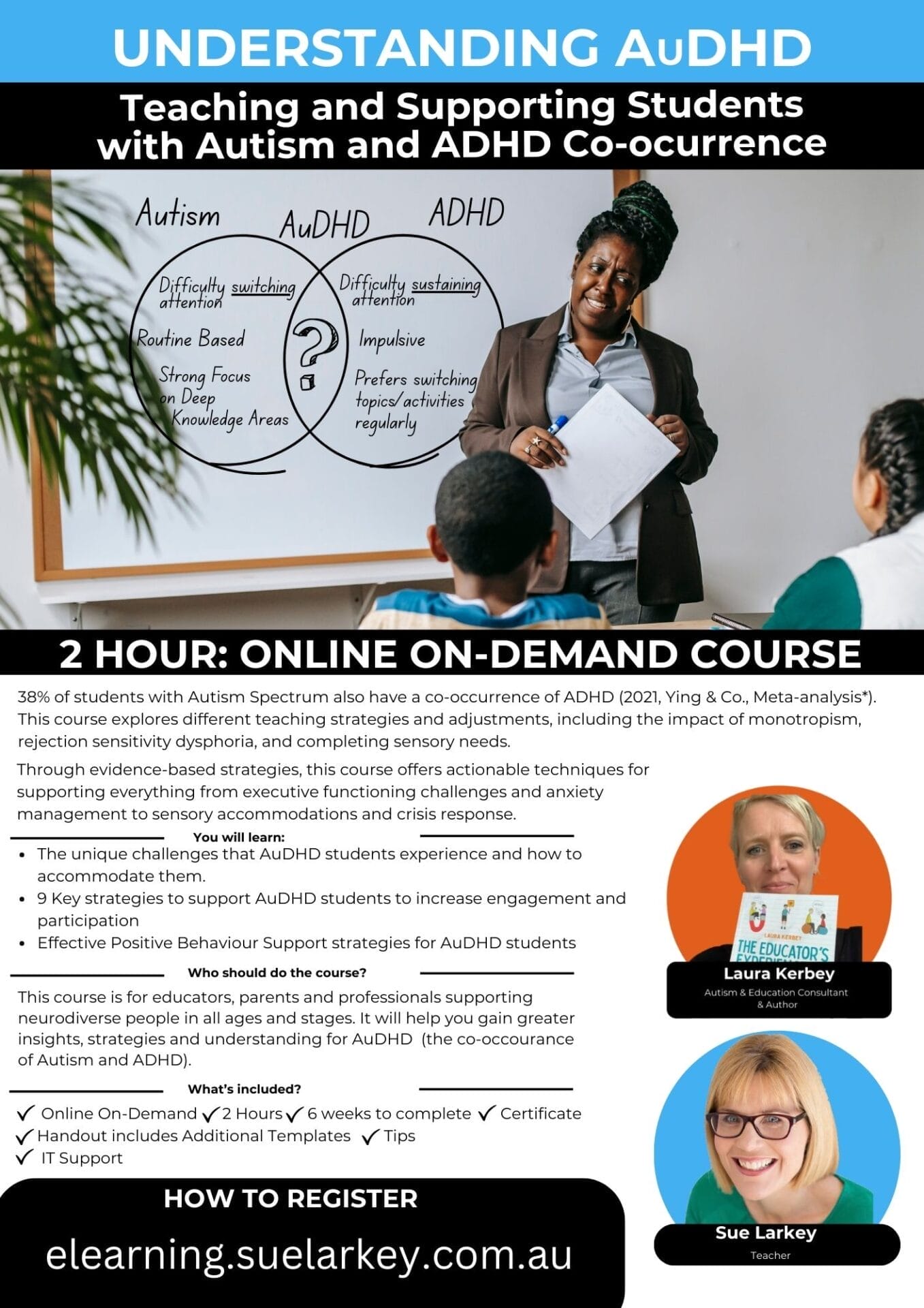
UNDERSTANDING AuDHD: Teaching & Supporting Students with Autism and ADHD Co-occurrence
✅ 2 Hours, 8 Lessons
✅ 6 Weeks to Complete
✅ Certificate of Completion
✅ Lesson Transcripts
 2 Hours
 Certificate
$149




 Sorry we no longer ship items outside Australia. Please consider the digital versions of Sue’s Books –