USING COMMUNICATION TEMPTATIONS TO MOTIVATE COMMUNICATION
Many children with ASD do not feel the need or motivated to communicate as everyone in their environment thinks for them, gives them what they want or even anticipates their needs. When you create a communication programme it is VITAL you create as many opportunities as possible for the child to communicate.
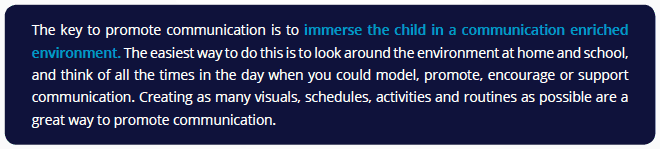
Start with activities that are particularly desirable or intriguing for your child are more likely to ‘tempt’ them or provide them with sufficient motivation to communicate with another person. Encourage verbal children to use their words or extend their word i.e. “Drink” to “I want drink” and non-verbal children to use visuals/signs/gesture to communicate.
12 Ideas to Provide Opportunities to Communicate
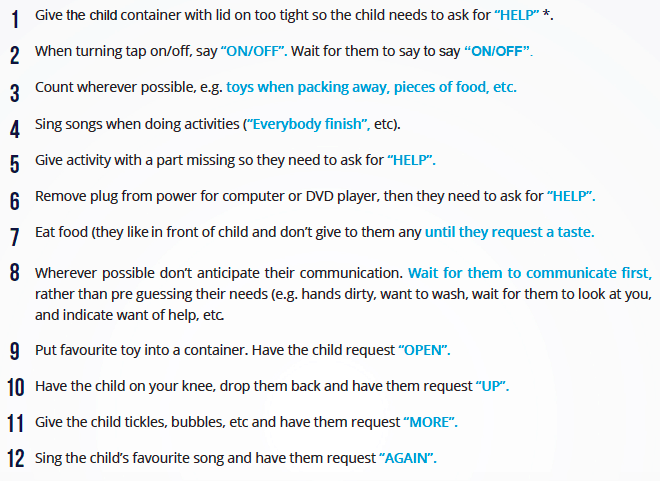
* Remember if the child is nonverbal they will need a visual to ask for help. You need to make sure their communication method is always avliable. Make sure you make spare visuals, so if they get lost always have a back up available.
Rewards are an important element of communication for children with ASD. So always remember to make activities fun, fast and rewarding.
10 Key Rules to a Successful Communication Programme
- Ensure consistency between environments.
- Be eclectic; try lots of different ideas and strategies.
- Remember not every strategy works for everyone.
- Never assume incompetence.
- Always model good communication practices.
- Make communication functional.
- Make communication fun and enjoyable.
- Use rewards and motivators.
- Ensure the child has communication enriched environments.
- Be persistent and REPEAT, REPEAT, REPEAT.
Every strategy, no matter how bizarre, is worth a try and if at first you don’t succeed then try and try again. No one child with ASD is the same so not all strategies will work with every child – so think carefully of how to adapt a strategy to suit the particular individual.
Top Communication Resources for Supporting Children
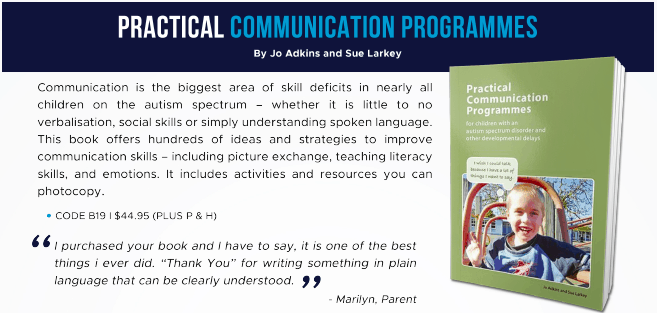
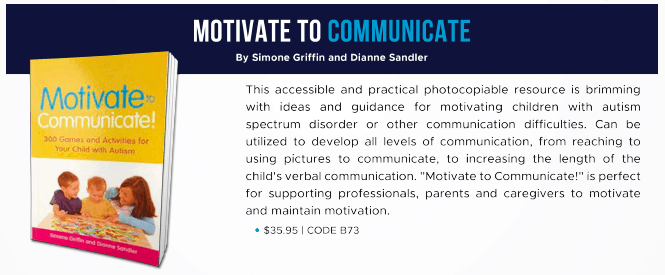



 Sorry we no longer ship items outside Australia. Please consider the digital versions of Sue’s Books –