Understanding PDA, AuDHD, RSD and ODD
A Practical Guide for Educators
In this episode, I’ve taken excerpts from my previous interviews with Laura Kerbey and Eliza Fricker:
✅ Offer Autonomy Inside Structure – Students with PDA are still autistic, so they need predictability about what’s going to happen – but within that structure, give them real autonomy, like offering "Would you like to…?" style choices.
✅ Treat Them as an Assistant, Not a Student – Frame tasks as something the student is helping you with rather than something they must do – PDA students usually want to help, they just need autonomy to get there.
✅ Show Interest Without an Agenda – Genuine interest in a student’s special interest only works when there’s no hidden agenda attached – jumping on a sudden burst of motivation with heavy enthusiasm can itself create a demand.
✅ Check Your Own State First – Children with PDA are hypersensitive to the emotions of the adults around them, and because they’re autistic, they may assume they’ve done something wrong – so notice your own anxiety or stress before walking in.
✅ Name the Rejection Sensitivity – Labelling rejection sensitivity is like labelling any emotion – once a student (or an educator) can say "that’s just my rejection sensitivity," they can start to regulate it and work through strategies.
✅ Take the Thought to Court – When a student assumes the worst, ask where the evidence actually is that people are laughing or talking negatively – and remind them that not everyone has to like us, and that’s okay.
✅ Treat Every Student as an Individual, Every Day – Presentation changes day to day – some days a student’s brain needs structure and direction, other days it pushes against it, so treat each day as its own.
✅ Offer Structure Plus Variety – A student with autism often wants the detail of what’s coming and may enjoy repeating the same activities; a student with AuDHD tends to want that same detail plus more variety within it.
✅ Weigh the Peer Voice – Because of rejection sensitivity, peers wanting an AuDHD student to do something can be a far bigger voice in that child’s head than a principal telling them off.
✅ Remember Autonomy Helps With ODD Too – Students with ODD also need autonomy and the chance to make decisions, so similar strategies work for both groups – though PDA and ODD are different profiles, and only a psychologist can diagnose.

Pathological Demand Avoidance (PDA) in the Classroom: Understanding and Teacher Strategies for Educators
$74.50
UNDERSTANDING AuDHD: Teaching & Supporting Students with Autism and ADHD Co-occurrence
$74.50
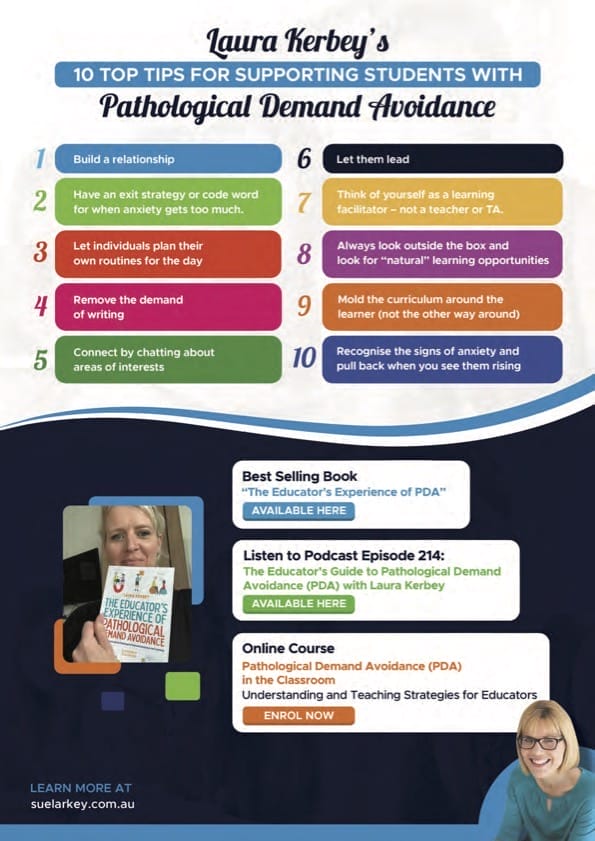
Download ‘Laura Kerbey’s 10 top tips for supporting students with pda’
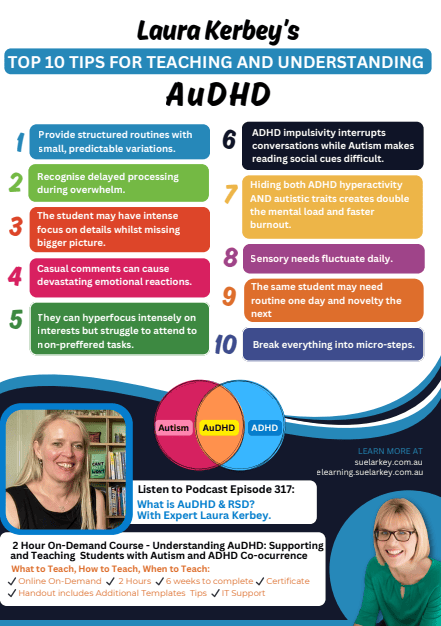
Download ‘Laura Kerbey’s 10 top tips for TEACHING AND UNDERSTANDING AUDHD’
Podcasts discussed in this episode

EPISODE 307:
Everything you need to know about PDA – Insights & Tips from Laura Kerbey

EPISODE 317:
What is AuDHD & RSD? With Expert Laura Kerbey

EPISODE 266:
Helping PDA Teens Thrive: A Guide for Parents & Educators
Great Resources to Understand and Support children with PDA
-

The Red Beast
$45.95 -

Super Shamlal – Living and Learning with Pathological Demand Avoidance
$45.95 -

Collaborative Approaches To Learning For Pupils With PDA
$40.95 -

The Defiant Child: A Parent’s Guide to Oppositional Defiant Disorder
$30.95 -

Can I tell you about Pathological Demand Avoidance syndrome?
$31.95 -

Red Beast Anger Workbook
$48.95 -

Can’t Not Won’t. A Story about a child who couldn’t go to School
$42.95 -
The Educator’s Experience of Pathological Demand Avoidance An Illustrated Guide to Pathological Demand Avoidance and Learning
$45.95 -

The Teen’s Guide to PDA
$42.95 -
All About PDA
$37.95 -

The (Slightly Distracted) Woman’s Guide to Living with an Adult ADHD Diagnosis
$39.82 -

The Parents’ and Professionals’ Simple Guide to PDA
$39.00
Understanding and Connecting with Pathological Demand Avoidance Learners
During Laura Kerbey’s time teaching autistic children, she had a sudden realisation that those with Pathological Demand Avoidance (PDA) are children like no other!
None of her tried and tested autism strategies would work to help them focus or learn and most of her time was spent wondering, what am I doing wrong?
If you feel the same, this short, Laura’s Book is your go to guide to teach you everything you need to know from one educator to another.
With an introduction to what PDA is followed by PDA tailored advice on how to connect with your student and create an autonomous, spontaneous environment that is personalised for you both, this guide is here to ensure that you and your PDA student thrive!
Illustrated by the popular Eliza Fricker and packed with entertaining anecdotes (including one about Jabba the Hut’s poo), this go-to-guide contains everything you need to start implementing PDA friendly learning to help you connect with your student and help them make the most of their learning experience.

Learning about PDA
Learn more about PDA with this Podcast -> https://suelarkey.com.au/learning-about-pda/
Recommended podcasts
EPISODE 263:
Teacher Assistant Q & A : Addressing Common Challenges for Teacher Assistants
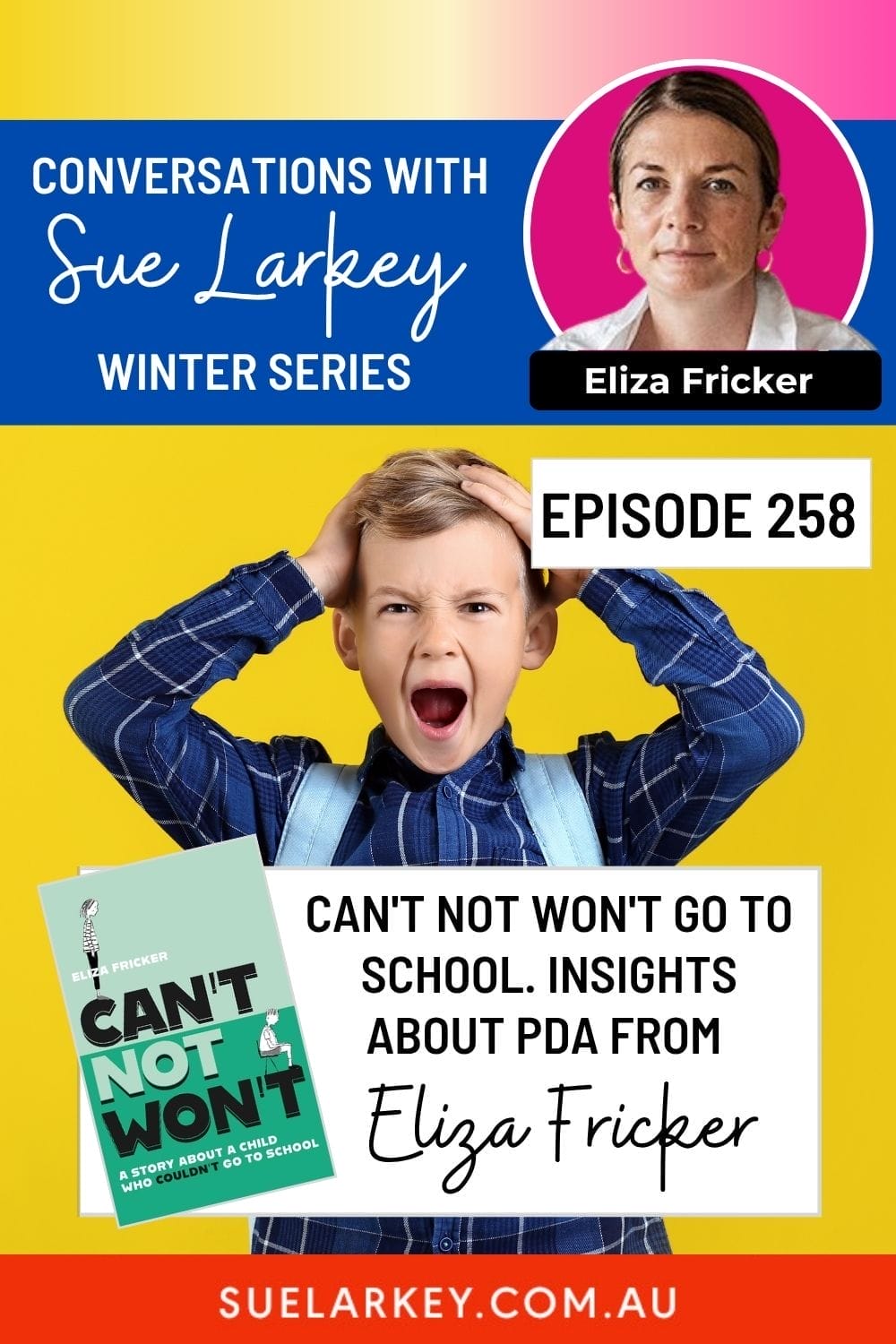
EPISODE 258:
Eliza Fricker – Can’t Not Won’t go to school. Insights about PDA from Eliza Fricker
EPISODE 306:
Do I have a child with ODD & PDA? What is it and What to do
Recommended Courses

Pathological Demand Avoidance (PDA) in the Classroom: Understanding and Teaching Strategies for Educators
A$74.50 · 2 Hours

UNDERSTANDING AuDHD: Teaching & Supporting Students with Autism and ADHD Co-occurrence
A$74.50 · 2 Hours


 Sorry we no longer ship items outside Australia. Please consider the digital versions of Sue’s Books –
