Sue Larkey Blog
Helping you “Make a Difference”


Tips, Strategies, Time Savers and Inspiration to help make difference for a child with an ASD in your class, home or community.

Please join my Facebook Community as you also read the insights, ideas and support of many amazing teachers, parents and professionals. Click this Facebook Icon Facebook Icon(or google “Sue Larkey Teacher”)
Please comment on any Blog via my Facebook page.
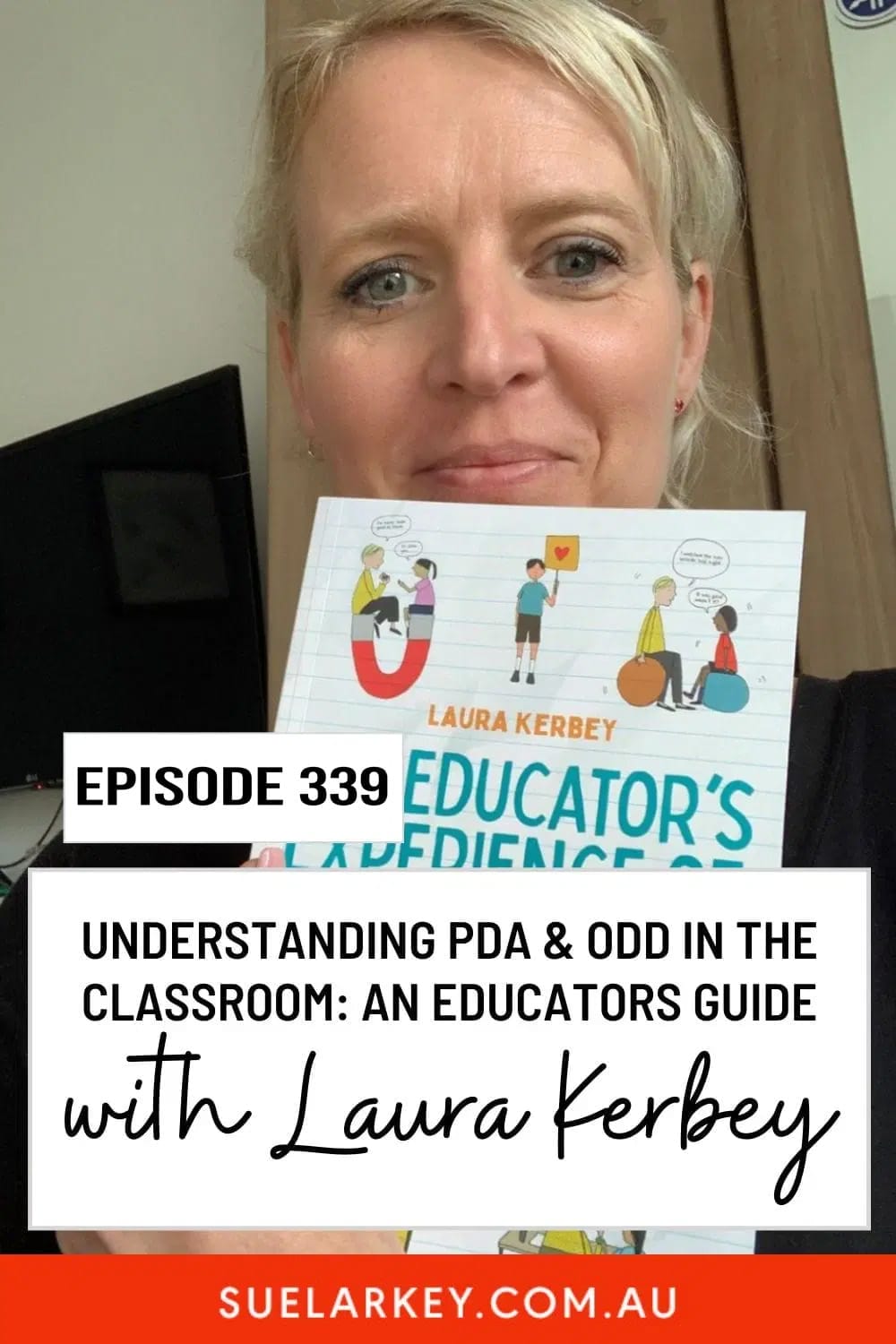
PDA vs. ODD: A Guide to Supporting Pathological Demand Avoidance in Schools (Episode 339)
PDA vs. ODD: A Guide to Supporting Pathological Demand Avoidance in Schools PDA and ODD DifferencesStrategies for Teaching PDA StudentsKey takeaways from this podcast for educators and parents/ carers of a child with PDA:✅ Share appropriate personal experiences to build trust ✅ Offer two clear choices instead of open-ended options ✅ Use natural consequences instead of demands (e.g., explaining toilet routines) ✅ Allow collaborative learning when students prefer working with peers ✅ Give students a fresh start each day, avoiding delayed consequences ✅ Discuss emotions openly to model emotional regulation ✅ Share problem-solving thoughts aloud ✅ Mix up strategies as they can wear out quickly ✅ Use special interests without hijacking them for learning ✅ Provide structure while maintaining autonomy (like the holiday analogy)Pathological Demand Avoidance (PDA) in the Classroom: Understanding and Teacher Strategies for EducatorsENROL NOW! ON SALE - SAVE...
Why Choice Making is so hard for Neurodiverse Children and What To Do (AS, ADHD, PDA, AuDHD) (Episode 338)
Why Choice Making is so hard for Neurodiverse Children and What To Do (AS, ADHD, PDA, odd, AuDHD) Choice Making Neurodiversity Classroom Strategies Discussed in this Episode: ✅ Limit choices to two options only. Instead of a full shelf of puzzles, offer two specific puzzles (e.g., 'the Dora puzzle or the number puzzle'). The same applies in secondary — instead of an open research topic, offer two pre-selected poems or topics. ✅ Model making the 'wrong' choice out loud. Say aloud 'I've read two pages of this book and I don't like it — I'm going to put it back.' This demonstrates that changing your mind is acceptable and teaches children the process of self-correction. ✅ Use a grazing plate approach for food exploration. Place new foods alongside a known safe food without any pressure to eat. Let children sniff, touch, and explore at their own pace, as done with Victoria who expanded from dry noodles to 20 different foods within one school year. ✅ Use parallel play to...

Autism + Environment = Outcome: How to Recognise and Support Executive Functioning Struggles in Neurodivergent Students (Episode 337)
Autism + Environment = Outcome: How to Recognise and Support Executive Functioning Struggles in Neurodivergent Students Executive Functioning Classroom Strategies Strategies for Executive FunctioningKey takeaways from this podcast for educators and parents to understand Executive Functioning: ✅ The "Tomorrow Box" - Place a physical box on each student's desk where they can put unfinished work. This gives them an "opt out" without anxiety, knowing the task isn't lost - they can return to it tomorrow.✅ Spare Supplies Near the Door - Keep spare pens and paper near the classroom entrance so that when a child forgets something (an executive functioning difficulty, not defiance), they can quietly grab what they need without shame or disruption.✅ Use "Could" Instead of "Should" - Change classroom language from directive ("You should do this") to invitational ("You could try this"). This simple language shift reduces demand and anxiety, especially for PDA and anxious children.✅...

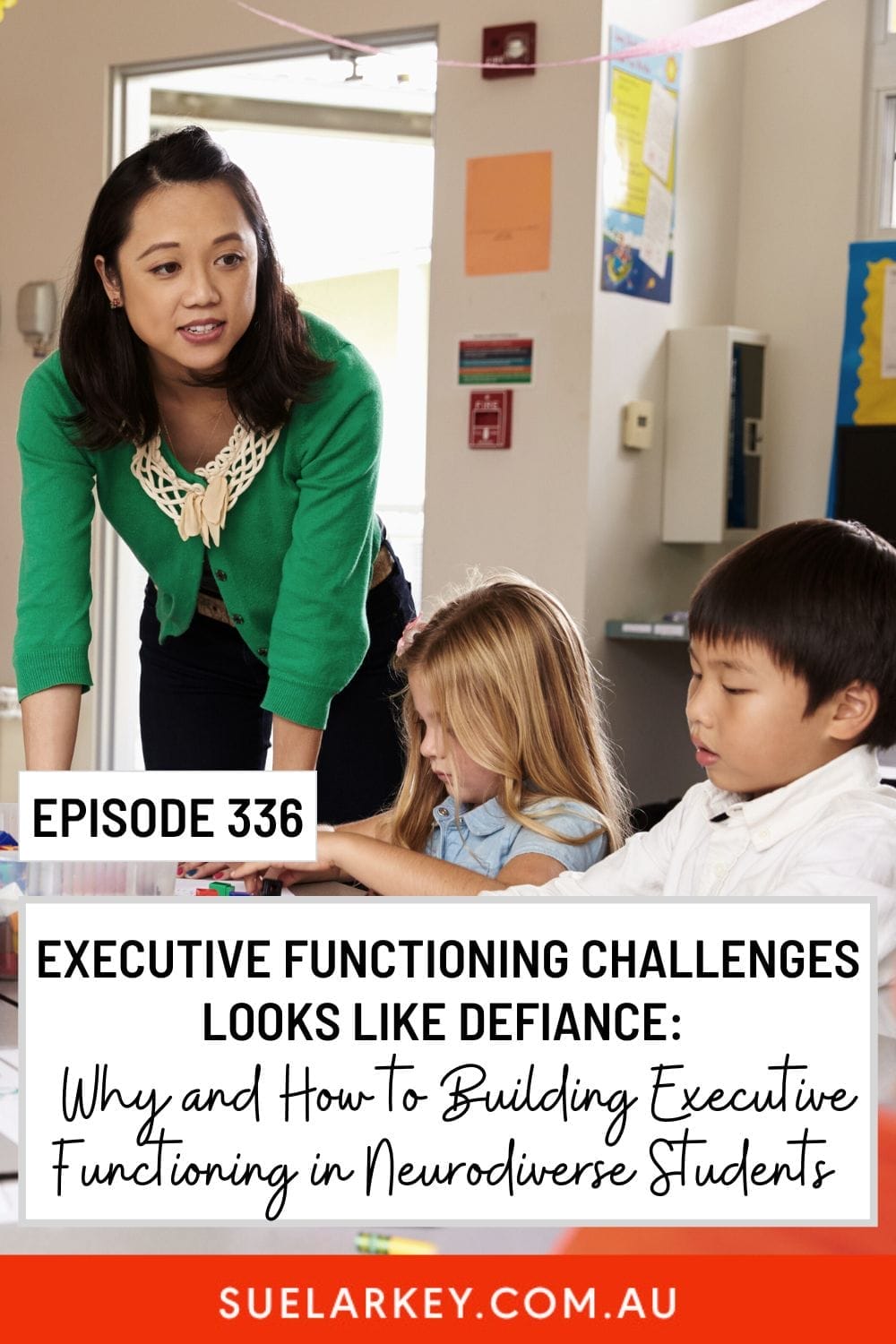
Executive Functioning Challenges Looks like Defiance: Why and How to Building Executive Functioning in Neurodiverse Students (Episode 336)
Executive Functioning Challenges Looks like Defiance: Why and How to Building Executive Functioning in Neurodiverse Students Executive Functioning AS Strategies Discussed in this Episode: ✅ Use a visual “wait” hand signal instead of saying “don’t call out” – Sue describes using a hand signal to indicate “wait” for children who struggle with impulse control. This acknowledges the child without shaming them and lets them know you’ve seen them. ✅ Introduce a sensory-weighted keychain tool as a “talking stick” alternative – Sue uses a sensory tool on a keychain with a weight attached. It is placed on the child’s desk to remind them it’s not their turn to talk, helping with impulse control in a tangible way. ✅ Implement the 5-minute warning for task initiation – Sue explains that many ADHD children do their best work in the last five minutes. Giving a “five minutes to go” warning is the trigger that initiates them to get started, rather than letting them sit on the...
How to Have the Hard Conversation: 8 Steps for Educators Starting the Diagnosis Conversation (Episode 335)
How to Have the Hard Conversation:8 Steps for Educators Starting the Diagnosis Conversation Talking to Parents Diagnosis Discussed in this Podcast: ✅ Choose the meeting location carefully. Avoid the principal's office. Meet parents in a relaxed setting like the classroom, during yard duty, or even casually at a community spot (Sue shares that some of her best conversations happened at supermarkets).✅ Use the 4:1 ratio - four positives to one negative. Before raising any concern, prepare at least two to three genuine positive things about the child. Emily witnessed a meeting where four staff members could not name a single strength of a child with ADHD - and the parents left defeated.✅ Start every meeting with a reflection exercise. Have everyone - parents, teachers, aides - sit quietly and write down three things going well and three biggest challenges, then share the positives first. 4. Use an "appointments" system for partner work. For children who are always picked last,...

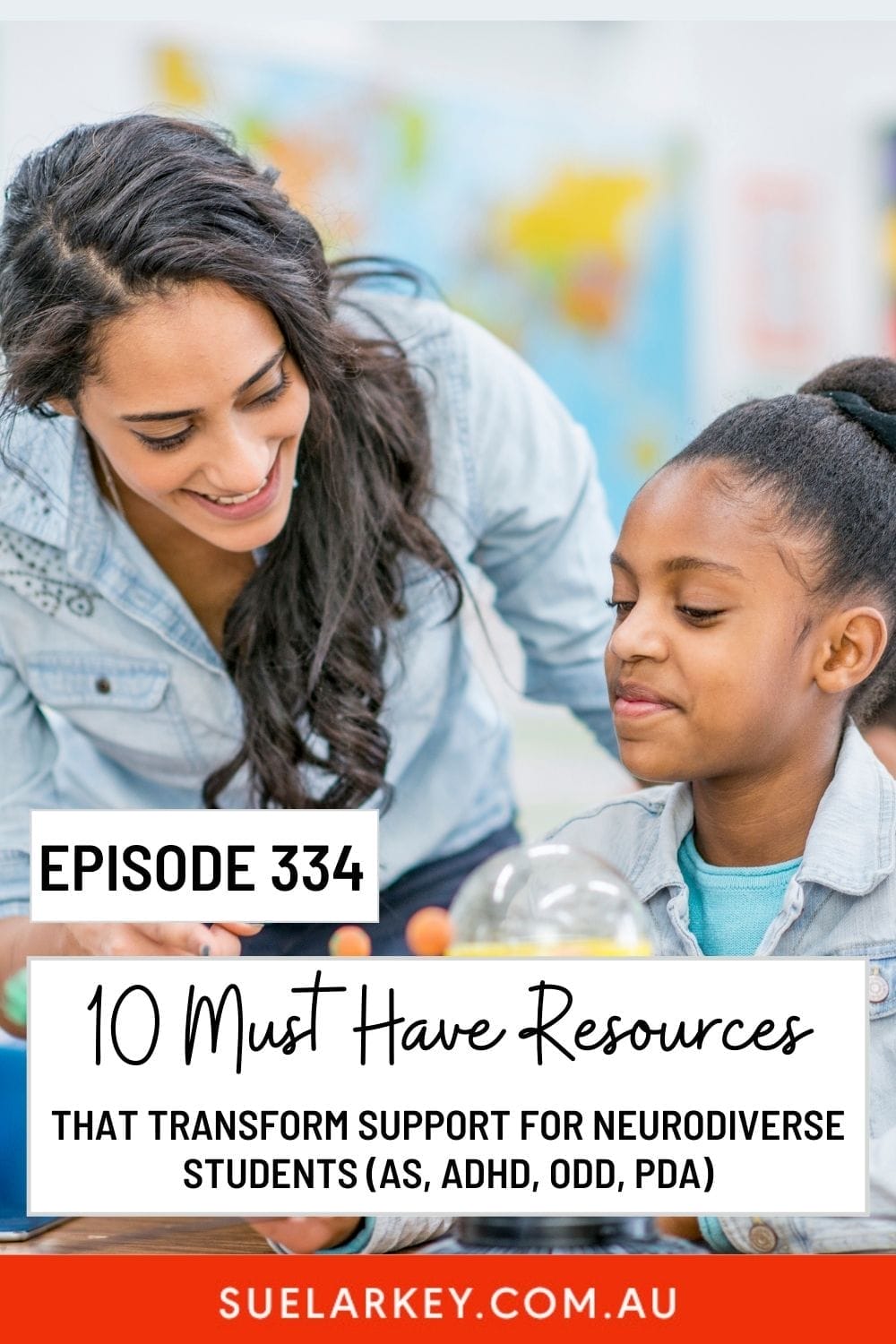
10 Must Have Resources That Transform Support for Neurodiverse Students (AS, ADHD, ODD, PDA) (Episode 334)
10 Must Have Resources That Transform Support for Neurodiverse Students (AS, ADHD, ODD, PDA) Neurodiverse Student Support Tools Neurodiversity Education Tools Resources Join me this week as I talk you through my FAVOURITE resources to support neurodiverse students. So, grab a cuppa and download the catalogue and let's chat. ✅ Using 2B pencils instead of HB pencils for left-handed students ✅ Implementing one-book systems for better executive functioning ✅ Using plastic sleeves instead of glue for worksheets ✅ Placing time timers next to analog clocks for visual time management ✅ Using "now, next, later" visual schedules with timer systems ✅ Reading specific book chapters based on current student needs ✅ Setting up fine motor activity stations using the Motor Flip Book ✅ Using whole-class social skills activities for inclusive learning ✅ Implementing visual cards on timers to show upcoming activities ✅ Creating staff meeting discussions around resources like "I am Aspie...
What every Educator needs to Know about Behaviour for Neurodiverse Students (AS, ADHD, ODD, PDA) (Episode 333)
What every Educator needs to Know about Behaviour for Neurodiverse Students (AS, ADHD, ODD, PDA) neurodiverse children classroom strategies Discussed in this Podcast: ✅ Talking about my brand new course All about classroom behaviours and the strategies to try. ✅ Give the Spelling List Early: Instead of making a child wait until Monday’s pre-test, give them the spelling list on Friday. This allows anxious children to learn the words over the weekend and arrive feeling prepared rather than panicked. The goal is that the child learns the words — the timing doesn’t matter. ✅ Replace Crosses with “O” for Opportunity: Instead of marking errors with a cross (X), use an “O” for Opportunity — an opportunity to fix it up, look it up, or ask someone else. This reframes mistakes as a learning step rather than a failure. ✅ Photocopy Extra Worksheets: For children who become distressed when they make mistakes, have extra copies of worksheets ready. If a child makes an error and wants...
Understanding Time Blindness: Essential Strategies for Supporting Neurodiverse Students (Episode 332)
Understanding Time Blindness: Essential Strategies for Supporting Neurodiverse Students Managing Time Blindness in Neurodiverse Students Supporting Neurodiverse Students with Time Blindness Discussed in this Episode: ✅ Sit in the student's seat to physically experience their view of the clock, schedule, and classroom—you'll quickly spot accessibility barriers you never knew existed. ✅ Swap analog clocks for digital displays because students navigate phones, train schedules, and real life using digital time, not big hand/little hand interpretation. ✅ Use pausable digital timers so students with ADHD get fair, accurate time tracking when toilet breaks and transitions interrupt their work. ✅ Try "let's see how much we can do" framing to turn time into a curiosity experiment rather than a pressure cooker, while building genuine time-estimation skills. ✅ Establish a Plan B before the timer starts so students know exactly what happens when time runs out—extend, mark...
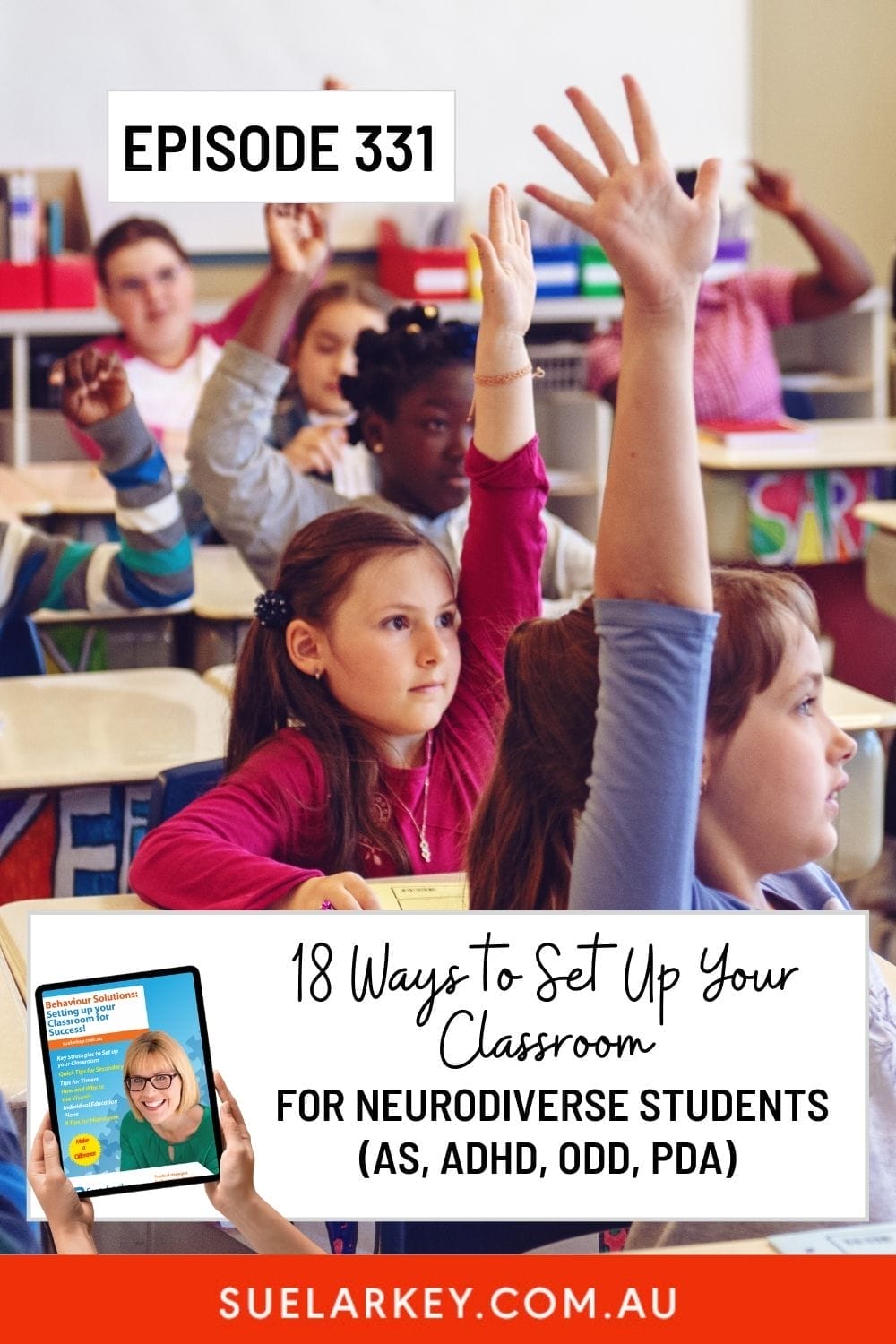
18 Ways to Set Up Your Classroom for Neurodiverse Success (AS, ADHD, ODD, PDA) (Episode 331)
18 Ways to Set Up Your Classroom for Neurodiverse Success (AS, ADHD, ODD, PDA) classroom setup neurodiverse studentsBehaviour Solutions for Classrooms The best behaviour management strategy isn't about responding to challenges—it's about preventing them through thoughtful classroom setup. This guide shows you exactly how to create an environment that naturally reduces challenging behaviors and supports student success.Classroom Preparation for Different Learning Styles ✅ Place a piece of paper under students arms during writing activities to activatecore muscles and improve posture✅ Set up 25-minute work intervals followed by structured movement breaks forregulation✅ Implement visual schedules combined with timers to help students track time andtransitions✅ Schedule regular hydration and bathroom breaks to support interoception needs✅ Create designated quiet spaces for sensory breaks and regulation✅ Use multiple timer types (Time Timer Plus, digital schedules) for different...
School Camps Without the Stress: A Preparation Guide for Neurodiverse Students (AS, ADHD, ODD, PDA) (Episode 330)
School Camps Without the Stress: A Preparation Guide for Neurodiverse Students (AS, ADHD, ODD, PDA) School Camp Neurodiverse Students Preparation Preparing Neurodiverse Children for CampMany neurodiverse children can find the anticipation of camp to be a source of great stress. Letting the student know as much detail as possible from the food to the different sensory feelings they might encounter, can often help to reduce anxiety and uncertainty. Talking about expectations and concerns can allow staff to tailor their support to the child's specific needs. Learn about preparing neurodiverse children for camp today! In this episode we will discuss: ✅Why camp is so important for curriculum and social learning ✅Tips and strategies to prepare for camp and excursions ✅ How to use social stories, pre-recorded videos or a visit to explain what camp will be like ✅ Accommodations about food, sleeping, noise etc. to make at camp Don't forget to follow Sue Larkey on Facebook and Instagram...
Practical Tools for Childhood Emotional Regulation (Episode 329)
Empowering children through mindfulness, this podcast explores how using a fun, magical approach can help children self-regulate and understand emotions.
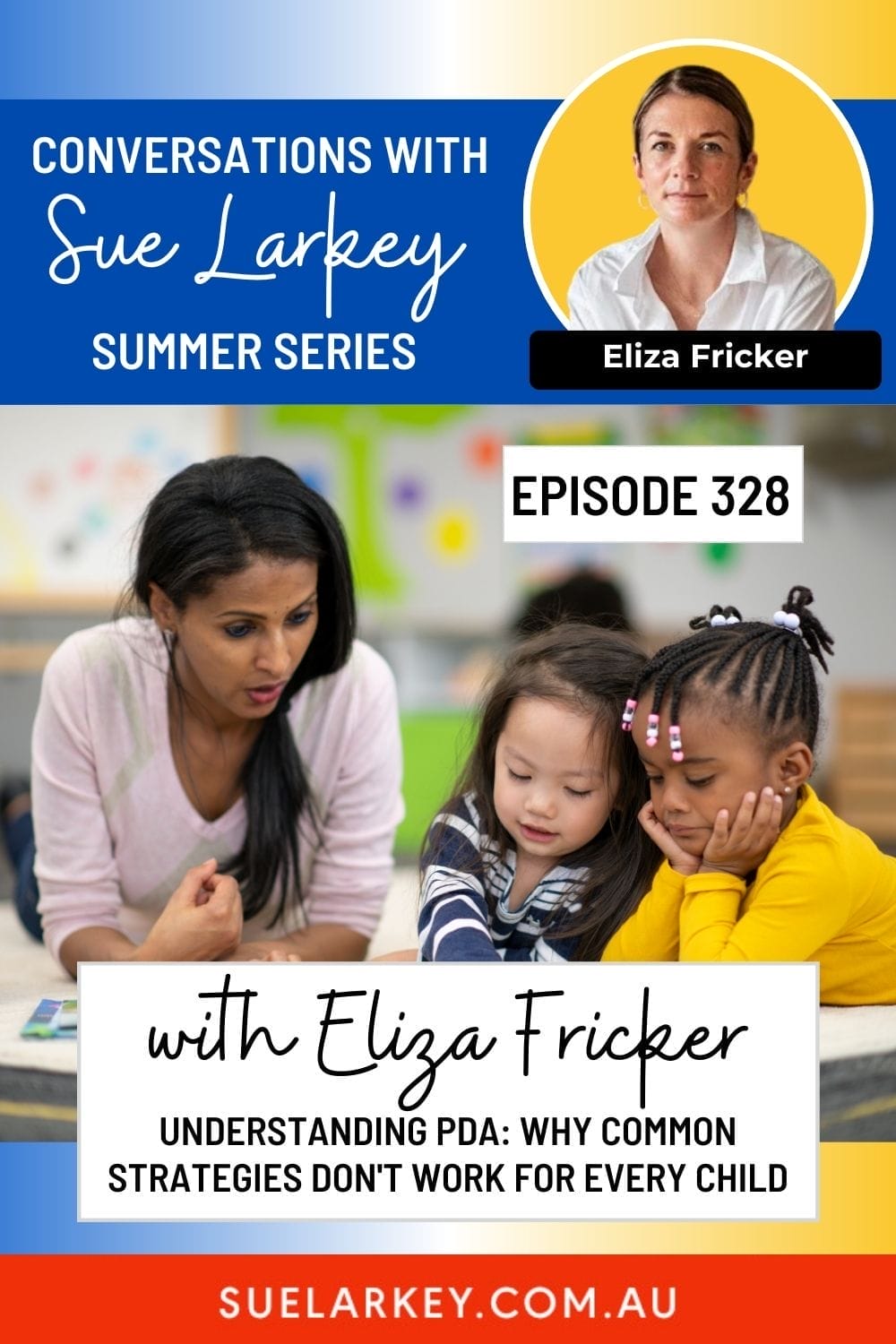
Understanding PDA: Why Common Strategies Don’t Work for Every Child (Episode 328)
Conversations with Sue Larkey With Guest Eliza Fricker Understanding PDA: Why Common Strategies Don't Work for Every Child Pathological Demand Avoidance StrategiesDiscussed in this episode: ✅ The Tomorrow Box Strategy - Create a physical "Tomorrow Box" on your desk where students can place work they're not ready to complete today. This gives anxious children an "out" without conflict and builds trust. ✅ Be a GPS, Not a Reactor - Practice maintaining a calm, monotone voice regardless of student behavior—like a GPS that stays calm even when you're frustrated. Consider using a sensory tool (like blue-tac) in your hand to help you stay regulated. ✅ Consistency Over Routine - Instead of rigid schedules and visual timetables, focus on being consistent in how you approach every situation. Your calm, predictable response matters more than a planned routine. ✅ Allow Doodling During Lessons - Recognize that drawing and doodling can help some students focus and process information. As...