How to Navigate Difficult Conversations About Your Child’s Diagnosis with Family and Friends – With Parent Anna Tullemans
Sharing Autism Diagnosis with Family
Discussed in this Episode:
✅ Assess What They Already Know: Before sharing diagnosis information, determine how much the person understands. Ask yourself: “Do they know there’s no ‘look’ for autism?” This tells you their baseline knowledge and where to start.
✅ Tailor Detail Level to Relationship Closeness: With close family (like parents), provide specific, detailed information: “He needs this quiet time because he needs to be able to quiet himself before he can come and talk to you.” With friends who already accept your child, keep it simpler: “Daniel is doing that because of his diagnosis, and his diagnosis means we need to explain things to him more intricately.”
✅ Start with Positives First: Before discussing challenges, highlight strengths. Example: “Daniel might be really good at doing puzzles and he can do them upside down. That’s fantastic because he sees shapes rather than colors.”
✅ Balance Negatives with Positives: When you must share a challenge, immediately follow with a strength: “Jonathan can’t look at you when he’s talking to you, but he’s got some really interesting things to say about what he’s doing.”
✅ Make It a Conversation, Not a Lecture: Don’t bombard people with information all at once. Create ongoing dialogue where people can ask questions and process information at their own pace.
✅ Assess What They’re Ready to Hear: Recognize that sometimes people aren’t ready to hear all the information at once. Share information in stages based on their readiness.
✅ Use Plain Language vs. Academic Terms: Adjust your explanation style to your audience. Some people appreciate clinical terminology, while others “need to know it in just plain old English.”
✅ Focus on Your Individual Child: Don’t try to explain all of autism. Instead, “think about your child and what you need for your child. Just focus on that. Don’t focus on the overall, this is what autism is.”
✅ Research Together When Needed: If you don’t have all the answers, involve the child (when age appropriate): “That’s a really good question. Is that part of your autism? Or is that something different? Let’s have a look.”
✅ Prepare Before Social Gatherings: Before events like Christmas where there are lots of family and friends, plan ahead about what information you’ll share and how you’ll handle uncomfortable questions.
Talking to family and friends about a diagnosis can be a bit daunting, I am hoping this podcast with Anna Tullemans will prepare you with information and understanding to make the task easier. Begin Sharing Diagnosis with Family and Friends Today!
Top Tips from The Interview with Anna
1. Before passing on information, cross out anything that is not relevant to your child and explain the points that are relevant to them and how people can adjust, accommodate and support.
2. Once family and friends have understood the needs of your child they will begin to change their approach.
3. It is important to constantly educate your family around your child as they grow and change. Someone who is 6 with ASD can look very different at 12 or 16. It is about constantly re-educating.
4. Books about diagnosis allow them to read and absorb in their own time. Use them to then have conversations. Picture books and lived experience stories were most useful for Daniel, but also family and friends. Leaving them on coffee tables was a great way to start conversations
Important question to ask yourself before sharing diagnosis
“What are the changes you want to see when you disclose the diagnosis to your family and friends?”

recommended courses
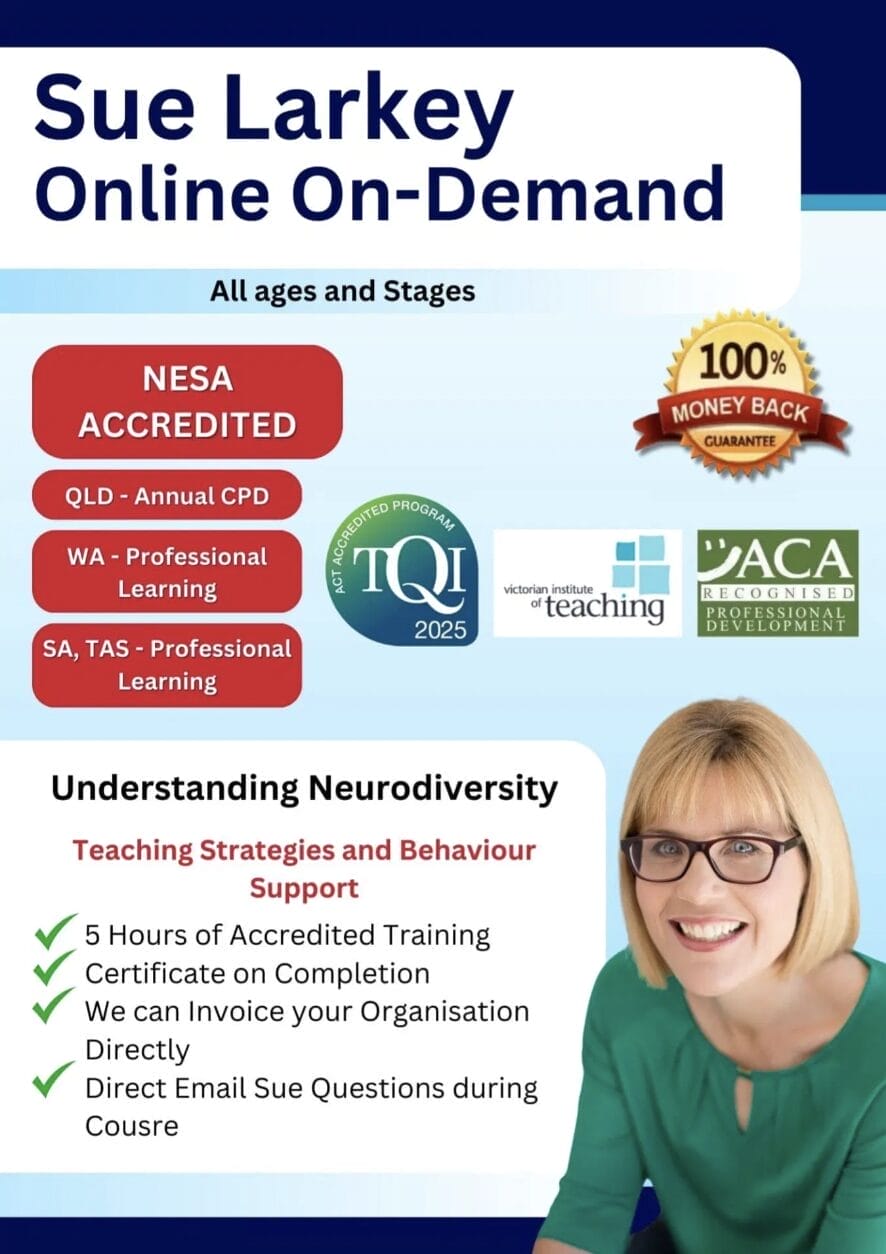
Understanding Autism Spectrum Disorder: Knowledge to Improve Student Learning, Participation and Outcomes

Temple Grandin & Sue Larkey: Teaching Students With Autism Spectrum
recommended podcasts

EPISODE 197:
8 Essential Steps to Encourage Parents to Pursue a Diagnosis
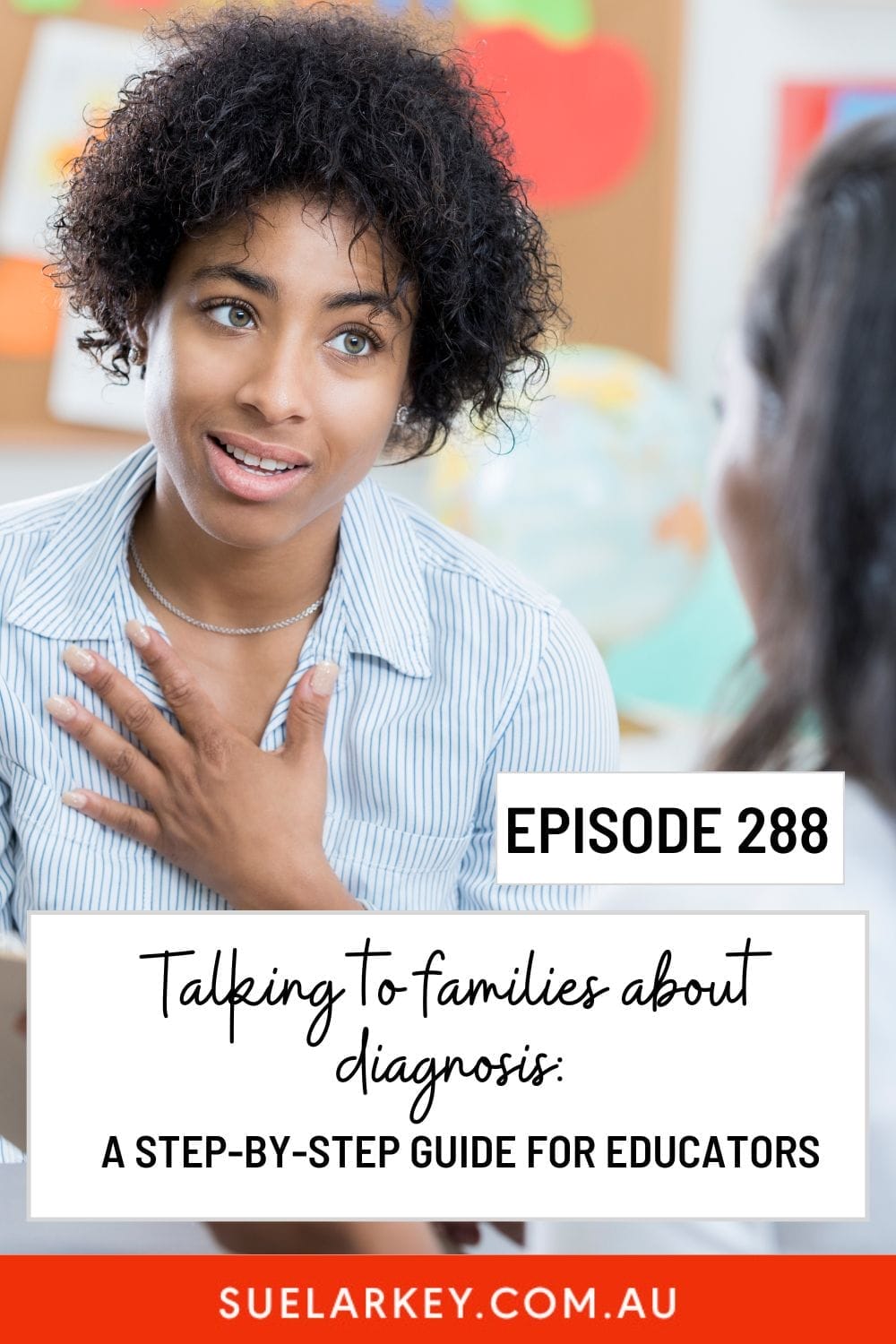
EPISODE 228:
Talking to families about diagnosis: A Step-By-Step Guide for Educators

EPISODE 243:
10 Essential Tips to Share to Increase Understanding
BOOKS ON TALKING TO CHILDREN ABOUT DIAGNOSIS
-

The Red Beast
$45.95 -

I am an Autistic Girl
$42.95 -

My Friend with Autism (Enhanced Edition)
$31.95 -

Can I Tell You About Autism?
$31.95 -

All Cats Are On the Autism Spectrum UPDATED and REVISED
$37.95 -

All Dogs Have ADHD UPDATED and REVISED
$37.95 -

All Birds have Anxiety
$37.95 -

Aspergirls
$45.95 -

Can I tell you about Pathological Demand Avoidance syndrome?
$31.95 -

Winston Wallaby Can’t Stop Bouncing
$45.95 -

Can I Tell You About ADHD?
$31.95 -

Inside Asperger’s Looking Out
$42.95
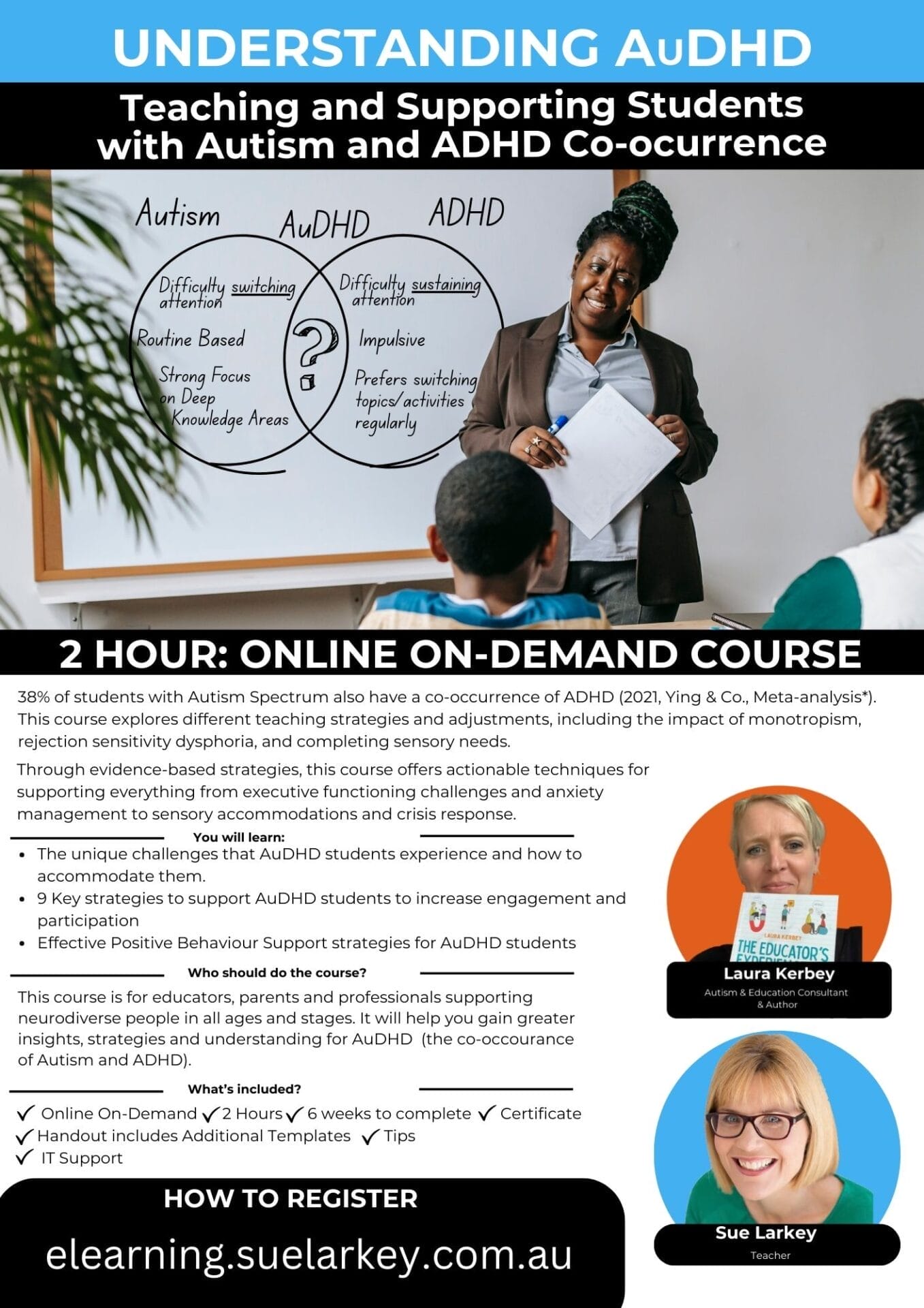
UNDERSTANDING AuDHD: Teaching & Supporting Students with Autism and ADHD Co-occurrence
✅ 2 Hours, 8 Lessons
✅ 6 Weeks to Complete
✅ Certificate of Completion
✅ Lesson Transcripts
 2 Hours
 Certificate
$149



 Sorry we no longer ship items outside Australia. Please consider the digital versions of Sue’s Books –