Everything you need to know about PDA – Insights & Tips from Educator
Neurodiverse Student Support Techniques
In this episode, I’ve taken excerpts from my previous interviews with Laura Kerbey:
✅ Shift Your Mindset About “Difficult” Students – Recognize that PDA students aren’t oppositional – they’re anxious. As Laura confessed, “there was nothing wrong with these children. It was the environment and it was me.”
✅ Give Students Autonomy Over Tasks – Provide choices and control to students with PDA, as demonstrated with the student who needed autonomy and dramatically improved once staff understood this need.
✅ Recognize “Can’t” vs “Won’t” – Understand that PDA students often WANT to do tasks but CAN’T due to anxiety, unlike ODD students who WON’T do tasks due to authority issues.
✅ Read Specialist Books Before Students Arrive – Prepare for incoming students by studying resources over summer break, as recommended in the podcast for teachers getting PDA or ADHD students next year.
✅ Use the Spider Analogy to Train Staff – Help colleagues understand the difference: “Can’t hold the spider” (PDA/anxiety) vs “Won’t hold your own spider” (ODD/defiance).
✅ Collaborate with Parents on Resources – When parents recommend books or resources, take them seriously – as one teacher discovered when a parent recommended Laura’s book on Facebook.
✅ Avoid Authority-Based Language – Understand that PDA students don’t recognize hierarchy or authority the same way, so traditional command-based approaches backfire.
✅ Create Environments That Reduce Demands – Modify the classroom environment rather than trying to change the student, as Laura learned when she realized “everything that I was doing was wrong.”
✅ Invest in Professional Development on Neurodiversity – Complete courses during summer to be prepared, with six months to finish rather than rushing during the school year.
✅ Share Knowledge with Transitioning Teachers – Inform next year’s teachers about students’ profiles, or purchase professional development courses that can be transferred to incoming staff.
Pathological Demand Avoidance (PDA) in the Classroom: Understanding and Teacher Strategies for Educators
$149
UNDERSTANDING AuDHD: Teaching & Supporting Students with Autism and ADHD Co-occurrence
$149
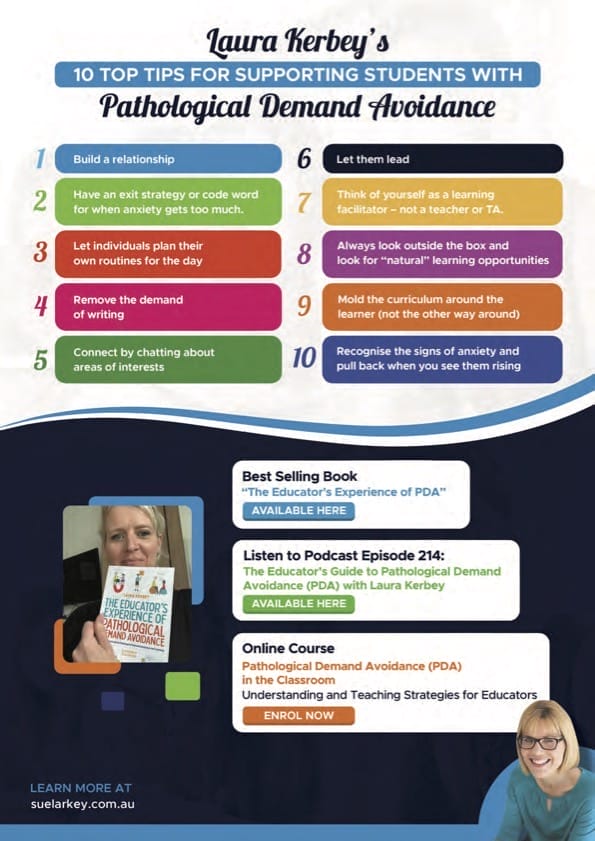
Download ‘Laura Kerbey’s 10 top tips for supporting students with pda’
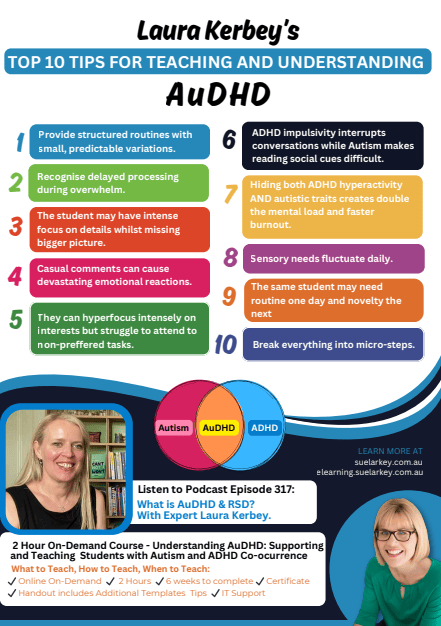
Download ‘Laura Kerbey’s 10 top tips for TEACHING AND UNDERSTANDING AUDHD’
Podcasts discussed in this episode

EPISODE 307:
Everything you need to know about PDA – Insights & Tips from Laura Kerbey

EPISODE 317:
What is AuDHD & RSD? With Expert Laura Kerbey

EPISODE 266:
Helping PDA Teens Thrive: A Guide for Parents & Educators
Great Resources to Understand and Support children with PDA
-

The Red Beast
$45.95 -
Super Shamlal – Living and Learning with Pathological Demand Avoidance
$45.95 -

Collaborative Approaches To Learning For Pupils With PDA
$40.95 -
The Defiant Child: A Parent’s Guide to Oppositional Defiant Disorder
$30.95 -

Can I tell you about Pathological Demand Avoidance syndrome?
$31.95 -

Red Beast Anger Workbook
$48.95 -

Can’t Not Won’t. A Story about a child who couldn’t go to School
$42.95 -

The Educator’s Experience of Pathological Demand Avoidance An Illustrated Guide to Pathological Demand Avoidance and Learning
$45.95 -

The Teen’s Guide to PDA
$42.95 -

All About PDA
$37.95 -
The (Slightly Distracted) Woman’s Guide to Living with an Adult ADHD Diagnosis
$39.82 -

The Parents’ and Professionals’ Simple Guide to PDA
$39.00










Understanding and Connecting with Pathological Demand Avoidance Learners
During Laura Kerbey’s time teaching autistic children, she had a sudden realisation that those with Pathological Demand Avoidance (PDA) are children like no other!
None of her tried and tested autism strategies would work to help them focus or learn and most of her time was spent wondering, what am I doing wrong?
If you feel the same, this short, Laura’s Book is your go to guide to teach you everything you need to know from one educator to another.
With an introduction to what PDA is followed by PDA tailored advice on how to connect with your student and create an autonomous, spontaneous environment that is personalised for you both, this guide is here to ensure that you and your PDA student thrive!
Illustrated by the popular Eliza Fricker and packed with entertaining anecdotes (including one about Jabba the Hut’s poo), this go-to-guide contains everything you need to start implementing PDA friendly learning to help you connect with your student and help them make the most of their learning experience.

Learning about PDA
Learn more about PDA with this Podcast -> https://suelarkey.com.au/learning-about-pda/
Recommended podcasts
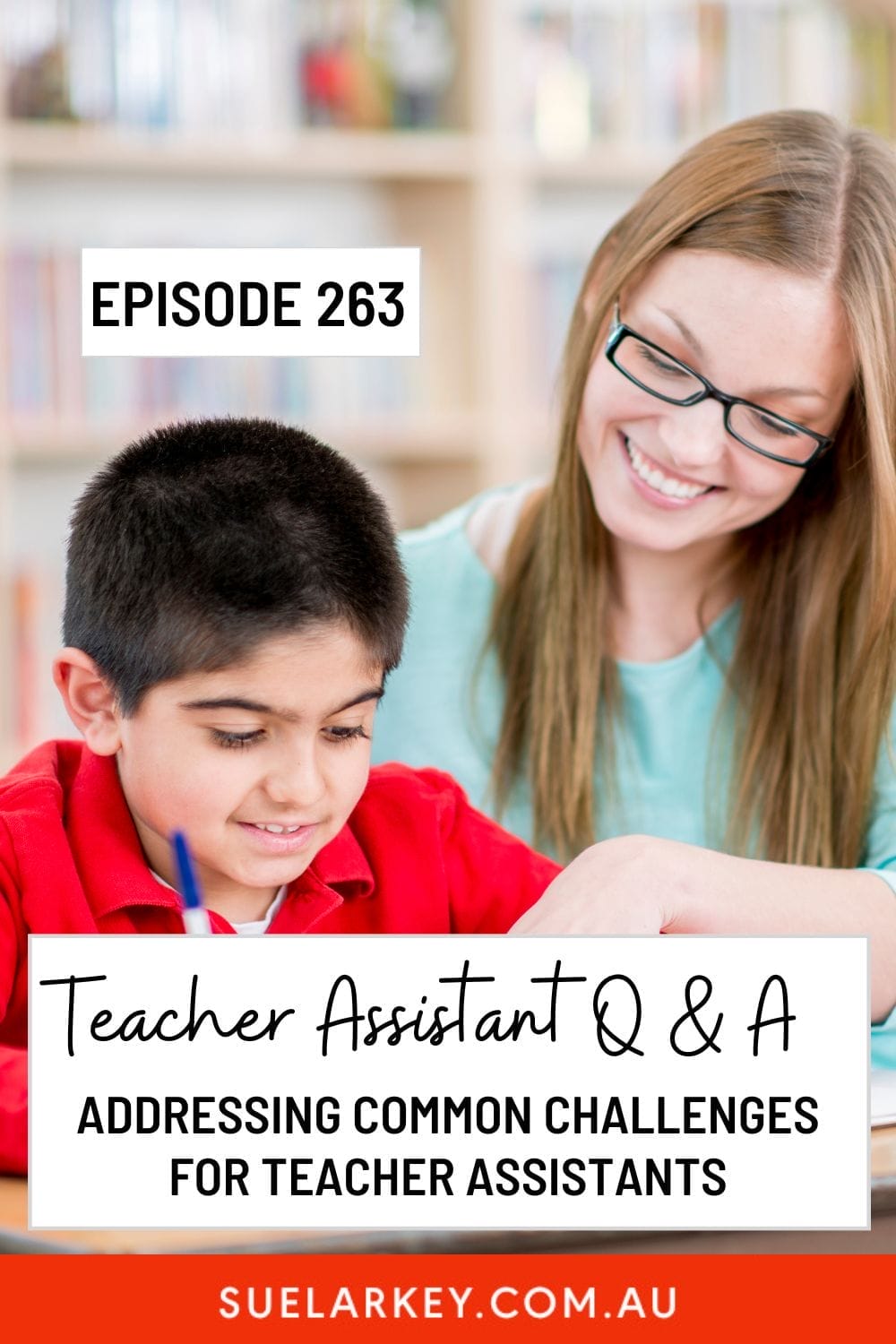
EPISODE 263:
Teacher Assistant Q & A : Addressing Common Challenges for Teacher Assistants

EPISODE 258:
Eliza Fricker – Can’t Not Won’t go to school. Insights about PDA from Eliza Fricker
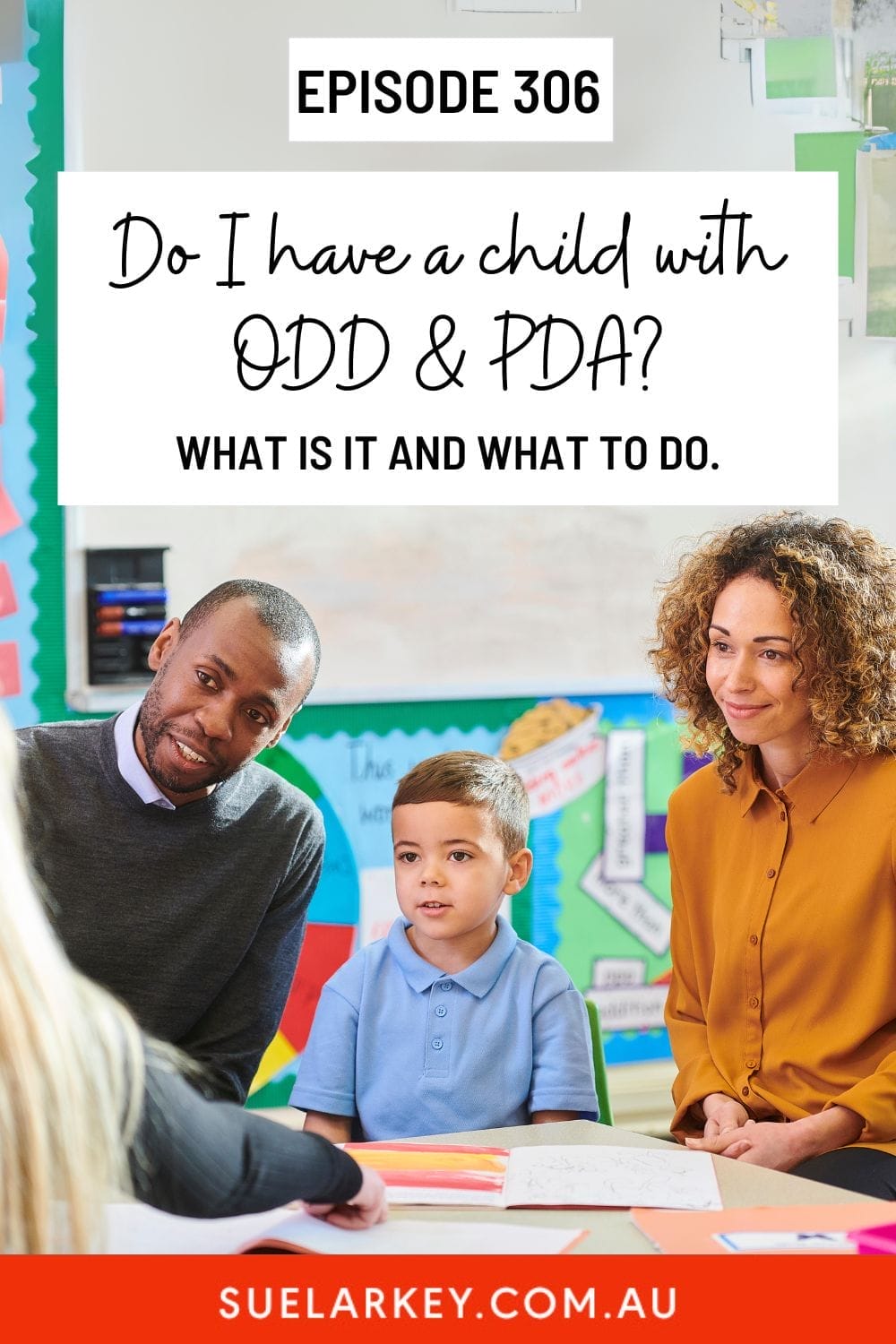
EPISODE 306:
Do I have a child with ODD & PDA? What is it and What to do
Recommended Courses

Pathological Demand Avoidance (PDA) in the Classroom: Understanding and Teaching Strategies for Educators

Dr Tony Attwood – Understanding Autism Spectrum Disorder: A Different Way of Thinking, Learning and Managing Emotions



 Sorry we no longer ship items outside Australia. Please consider the digital versions of Sue’s Books –