Autism + Environment = Outcome:
How to Recognise and Support Executive Functioning Struggles in Neurodivergent Students
Executive Functioning Classroom Strategies
Strategies for Executive Functioning
Key takeaways from this podcast for educators and parents to understand Executive Functioning:
✅ The “Tomorrow Box” – Place a physical box on each student’s desk where they can put unfinished work. This gives them an “opt out” without anxiety, knowing the task isn’t lost – they can return to it tomorrow.
✅ Spare Supplies Near the Door – Keep spare pens and paper near the classroom entrance so that when a child forgets something (an executive functioning difficulty, not defiance), they can quietly grab what they need without shame or disruption.
✅ Use “Could” Instead of “Should” – Change classroom language from directive (“You should do this”) to invitational (“You could try this”). This simple language shift reduces demand and anxiety, especially for PDA and anxious children.
✅ Provide a Starting Prompt, Not a Blank Page – Instead of handing students a blank piece of paper (which triggers inertia), give them a starting sentence, a template, or a partially completed organiser to help them overcome the “getting started” barrier.
✅ Use “When and Then” Phrasing – Instead of open-ended demands, structure tasks with “When you finish X, then you can do Y.” This gives neurodivergent children a clear sequence and reduces the overwhelm of unstructured expectations.
✅ Minimise Wall Displays Around the Board – If you want students to focus on the board, make the board the only thing on that wall. Competing visual displays around the focal point create sensory competition that is especially taxing for neurodivergent learners.
✅ Signal “Stopping for Now,” Not “Stop” – When asking a student to transition away from a task, say “We’re stopping for now” and clearly communicate when they can return to it. Saying “stop” can be
processed as “never,” triggering anxiety.
✅ The Five-Minute Warning for Transitions – Give a five-minute warning before task transitions. For many children (especially those with ADHD), this is when their best work happens because the impending deadline helps them complete the current task before shifting.
✅ Request Executive Functioning Assessments – When students are assessed by psychologists, specifically ask for executive functioning testing (planning, organising, working memory). These results provide the most actionable classroom insights.
✅ Put Systems in Place Once for the Whole Year – Design structural supports (visual schedules, spare supplies, tomorrow boxes, colour coding) that stay in place all year. These aren’t things to remember daily – set them up once and they benefit every child.
Top 10 Tips For Students With Executive Functioning

1.
Place spare supplies near classroom door for easy access
Use “could” instead of “should” in instructions
Give specific start points rather than blank pages
Remove visual clutter around teaching boards
Implement clear “when and then” language structures
Offer five-minute warnings before transitions
Create structured time blocks for task completion
Provide context for upcoming changes or events
Provide “tomorrow boxes” for unfinished work
Design calm, low-sensory areas within classrooms
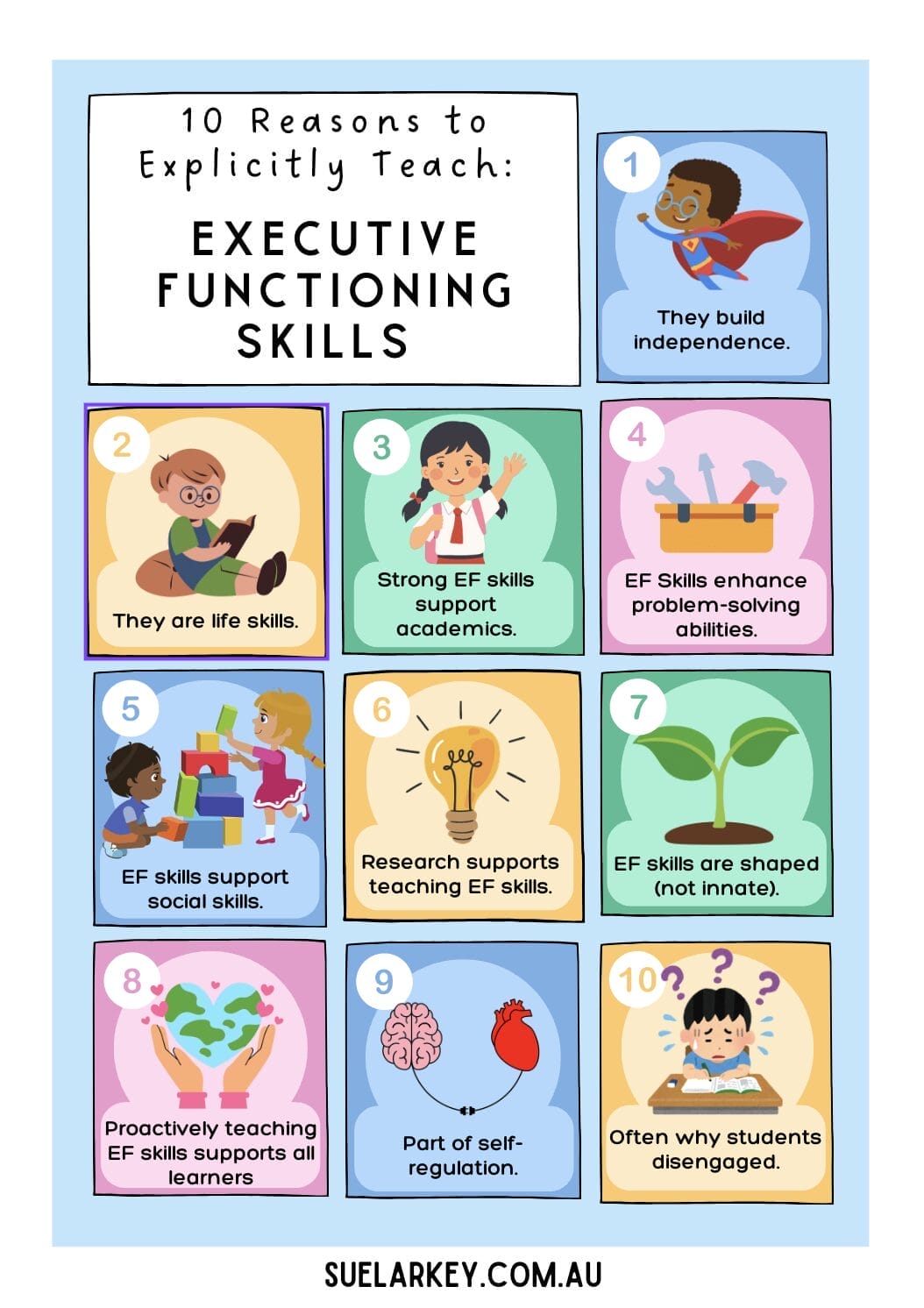
Top 10 Reasons Must Teach Executive Functioning Skills
RECOMMENDED COURSES

Pathological Demand Avoidance (PDA) in the Classroom: Understanding and Teaching Strategies for Educators

Executive Functioning Training
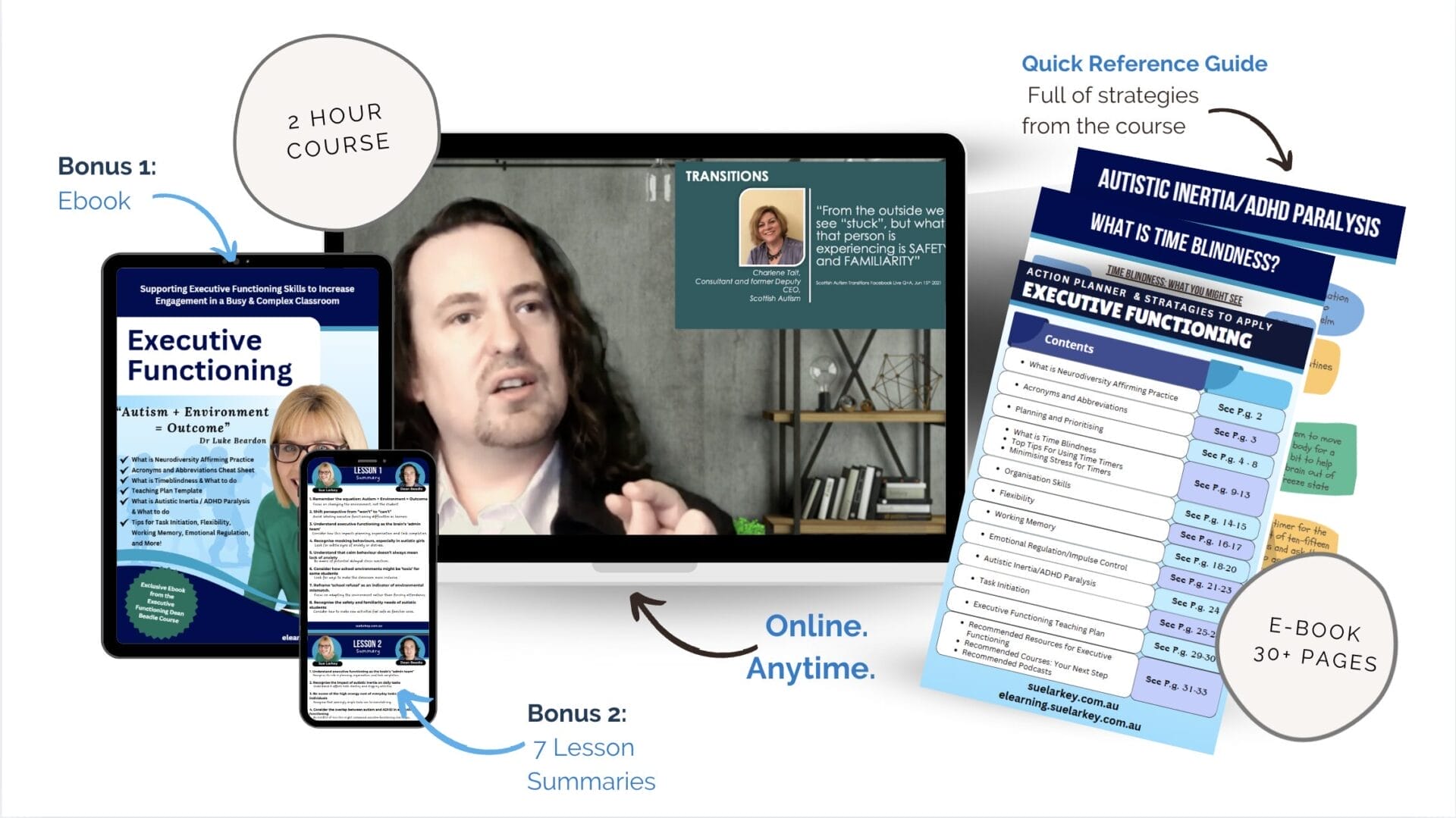
Educators Guide to Executive Functioning – Why it impacts Learning and Behaviour & What to do
RECOMMENDED PODCASTS

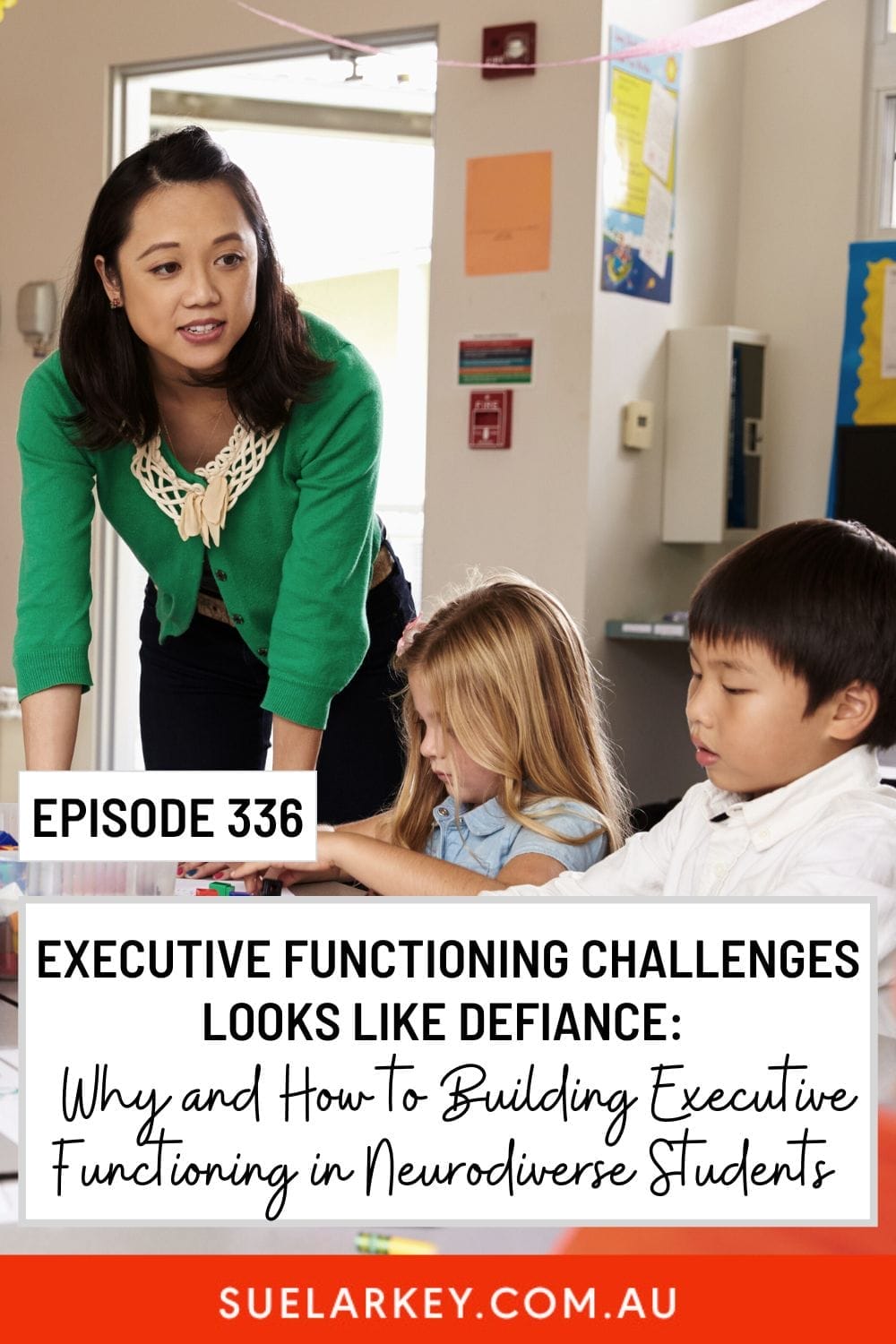
EPISODE 304:
Decoding Classroom Behaviour: An Educators Guide to Supporting Neurodiverse Students (AS, ODD, PDA, ADHD)
EPISODE 289:
30+ Reasons Why a Child Can’t Sit Still & What You Can Do

EPISODE 315:
Executive Function Classroom Strategies – Breaking Through Autistic Inertia & ADHD Paralysis
Great Resources to Support and Understand Executive Functioning
No Results Found
The page you requested could not be found. Try refining your search, or use the navigation above to locate the post.
Sue Larkey Books









 Sorry we no longer ship items outside Australia. Please consider the digital versions of Sue’s Books –