Conversations with Sue Larkey
With Guest Jed Baker
Seven Hidden Triggers Behind Challenging Behavior in Children with Autism
behaviour triggers in autism

**************************************
Join me for an upcoming Workshop:
Can't make these Workshop dates? Join me for a self-paced on-demand course:
Sue Larkey On-Demand Workshops
**************************************
Discussed in this Episode:
✅ The Thursday Morning Detective Work: Track patterns in challenging behavior by day/time. The example of a student who had meltdowns every Thursday morning traced back to swimming lessons on Wednesday night causing late bedtime, poor sleep, and skipped breakfast.
✅ The Two-Question Anxiety Strategy: When a child expresses fear, ask: “What is the probability of this bad thing happening?” and “Am I overestimating the severity?” Use real data to help children think through worries logically.
✅ Self-Recording for Routine Reminders: Have students record audio messages to themselves on their phones, reminding them of new routines and strategies for challenging situations (like navigating locker areas).
✅ The “Then vs. Now” Trauma Processing Technique: When children bring up past incidents, acknowledge what happened, then help them see the present: “That happened then. Are you safe now? Look at the friends you have now.”
✅ Chronological Timeline Writing: Have students write out a timeline of difficult events, then discuss how circumstances have changed (“In year 2 we struggled with friendships, but now in year 10, look who we’ve got”).
✅ Observing the Sensory Environment: Before addressing behavior, assess whether the environment is overwhelming (too loud, too crowded) or understimulating (boring, passive listening). Adjust accordingly.
✅ Respecting Special Interests as Meditation: Allow daily time for children’s passionate interests (like anime) as a legitimate calming strategy that recharges their batteries for facing daily challenges.
✅ Using the Seven Trigger Categories as a Checklist: When behavior occurs, systematically check: internal issues (tired/hungry/pain), sensory issues, demands/anxiety, disappointment, threats to self-esteem, unmet attention needs, and past trauma.
✅ Self-Modeling Video Technique: Record students performing expected behaviors, edit out problematic moments, and have them watch the successful version before challenging situations.
✅ Journaling for Emotional Processing: Encourage written or audio journaling to help students process emotions and gain perspective rather than being “hostage to the emotion.”
STRATEGIES FOR BEHAVIOUR SUPPORT
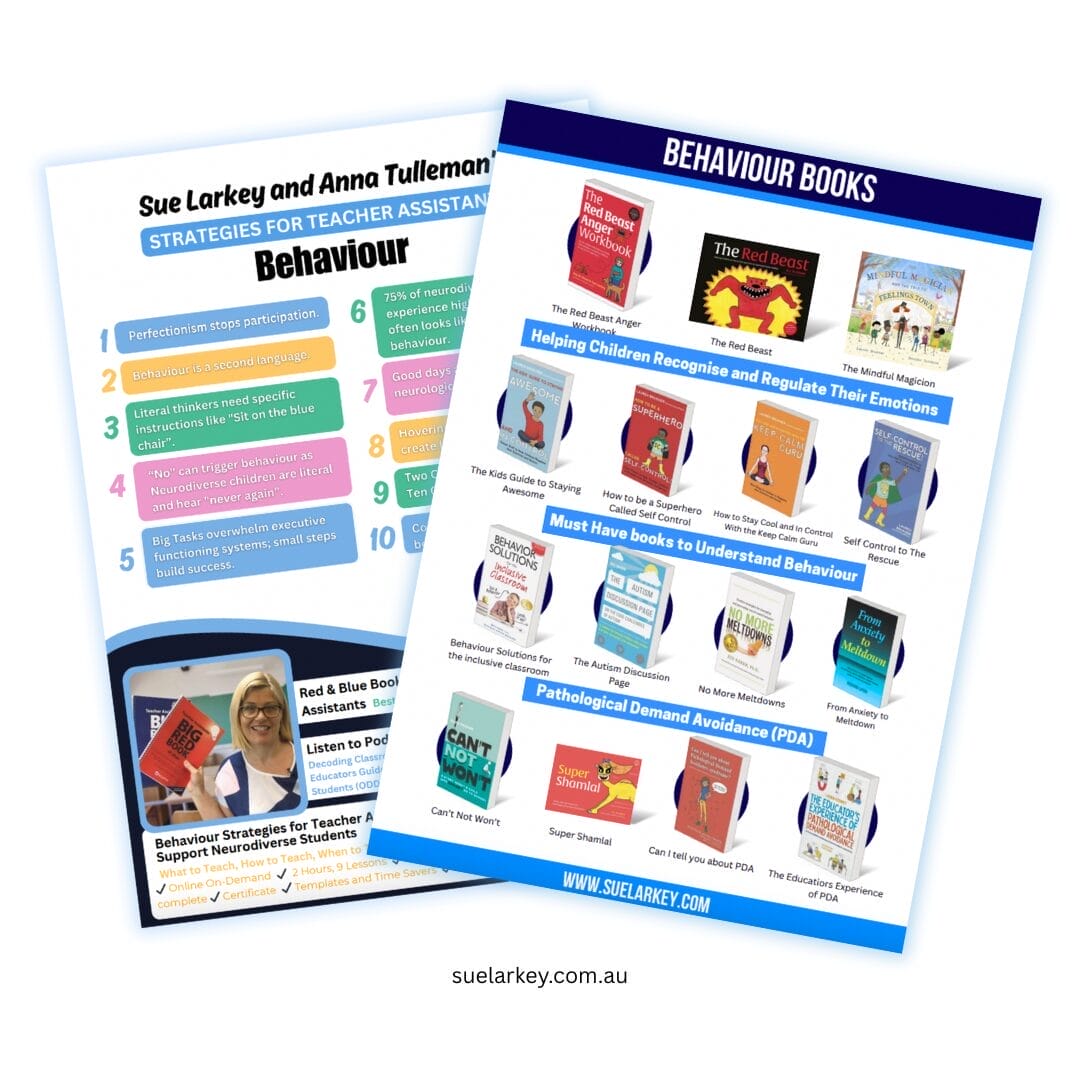
RECOMMENDED COURSES

Teaching Students with Neurodiversity (AS, ADHD, PDA, ODD … )
Teaching Strategies & Behaviour Support
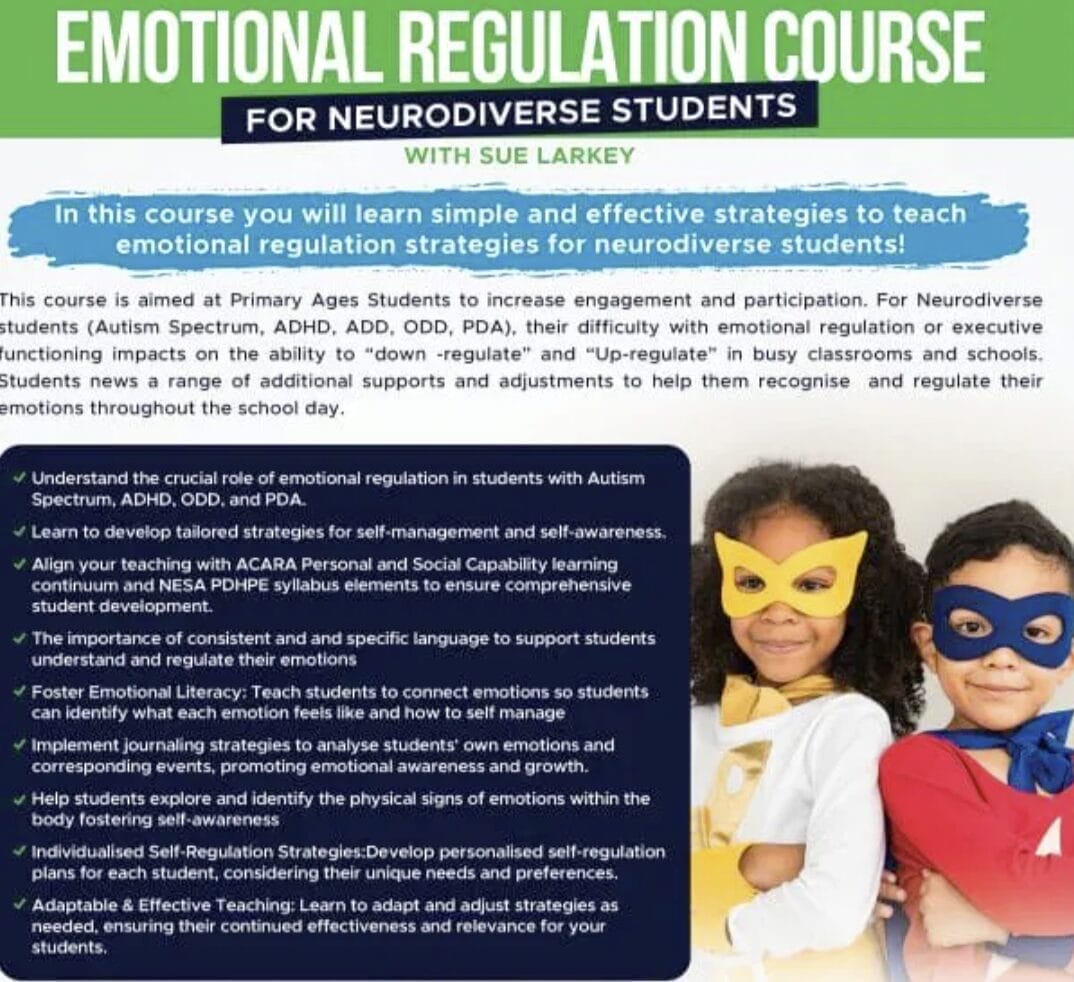
Challenging Behaviour in the Classroom: Emotional Regulation in Students with an Autism Spectrum and/or other Neurodiversity
RECOMMENDED PODCASTS
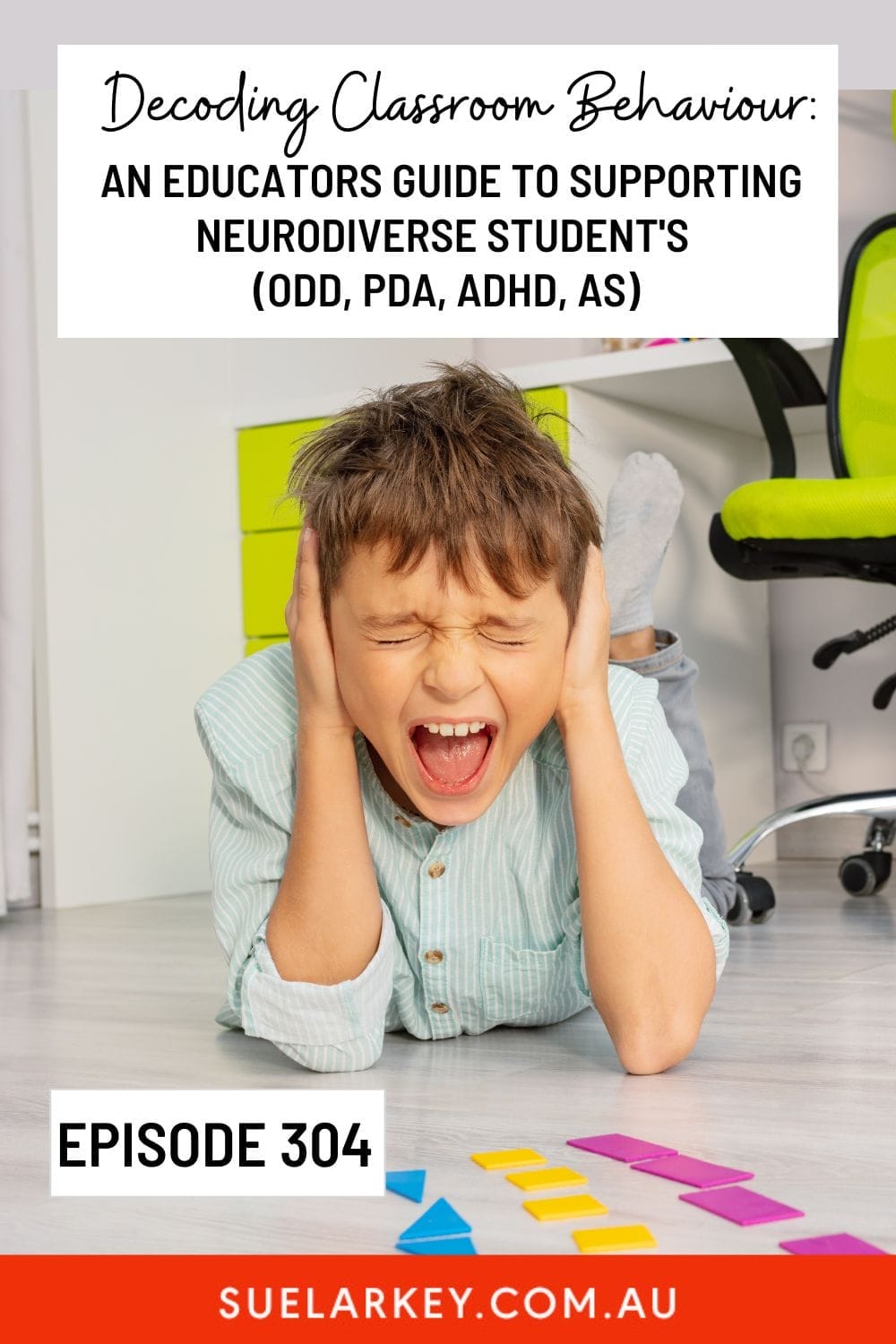
EPISODE 304:
Decoding Classroom Behaviour: An Educators Guide to Supporting Neurodiverse Students (AS, ODD, PDA, ADHD)
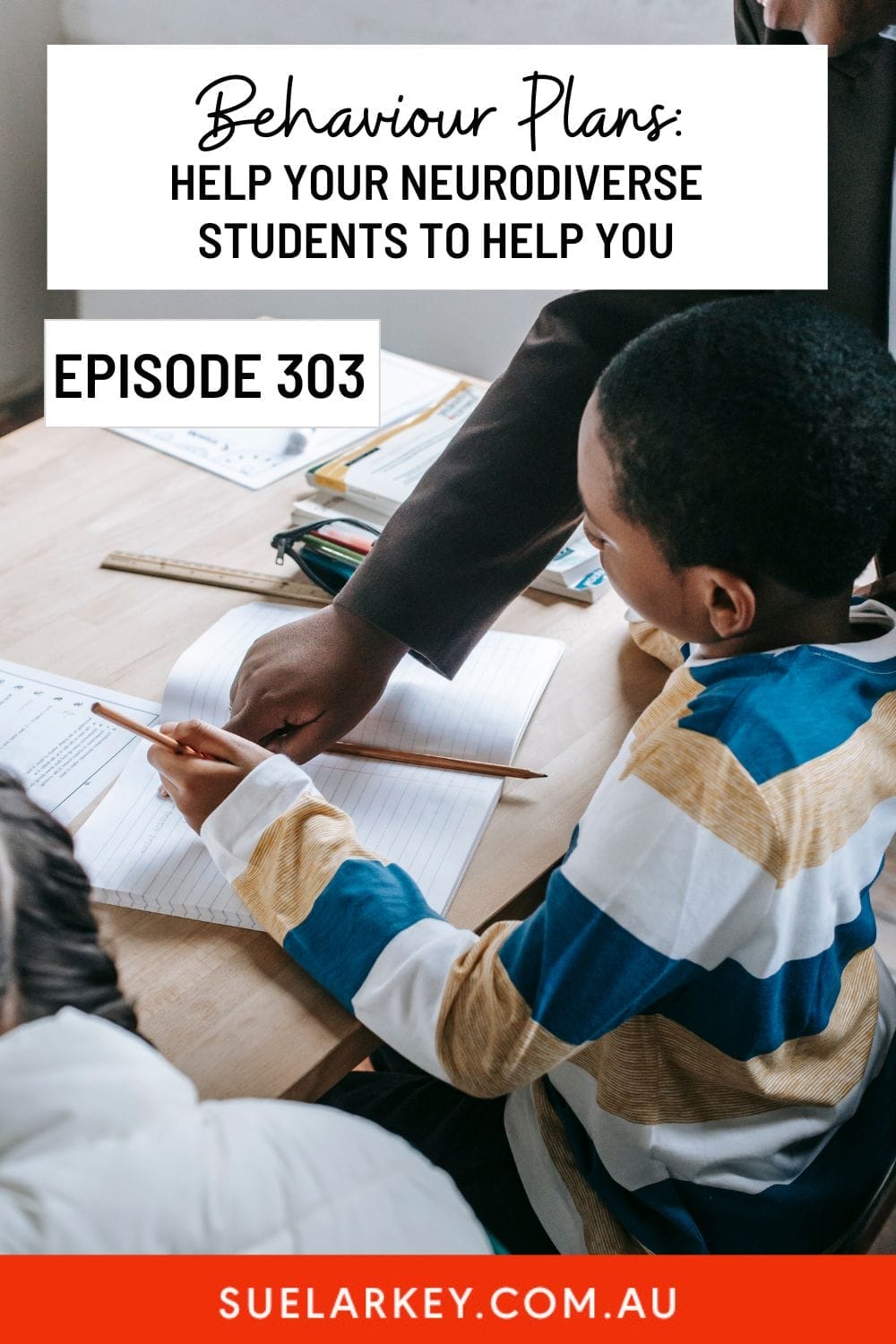
EPISODE 303:
50/50 – Behaviour Plans: Help your neurodiverse students to help YOU
EPISODE 285:
Behaviour Solutions for Setting up your Classroom for Success
BOOKS ABOUT BEHAVIOUR
Showing 1–6 of 9 resultsSorted by popularity
-

Behaviour Solutions for the Inclusive Classroom
$29.95 -
Behavior Solutions for the Home and Community
$29.95 -

More Behavior Solutions In and Beyond the Inclusive Classroom
$29.95 -

No More Meltdowns
$29.95 -

Overcoming Anxiety in Children and Teens
$29.95 -

The Social Skills Picture Book: Teaching play, emotion & communication to children with autism
$68.95






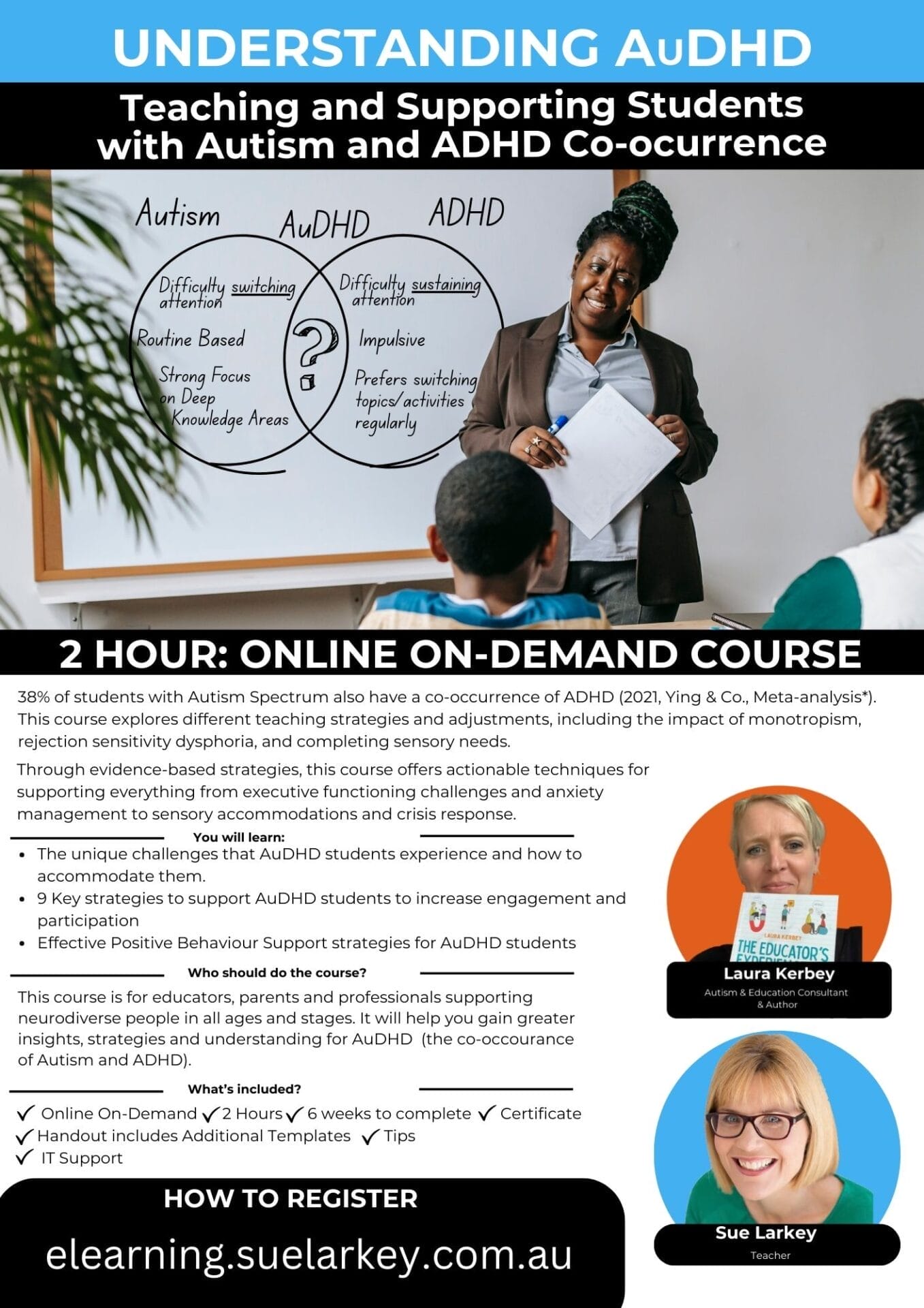
UNDERSTANDING AuDHD: Teaching & Supporting Students with Autism and ADHD Co-occurrence
✅ 2 Hours, 8 Lessons
✅ 6 Weeks to Complete
✅ Certificate of Completion
✅ Lesson Transcripts
 2 Hours
 2 Hours
 Certificate
$149


 Sorry we no longer ship items outside Australia. Please consider the digital versions of Sue’s Books –