PREPARING NEURODIVERSE STUDENTS FOR 2027
Getting Ready for the New School Year: Transition Strategies for Neurodiverse Students
neurodiverse student transition tips
Discussed in this Episode:
✅ Start in November: My view was that November is the best time to begin transition, because concerts and end-of-year events leave little capacity later, and some children need more visits than others.
✅ Reduce Staffing Uncertainty: I argued that neurodiverse children and their parents need to know the teacher and classroom before the break, because many children co-regulate. Even a 50 50 chance is worth sharing (I put the real odds at roughly 80%), with a note that changes can happen. Where staff churn is high, I kept the teacher assistant the same for the first four weeks, until funding and staffing were known, so there was one familiar face.
✅ Plan for Sensory: Every move brings different sensory demands: one confined classroom of 20 to 25 children with fewer quiet nooks, constant movement between classes in secondary, and changes in uniform and shoes. I asked what each child’s sensory needs would be in the new setting.
✅ Map the Support People: Children need to know who they go to for help (the teacher assistant, the teacher or a peer) and which other staff, such as learning support, they should meet. Office staff mattered too, because some children are dropped off there in the morning due to separation anxiety.
✅ Make It Visual: A physical map of the school (toilets, library, bag hooks, lockers), plus written rules such as which days equipment can be used, gave my visual learners time to process the information.
✅ Build Peer Connections: Parents were the focus here. I encouraged them to network, find out whether their child knows anyone, and organise play dates in the holidays.
✅ Teach the Hidden Rules: Neurotypical children pick up school routines by osmosis, while neurodiverse children often do not. I recommended explicit social scripts for things like asking for help, sitting on the mat, lining up and saying sorry.
✅ Prepare for the next step – Join sue now for upcoming workshops OR same course online on demand upcoming workshop
✅ Start volunteer work and job experience in November – For students transitioning to work, arrange “go to work” days with parents or family friends, start volunteer positions, or secure summer jobs at franchises like McDonald’s, Baker’s Delight, or Subway that have structured training programs.
Looking for more tips and strategies for transitioning to 2027? Join me for upcoming workshops.

It’s starting to get to the end of 2026, and you might already be starting to think about how you will ease the transition for the children you know. Or if you are just coming out of learning from home and moving to in-person teaching, these transition tips will help reduce anxiety and stress!
Transition can be big or small changes: it includes change in teacher, change in room, change in students in the class not just starting preschool, school, high school and beyond.
The nature of autism is such that transition can be extremely stressful, no matter what age or how BIG or SMALL the change maybe.
Changing Teacher is Like Moving to a Foreign Country

I have prepared THREE FREE Cheat Sheets for Transition Strategies:

Transition Student Programme
✅ Academic
✅ Behavioural
✅ Communication
✅ Learning at Home
✅ Social Skills
✅ General / Sensory

Transition Tips Booklet
✅ 13 Separation Anxiety Tips
📌 12+ Page Student Transition Guide
⭐️ Preschool to Post School Tips
✅ Checklist for Success
📌 Top Tips for Children Starting School in 2024
🌼 School to Work Transition for Young People with Autism Spectrum Disorder
10 Things About Me
An informative guide to enable student self-advocation
This is the perfect solution for assisting a smooth transition, and ensuring the student’s new teacher is aware of what to do and what not to do.
recommended courses

Practical Behaviour Strategies for Every Classroom: The Ultimate Classroom Behaviour Guide for Neurodiverse Students
A$149 · 45+ Videos, Lifetime Access

Educators Guide to Executive Functioning: Why it Impacts Learning and Behaviour & What to do
A$149 · 2 Hours
recommended podcasts

Episode 168:
How to Transition from Primary to Secondary: Interview with Expert Joan Shanahan

Episode 358:
Preparing Neurodiverse Students for the Transition to Secondary School

Episode 271:
Transition Strategies For Neurodiverse Students – Free Ebook
RECOMMENDED BOOKS FOR TRANSITIONING
Making it a Success


| by Sue Larkey | This is the ideal reference for schools to successfully integrate students into the classroom. It provides easy to follow, proven strategies and worksheets to use immediately. Dr. Tony Attwood writes in the foreword: “Sue has a remarkable ability to identify and briefly explain the difficulties experienced by a child with autism in a regular classroom and to suggest realistic and practical strategies to improve abilities and behaviour. Her advice is succinct and wise.”
$47.95
8 in stock
The Essential Guide to Secondary School

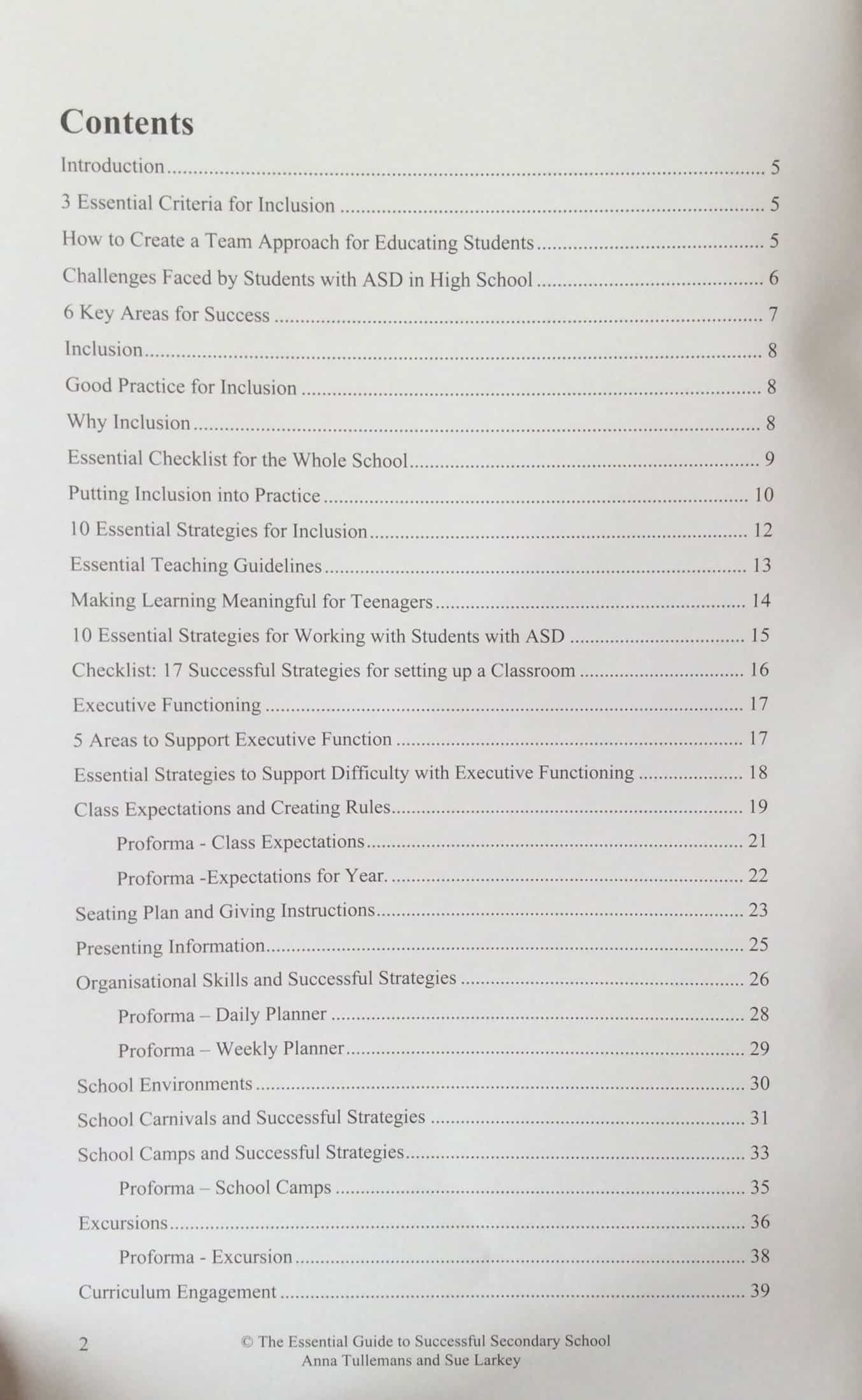
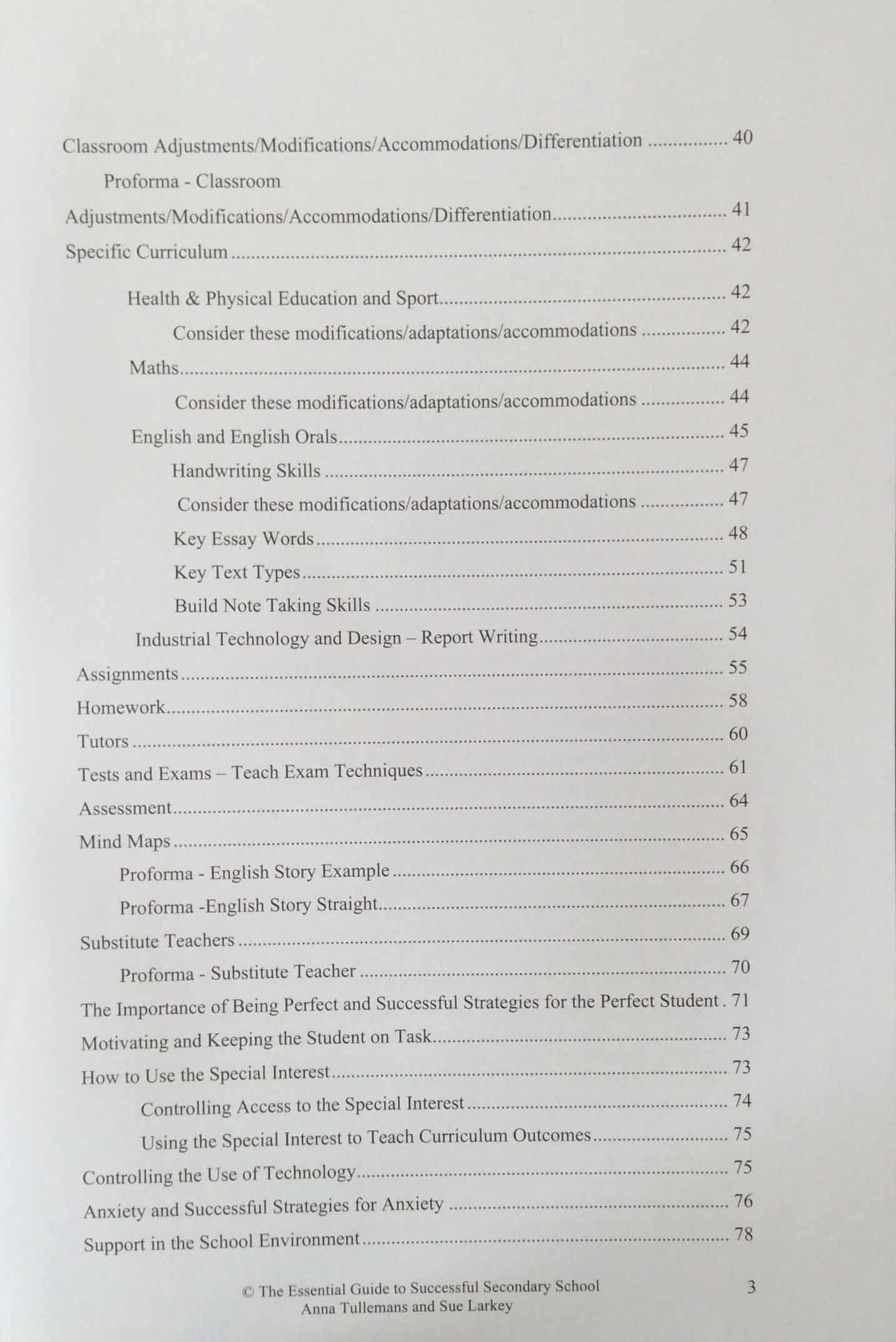

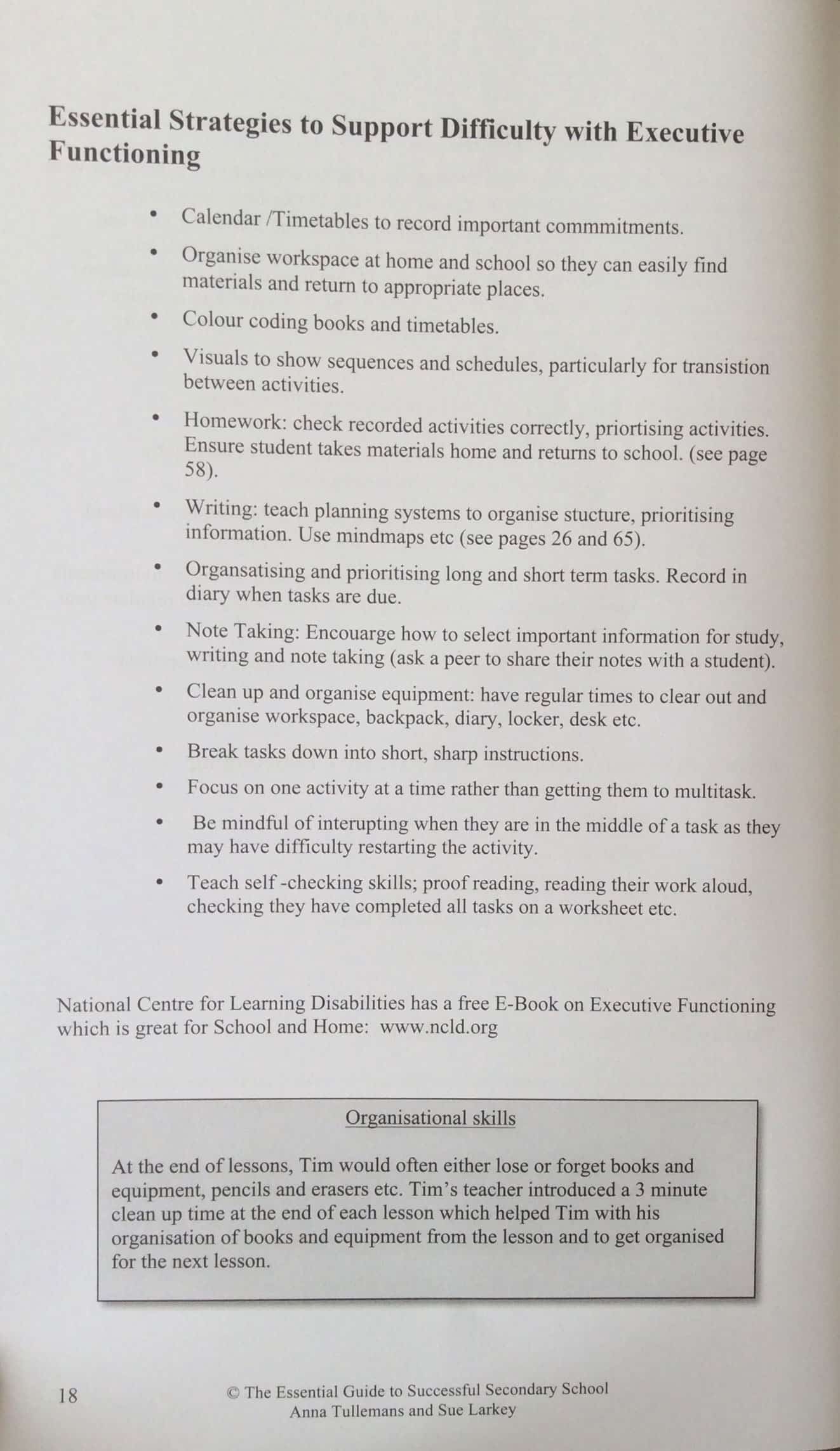


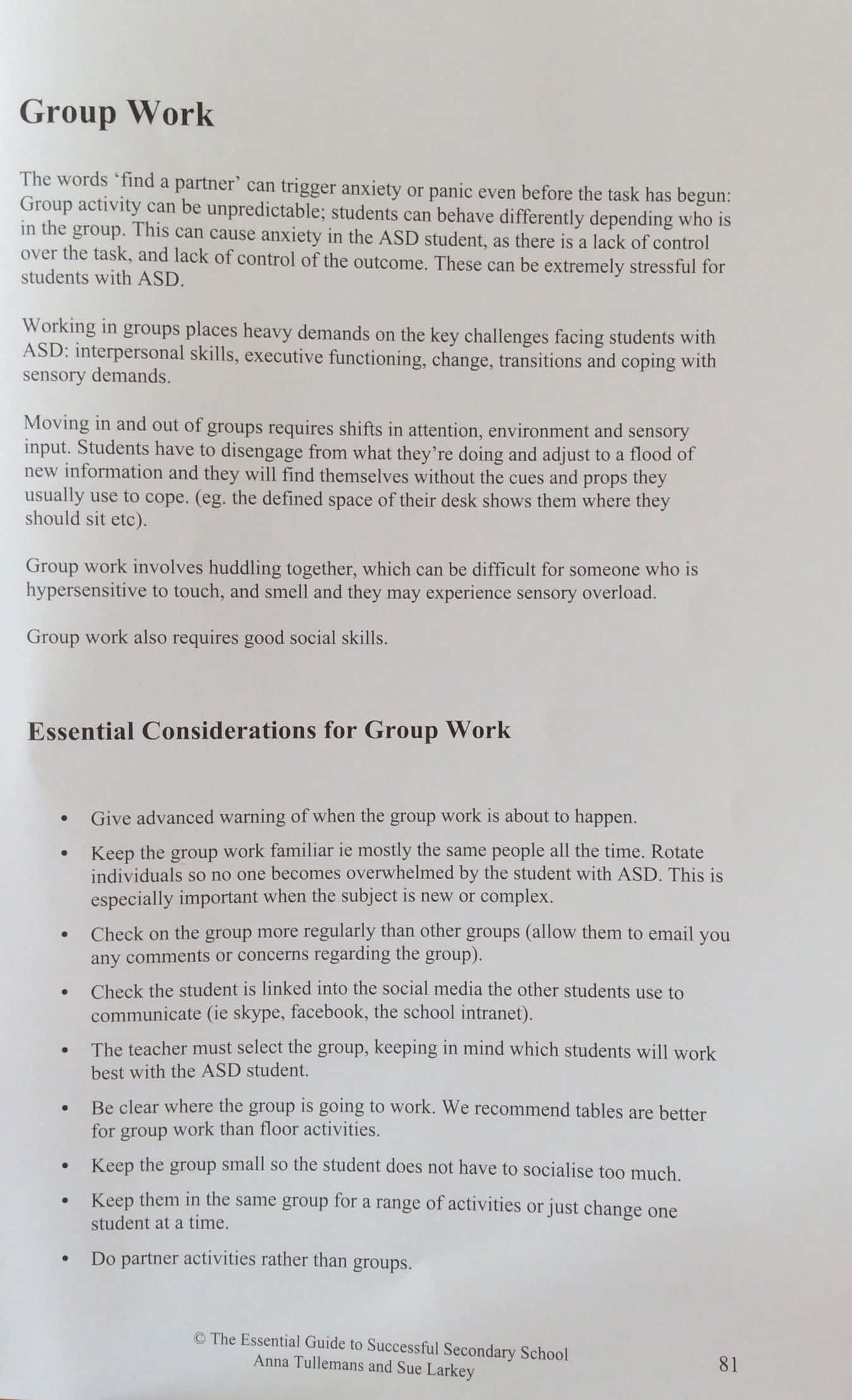
| by Sue Larkey & Anna Tullemans | Revised and expanded in 2016. A practical guide to secondary school. Ideas for
all staff, from curriculum engagement, accommodations, group work, homework, using technology, behaviour support, organisational skills to building independence. Includes proformas to photocopy and save you time. This book has over 100 pages of proven ideas and strategies. MASSIVE TIME SAVER for busy Teachers & Parents

$44.95
46 in stock
The Early Years: The Foundations For All Learning
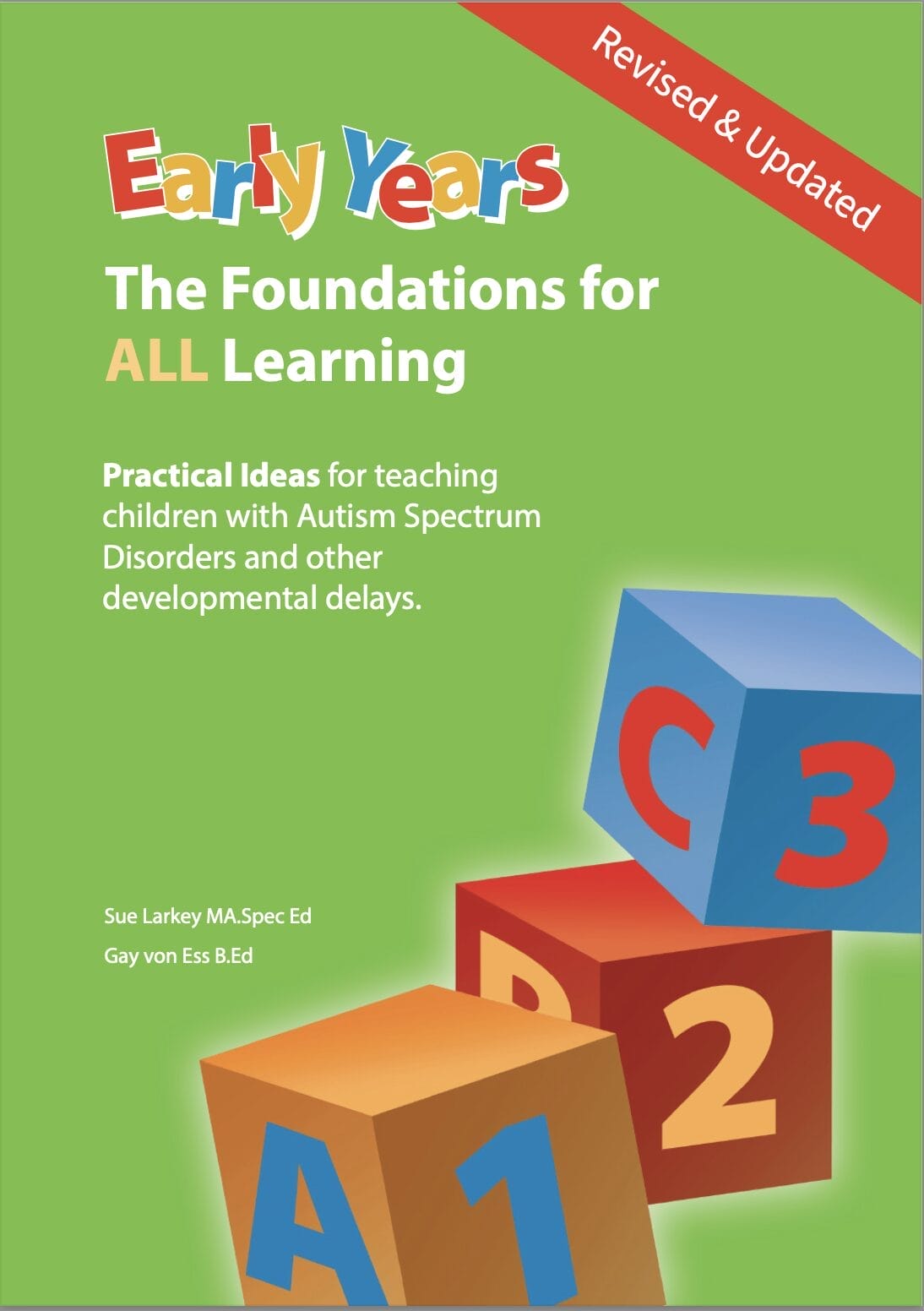
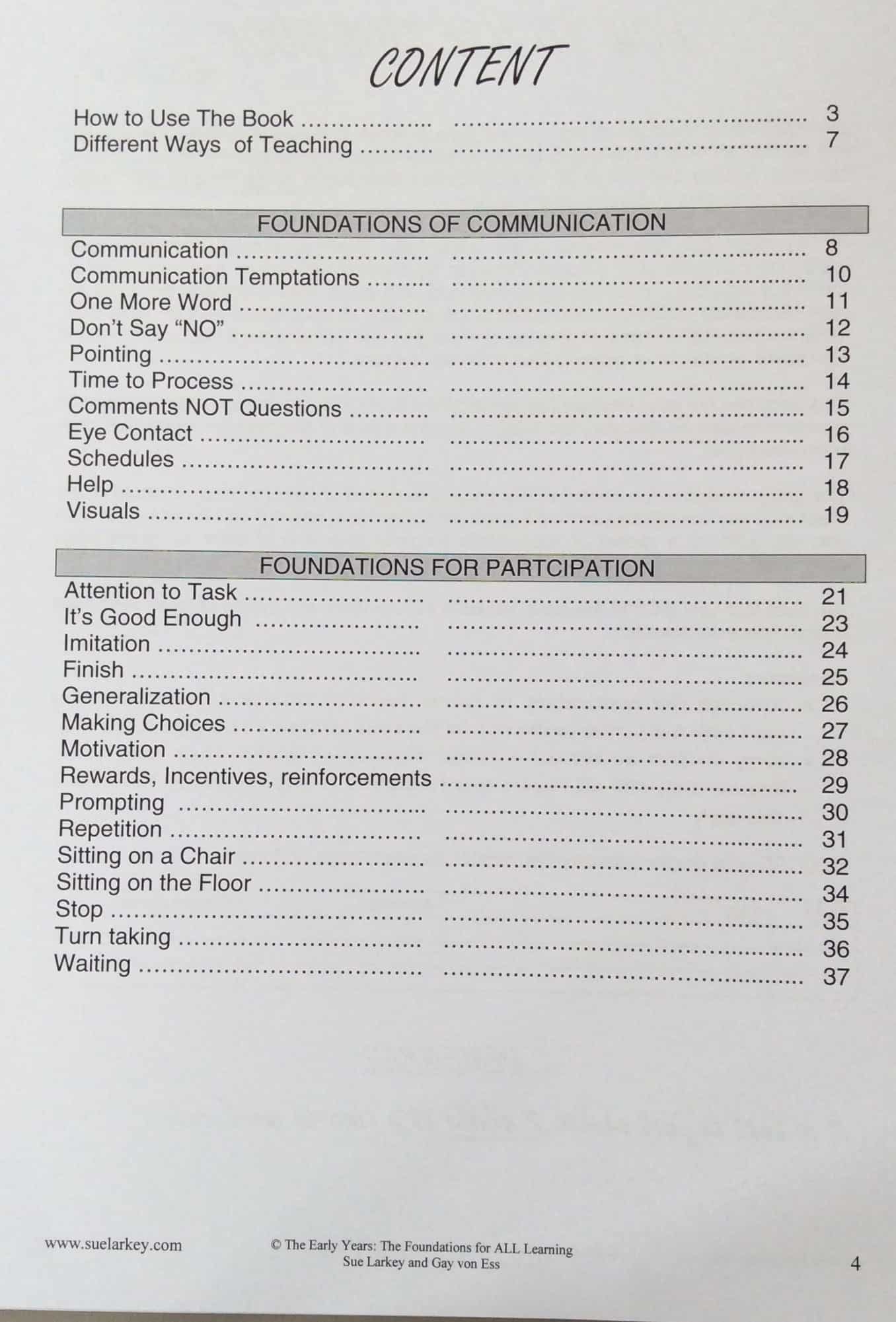
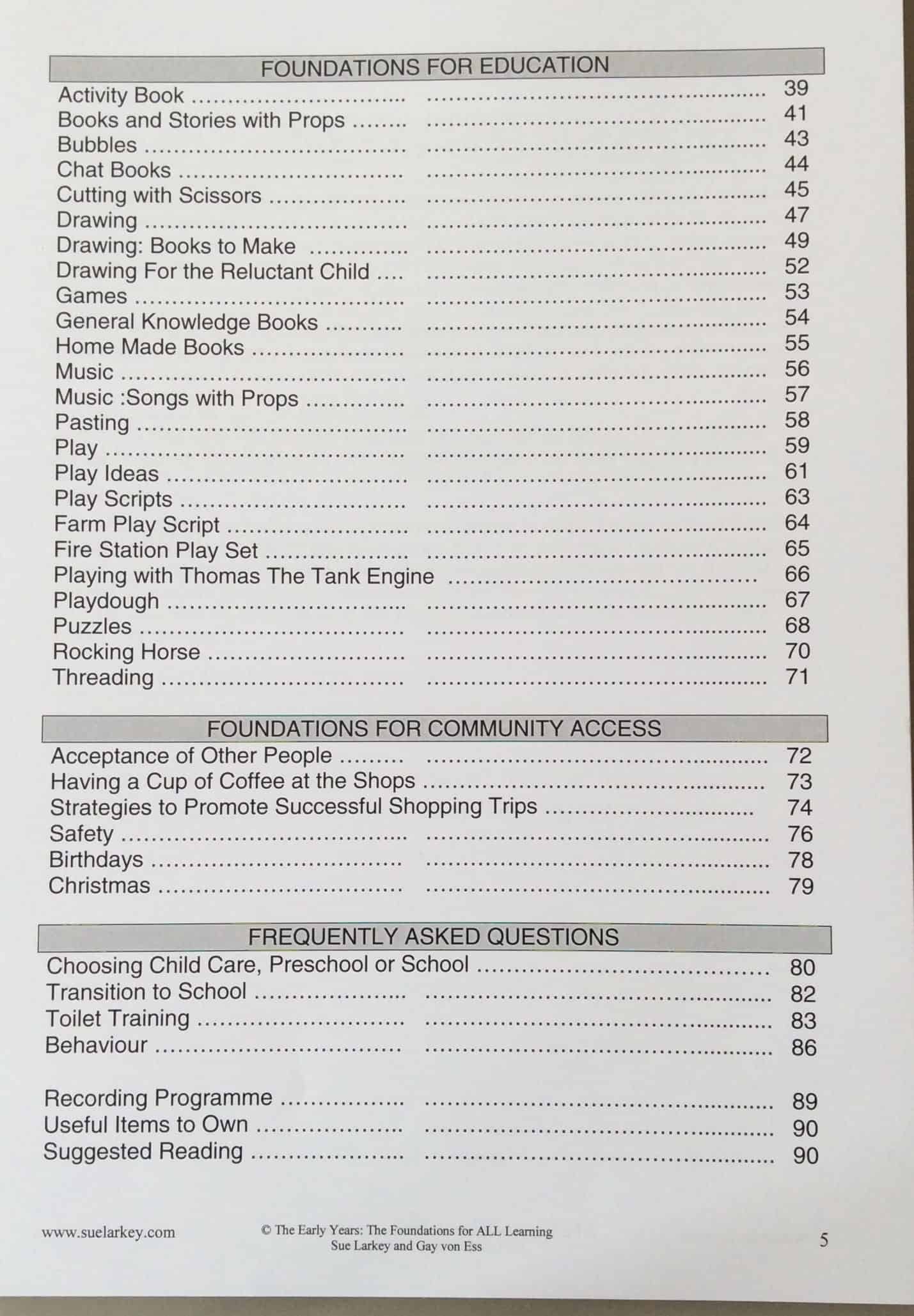
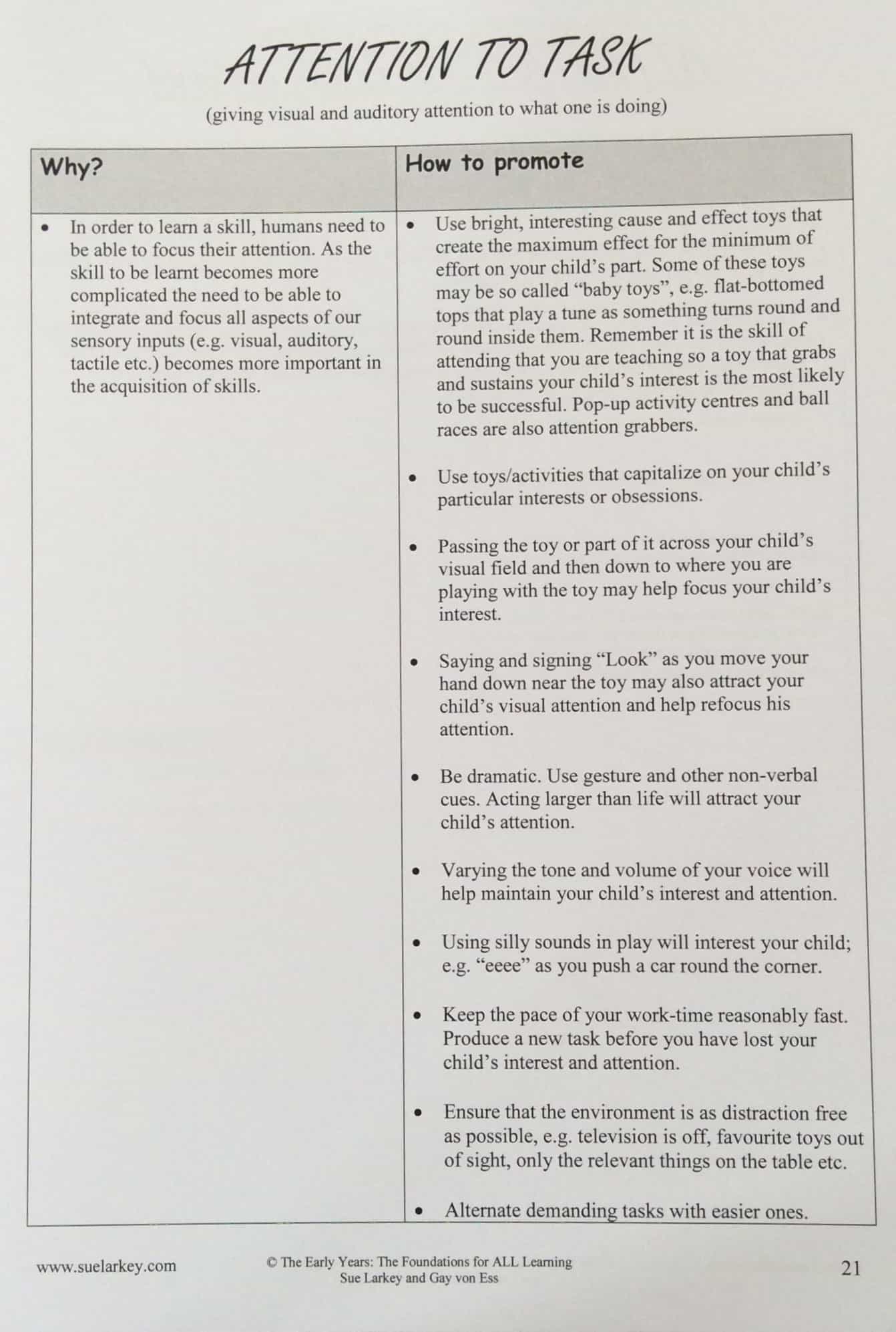
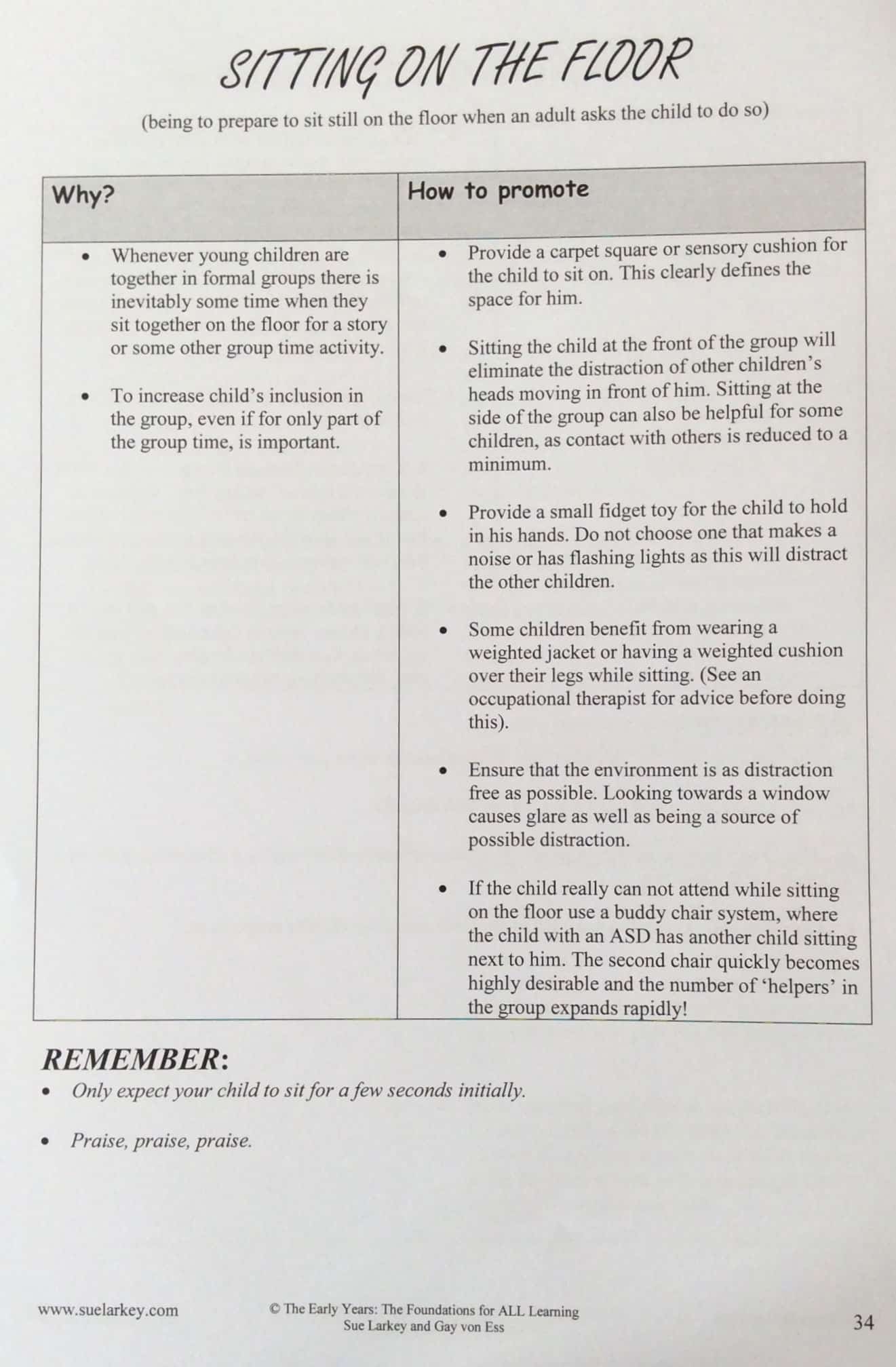
| by Sue Larkey & Gay von Ess | This book is full of practical ideas to give children with an ASD and other developmental delays the KEYS to learning. Teaching to play, write, draw, imitate etc. Toilet training, community access, etc. To sit, ask for help, wait, play, attention to task, sign songs, etc. Great easy to photocopy programmes.
$39.95
20 in stock
From Anxiety to Meltdown


| by Deborah Lipsky | How Individuals on the Autism Spectrum Deal with Anxiety, Experience Meltdowns, Manifest Tantrums, and How You Can Intervene Effectively. This is a MUST HAVE book!!
$48.95
4 in stock
I’m Going to School

| by Anna Tullemans | A workbook for children who are beginning pre-school or school. This book helps them to create a visual guide for preparing for those first steps into a new environment. The children get to take photos and paste them into the book. They can also draw maps to help them find their way around a new school. Each year the book is updated to include the new calendar for that year. It can be used for new students or students who are moving into the next year of school so they can re-acquaint themselves with their new surroundings.
$30.00
24 in stock
How to Stop Your Words Bumping into Someone Else’s


| by Anna Tullemans & Rhonda Dixon | This book has 18 great A4 clear pages with an excellent picture to explain so many of the common challenges students with an ASD face in social and school situations. They include: Getting Someone’s Attention, Starting a Conversation, Interrupting, Asking Someone to Play, What if a Person Says ‘No’?, Asking for Help, How loud or soft your voice should be, Waiting in Line, Waiting on the Mat and Waiting at your Desk.
$29.95
12 in stock
The Ultimate Guide to School and Home

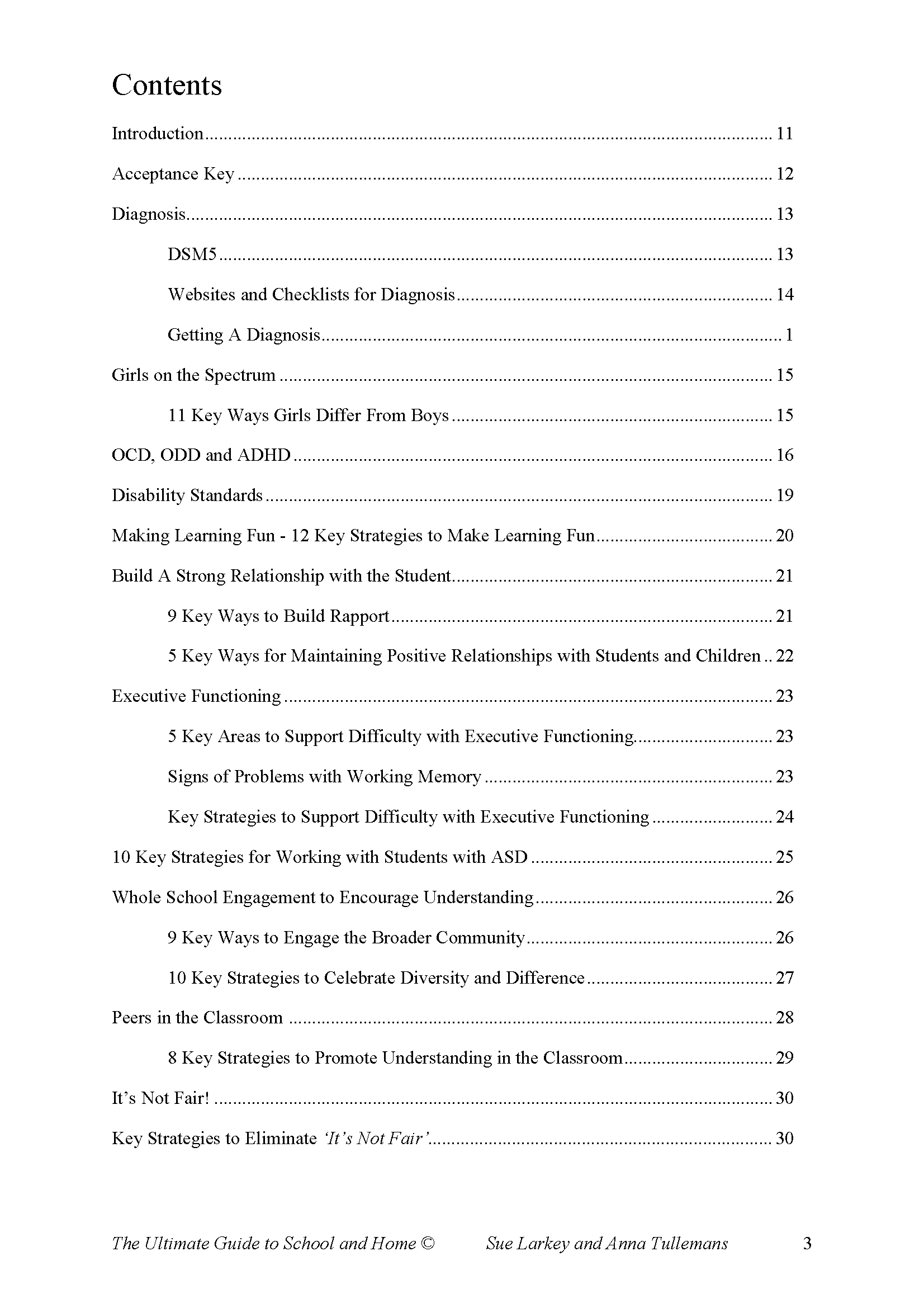
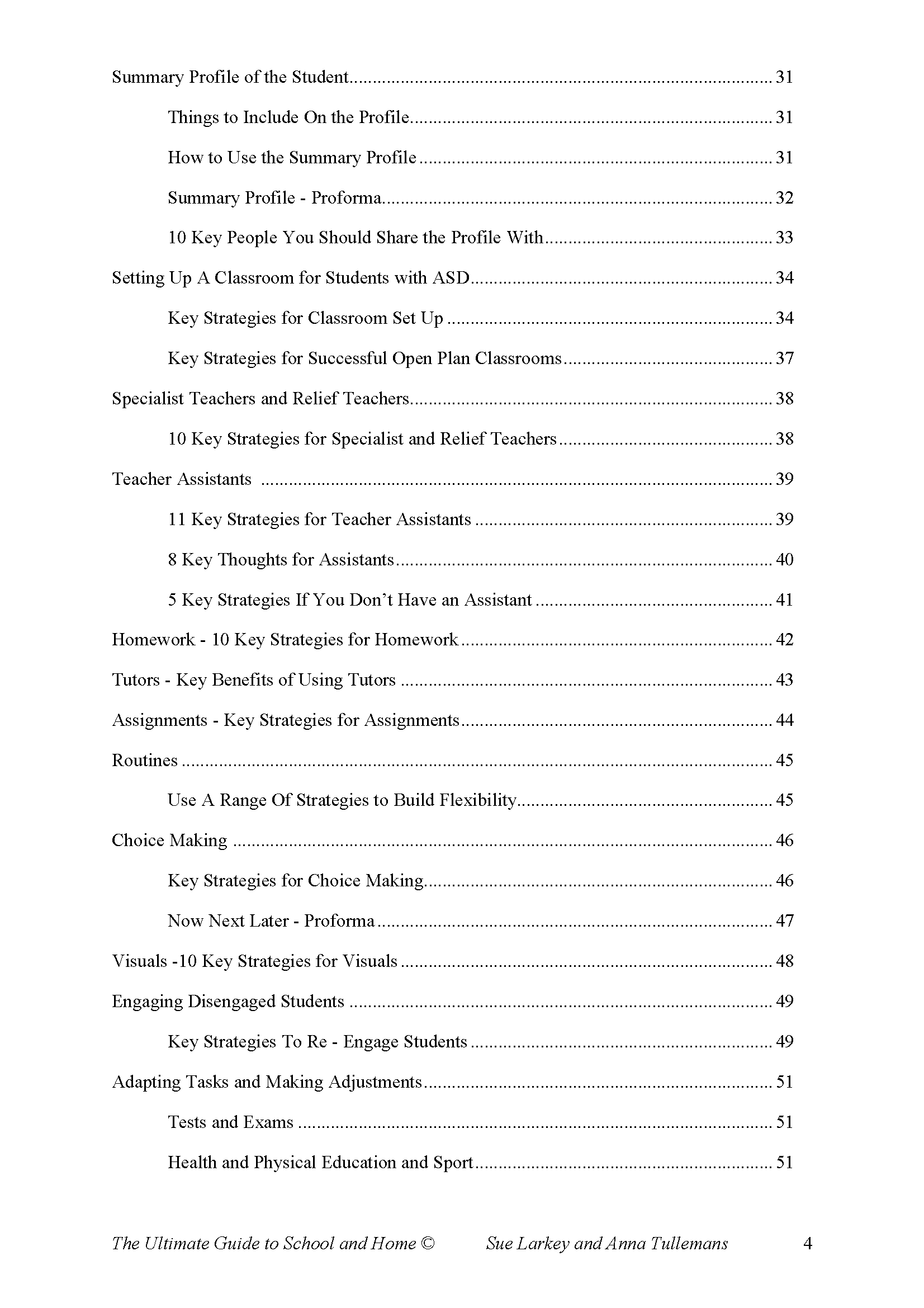
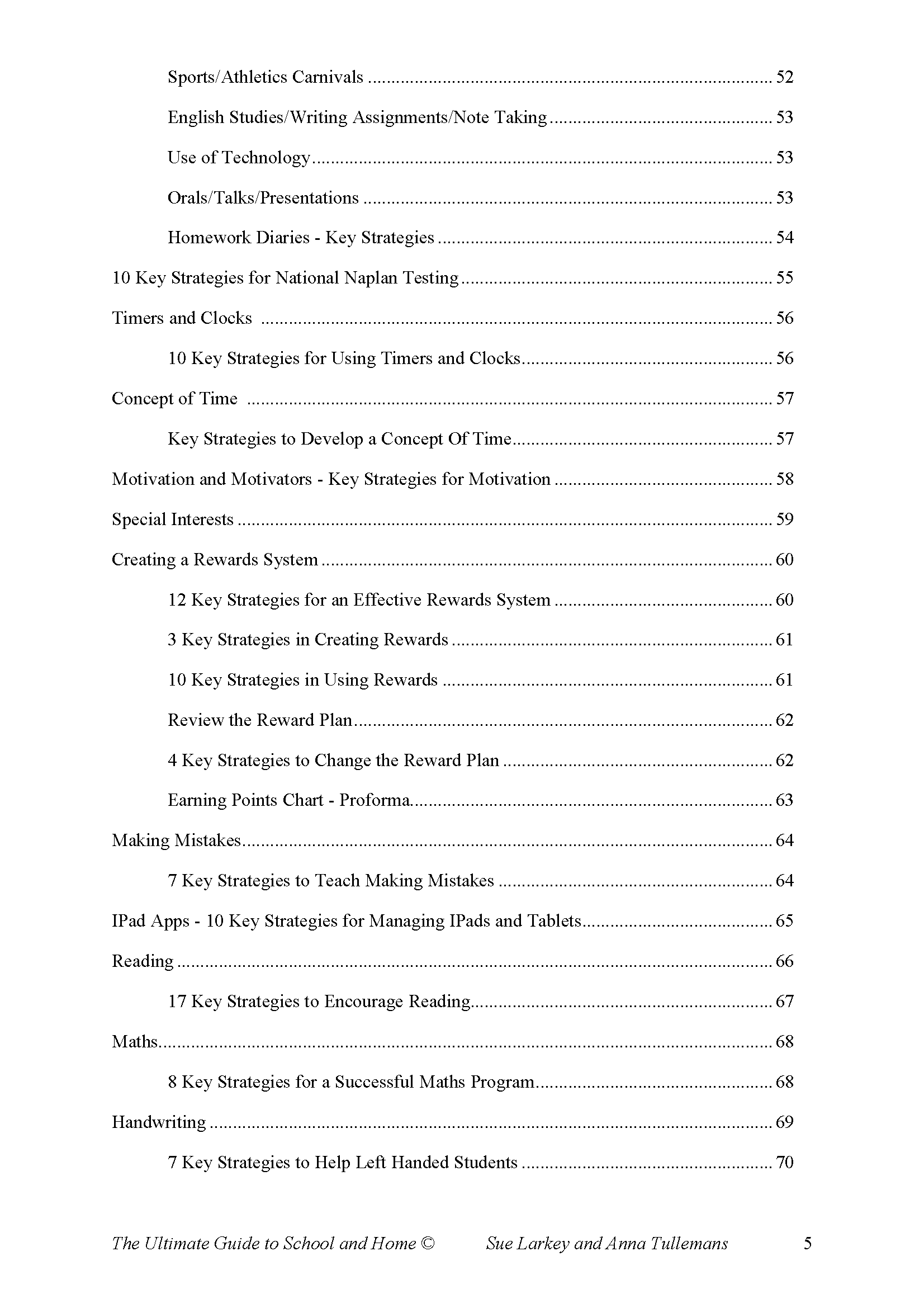
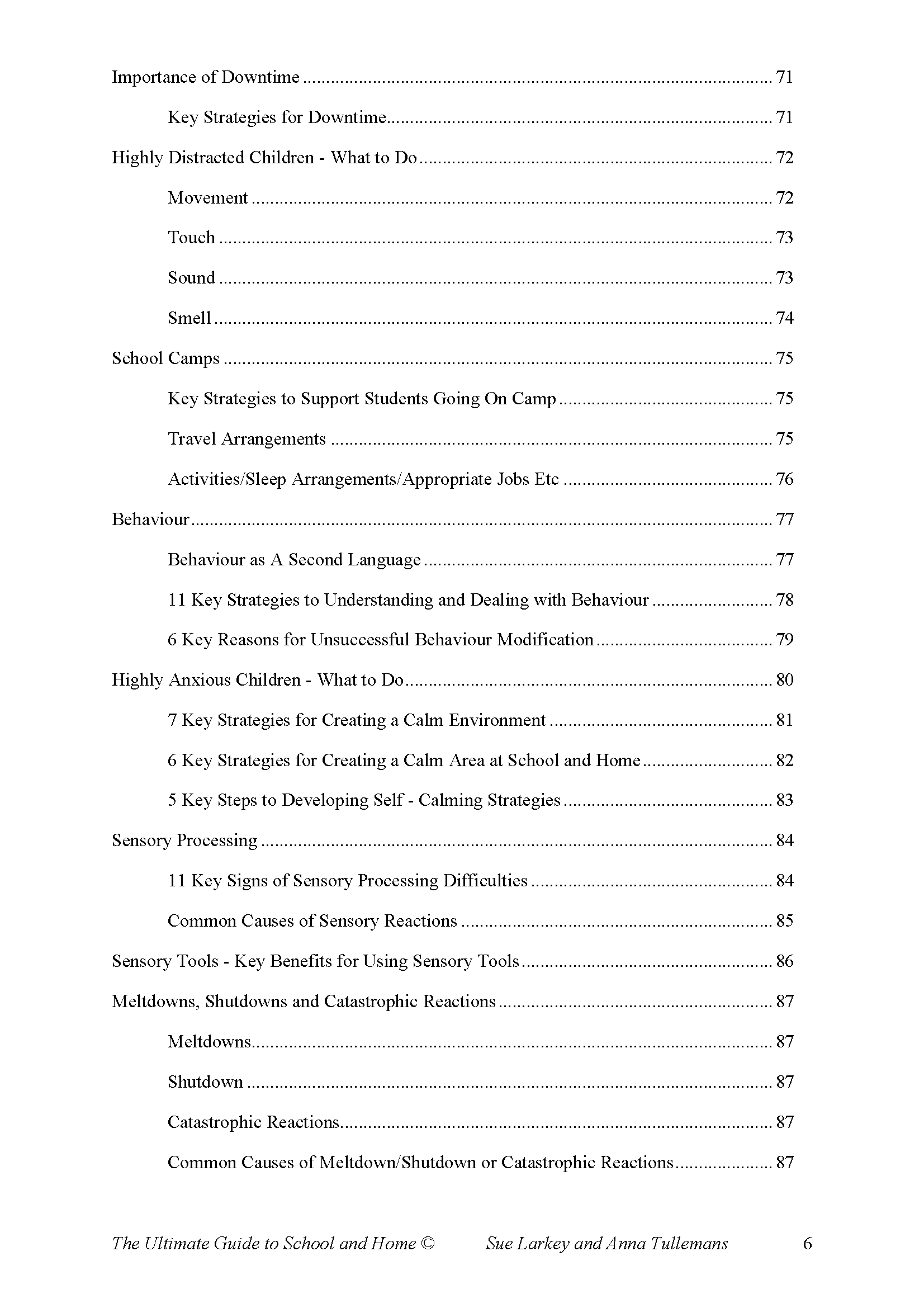
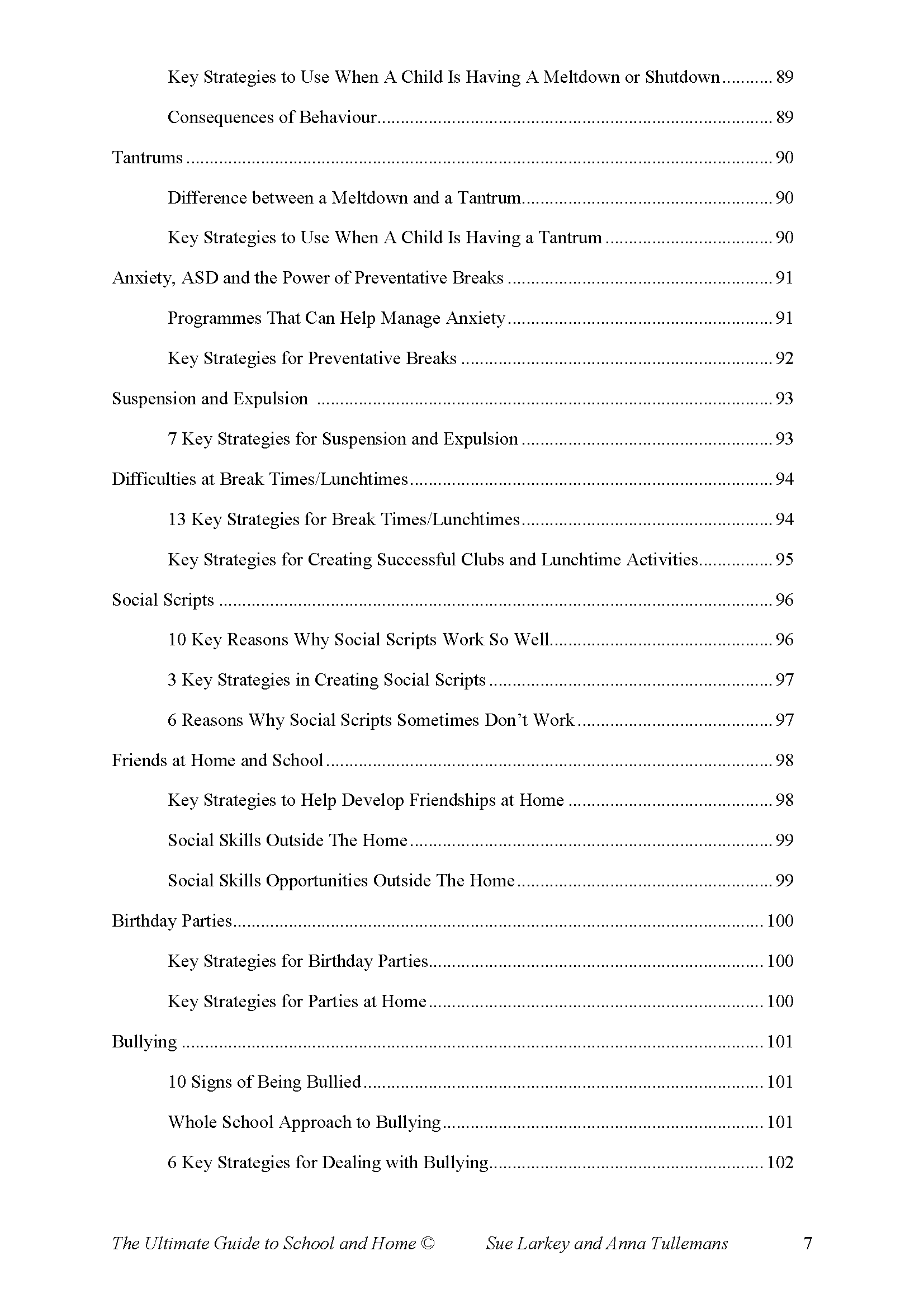
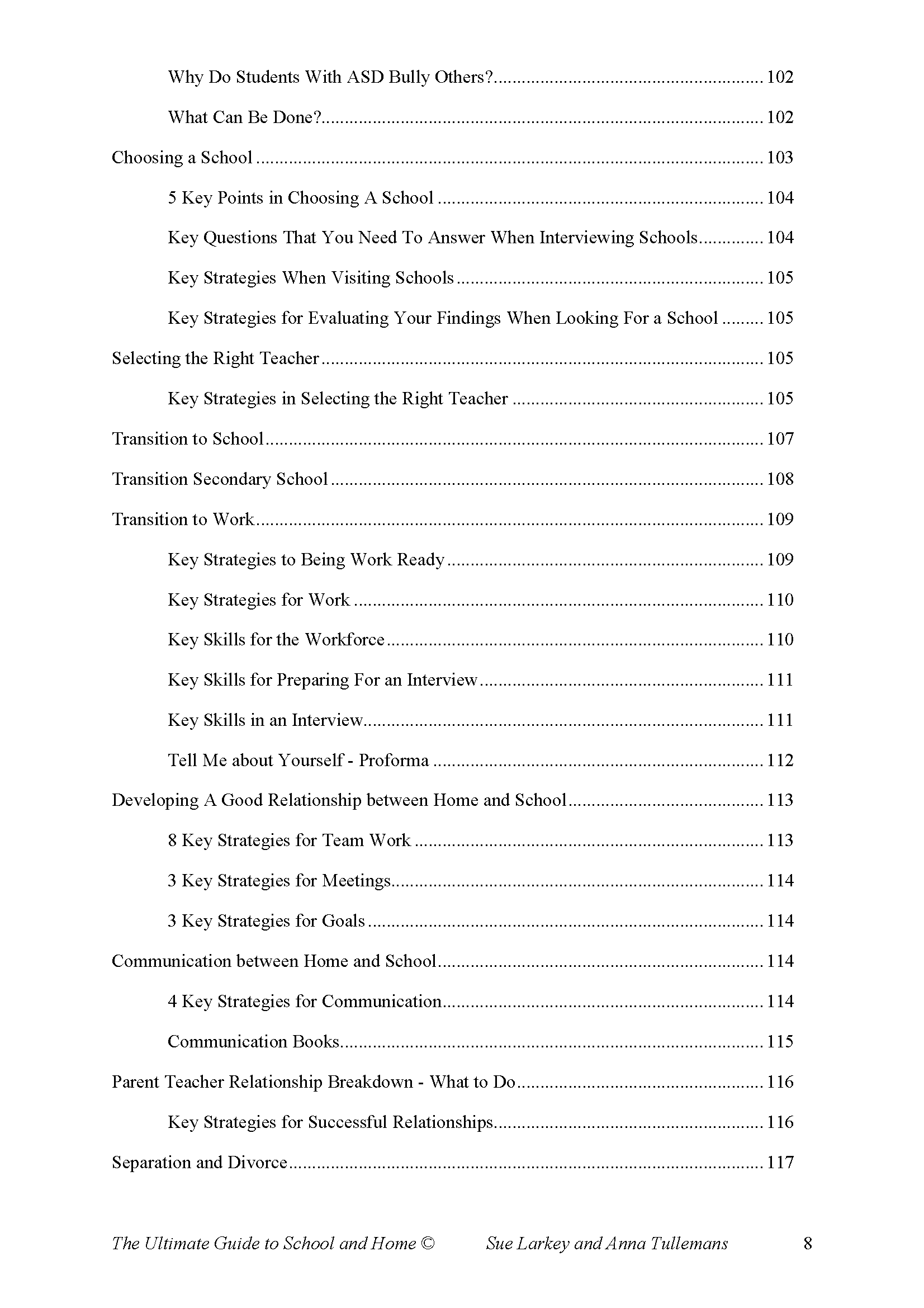
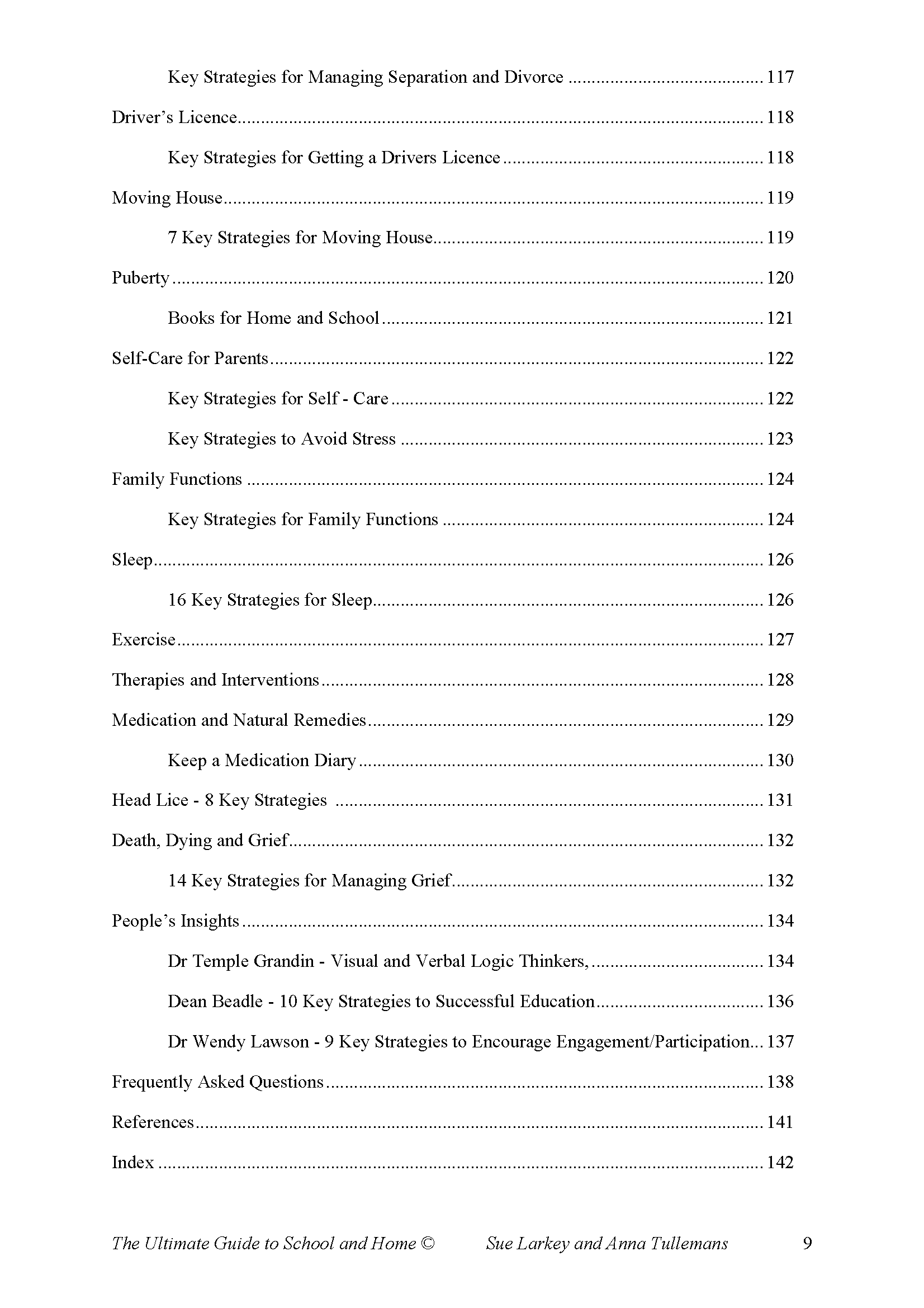
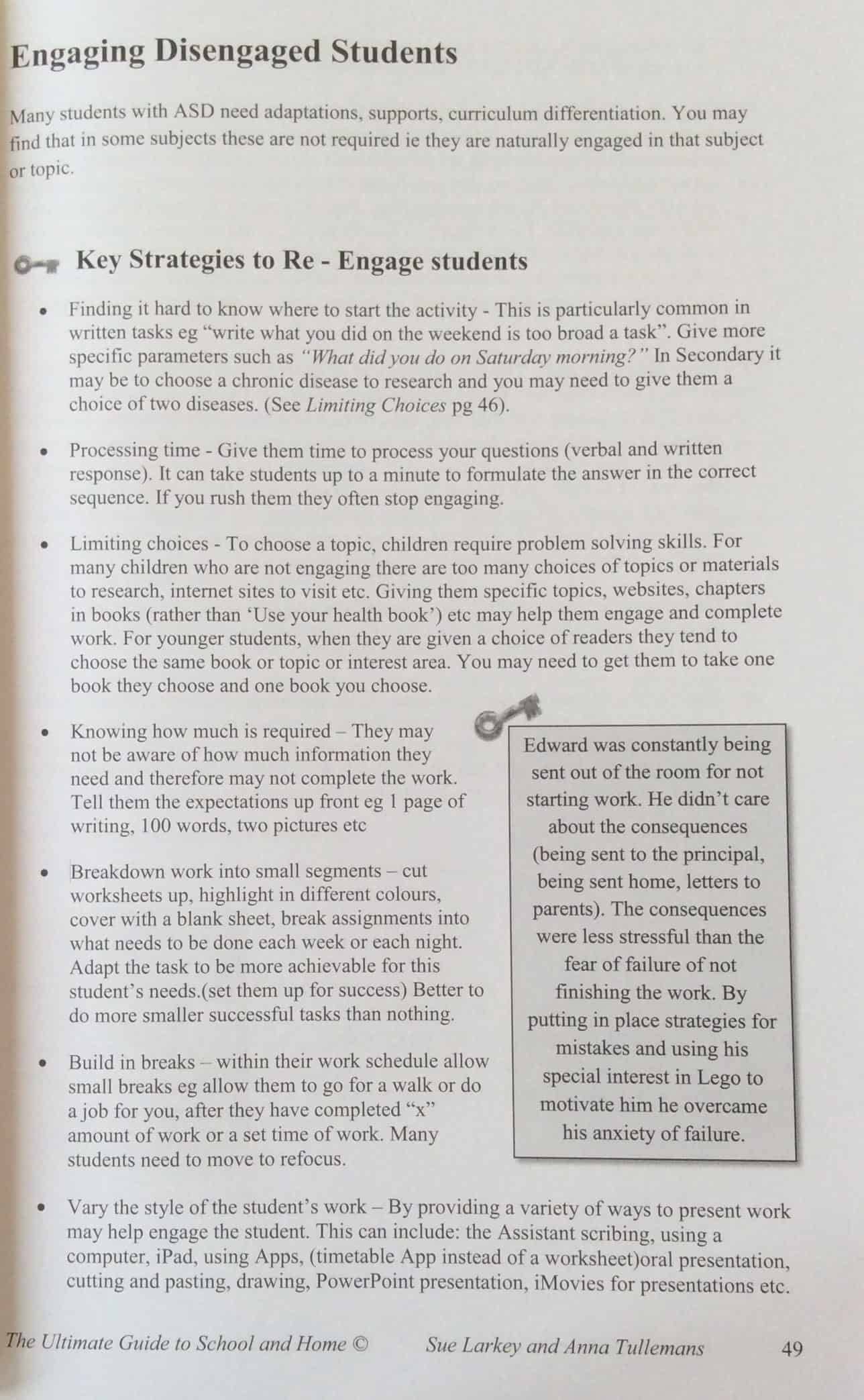
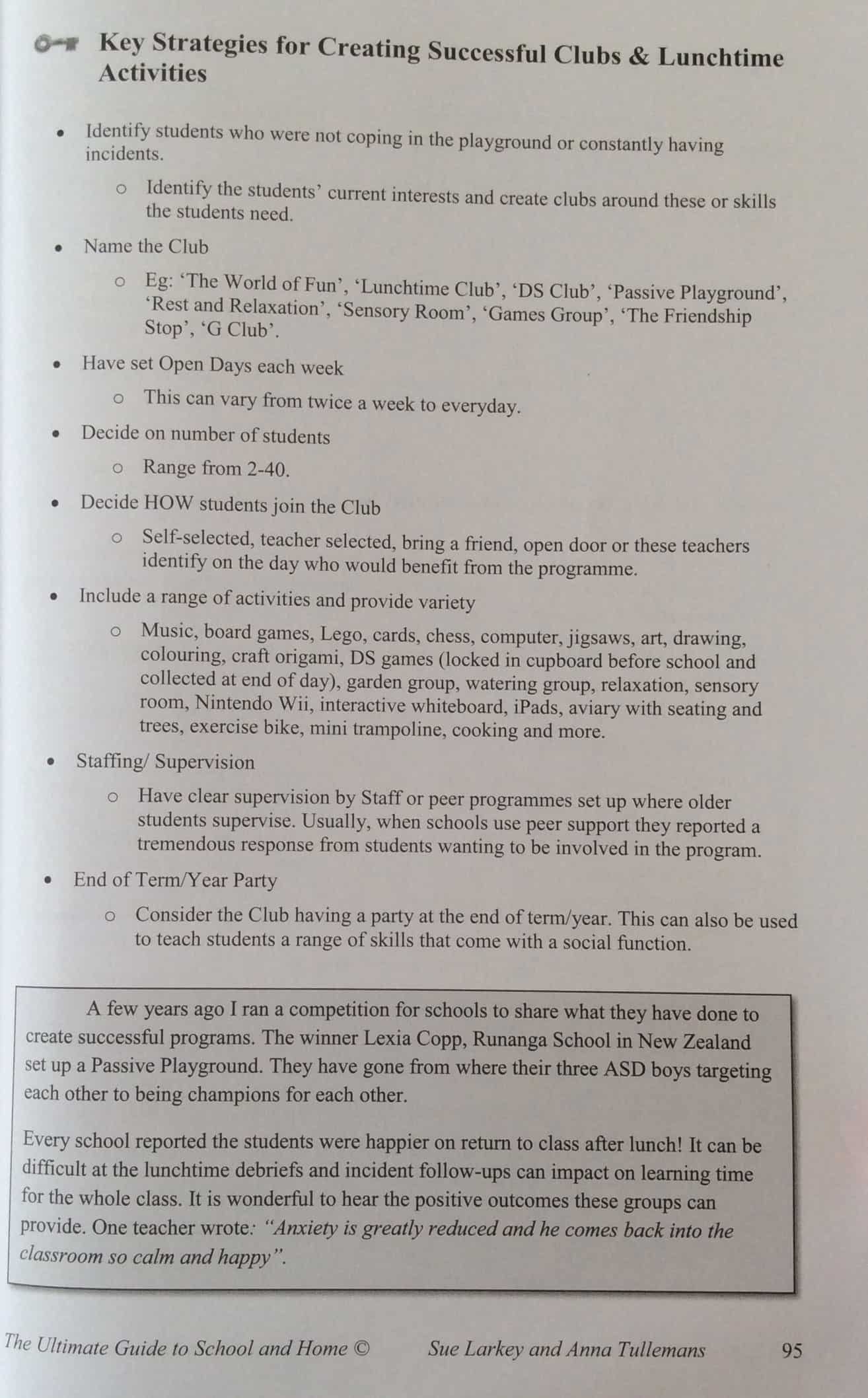
| by Sue Larkey and Anna Tullemans | This book provides key strategies for all ages and stages. It offers over 500 practical strategies and timer savers for school and home from engaging disengaged students, what to do if you don’t have a teacher assistant to considerations for setting up a classroom for teachers; and from developing friends, to moving house and choosing a school for families. It is the ultimate guide for teachers, parents and all professionals supporting children with autism spectrum disorder, including Aspergers, ADD, ADHD, ODD and other developmental delays.
Content pages below.
$44.95
36 in stock
SUE LARKEY BOOKS
-
Teacher Assistants Big Red Book of Ideas
$39.95 -

The Essential Guide to Secondary School
$44.95 -
The Early Years: The Foundations For All Learning
$39.95 -
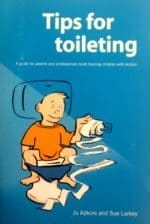
Tips for Toileting
$29.95 -

Making it a Success
$47.95 -

Practical Sensory Programmes
$71.95 -
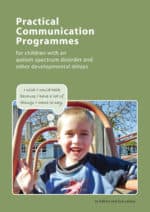
Practical Communication Programmes
$44.95 -
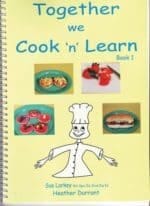
Photo Cook Book 1
$44.95 -
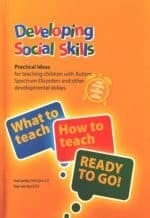
Developing Social Skills
$39.95 -

Teacher Assistants Big Blue Book of Ideas
$39.95 -

The Ultimate Guide to School and Home
$44.95 -
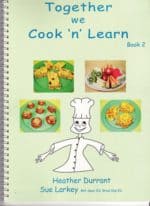
Photo Cook Book 2
$44.95


 Sorry we no longer ship items outside Australia. Please consider the digital versions of Sue’s Books –
